Portuguese
  Spanish


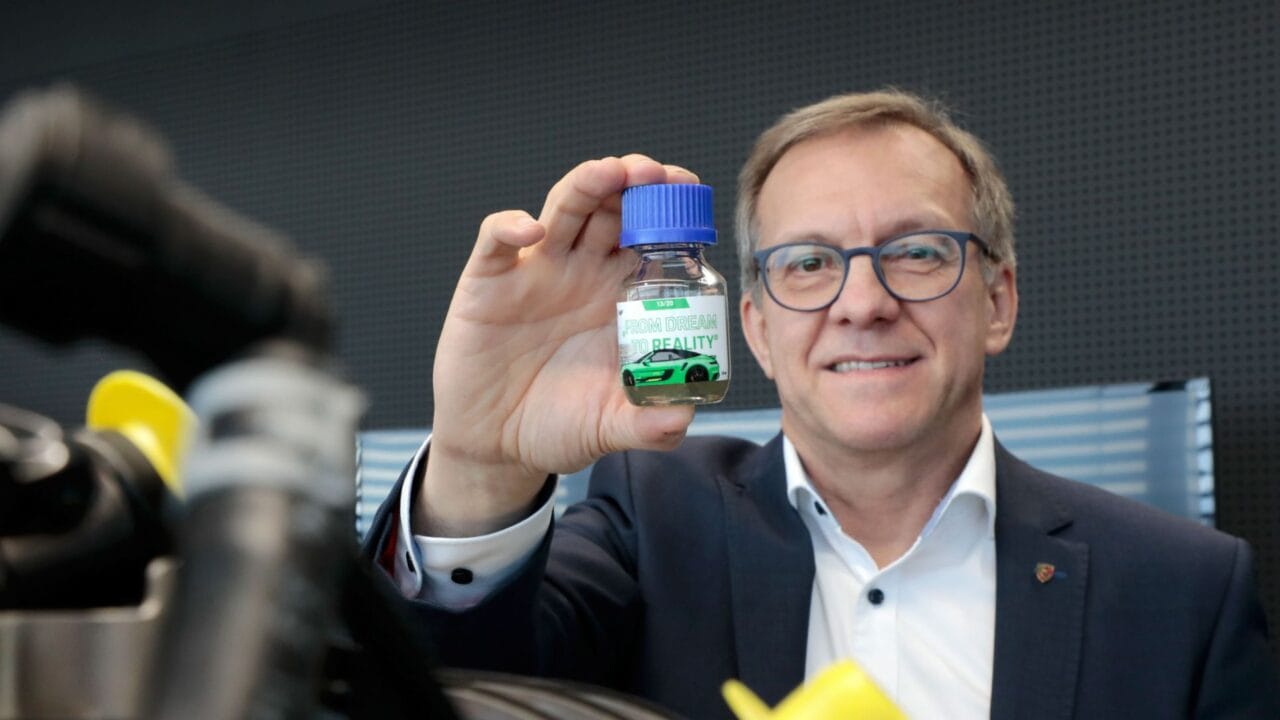

E-Fuels Are An Alternative To Gasoline And Diesel. They Are Seen As A Potential Way To Keep Combustion Engine Cars On The Roads Longer Amid Plans To End Sales Of These Vehicles In The Next Decade.
But will electric fuels be practical and truly suitable for a future with net zero emissions? Porsche thinks so. The company opened a fuel refinery in Chile at the end of 2022 and successfully requested the European Commission to exempt cars using this product from the EU’s 2035 ban on gasoline vehicles. The UK government, however, did not grant such an exemption.
Porsche plans to race 30 Porsche 911 cars in September as part of the Goodwood Revival event. These are not new cars built from scratch to run on e-fuel. They are models from before 1966, according to Car Magazine.
What Is E-Fuel?
Regular gasoline is refined from crude oil. Plant and animal life millions of years old is transformed into this crude oil through a prolonged process of pressure and heat applied. The e-fuels targeted by Porsche are not produced with refined crude oil. Water is split into hydrogen and oxygen. This hydrogen is then combined with carbon dioxide to produce hydrocarbons, the main component of gasoline.
-
Brazilian scientists are simultaneously advancing two research projects on clean hydrogen and driving solutions that could transform the energy matrix, enhance industrial competitiveness, and accelerate large-scale emission reduction targets.

-
Advancement in renewable energy: A R$ 150 million project launched by Petrobras and Finep aims to create state-of-the-art electrolyzers for green hydrogen, strengthening national research and preparing Brazil to compete in a billion-dollar energy market.
-
Illiterate or semi-literate grandmothers were trained to repair solar systems, open rural workshops, and light up homes that still depended on kerosene.
-
US$ 7 billion, green hydrogen, and steel with up to 95% less CO₂: the first green steel plant on the planet emerges in Sweden and targets Brazil as the next chapter





These chemical reactions are then powered by electricity. And since this energy can be harnessed from renewable sources, such as solar and wind, it can be argued that e-fuels are an environmentally friendly way to fuel a vehicle.
Some Problems
Cost and efficiency, however, are the main arguments against the product. Electric cars are described as having 70-90% energy efficiency, depending on the statistics: Octopus EV states 77%, while Renault claims its EV engines are 90% energy efficient.
The combustion engine achieves a maximum efficiency of about 40%, according to Nissan, after decades of improvements. When using electronic fuels, it is necessary to deal with this energy loss, compounded by the energy costs involved in creating the fuel itself.
This makes e-fuels extremely expensive. Part of a 2017 study funded by the European Climate Foundation suggested that subsidies of at least €1-1.50 per liter would be needed to make producing the fuel in “significant volumes” remotely viable.
Nevertheless, there is no suggestion that such fuels are a credible substitute for current gasoline use.