Portuguese
  Spanish


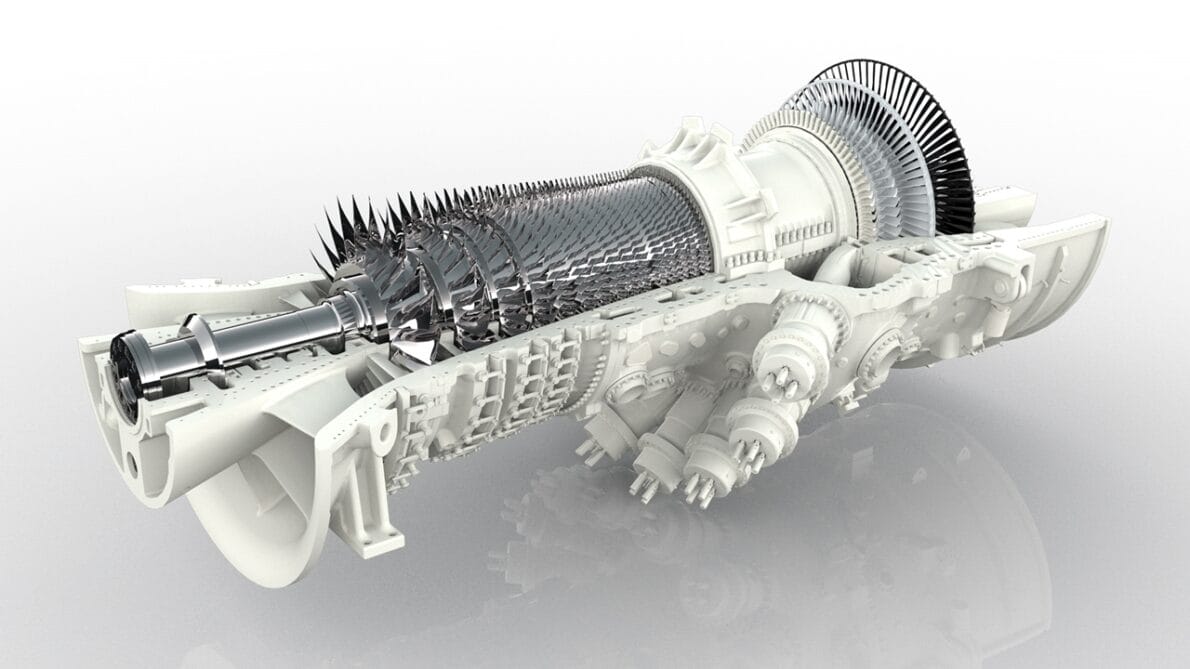

The First H-Class Gas Turbine from Ansaldo Energy Can Generate Power by Burning Only Hydrogen. The Project ‘FLEX4H2’ Was a Success
The project “FLEX4H2” was a success. The GT36, the first H-class gas turbine from Ansaldo Energy, can operate by burning only hydrogen. An anticipated success credited to the new combustion chamber design and the commitment of the eight partners who launched the initiative in January 2023.
Flexibility for Hydrogen – the full name of the project – was created to support the ambitious climate goals of Europe through the development of a flexible combustion system in terms of fuel and operation. Specifically, the consortium, led by Ansaldo itself, spent four years designing, developing, and validating a safe, efficient system capable of operating with any hydrogen concentration in the mixture. Up to 100% H2.
A goal pursued under the most demanding combustion conditions, that is, at the H-class operating temperatures necessary for maximum cycle efficiency. All of this while respecting strict emissions limits without the need to use diluents.
-
Green Hydrogen Projects in Northeastern Brazil Stalled for 18 Months Awaiting Government Decree, Delaying Billions in Investments

-
Brazil Concludes Largest Energy Auction in History, Secures 18.97 GW and Mobilizes $12.8 Billion to Ensure Supply Until 2031
-
How Norway Produces More Energy Than It Consumes with Nearly 1,800 Hydropower Plants and Over 1,100 Reservoirs

-
Axia Energia Invests $280 Million in Q1, Increases Investments by 36%, and Turns Loss into $740 Million Profit


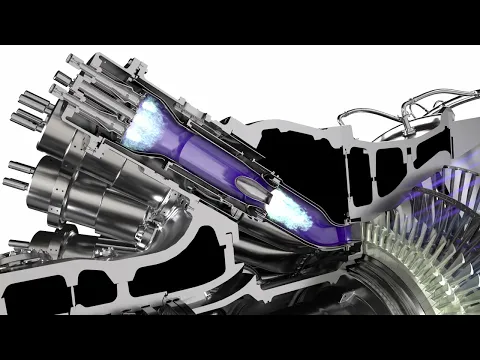

The Ansaldo Gas Turbine Switches to Pure Hydrogen
The new design is based on Ansaldo Energy’s Constant Pressure Sequential Combustion (CPSC) technology, which employs two systems: one with aerodynamic flame stabilization and another stabilized by auto-ignition. All the work has been supported and will continue to be supported in multi-physics simulation.
”Decarbonizing gas turbines is a fundamental part of the energy landscape transition. A single engine equipped with the new FLEX4H2 combustion system has the potential to eliminate up to 2,000,000 tons of CO2 emissions annually while providing enough clean energy to power up to 500,000 homes.”
Federico Bonzani, Product and Technology Director of Ansaldo Energy
Although only a year has passed, the partners have already made significant progress. Prototype testing of the new combustion chamber at a test facility in Germany has validated the initial insight, allowing the Ansado gas turbine to operate with pure hydrogen. The tests revealed the combustion chamber’s ability to switch seamlessly from natural gas to H2, with extreme operational flexibility.
”The innovative sequential combustion technology allows the GT36 to utilize a wide range of hydrogen and natural gas mixtures, ensuring its adaptability to the changing needs of current and future power generation markets.”
FLEX4H2 – Decarbonized Energy
Flexibility for Hydrogen (FLEX4H2) is a co-funded project by the Clean Hydrogen Partnership, the EU, and Switzerland. Its objective is to develop a flexible combustion system capable of operating with any hydrogen concentration in natural gas, up to 100% H2.
The new combustion chamber design will be fully adaptable to existing gas turbines, providing significant opportunities to renew existing assets.
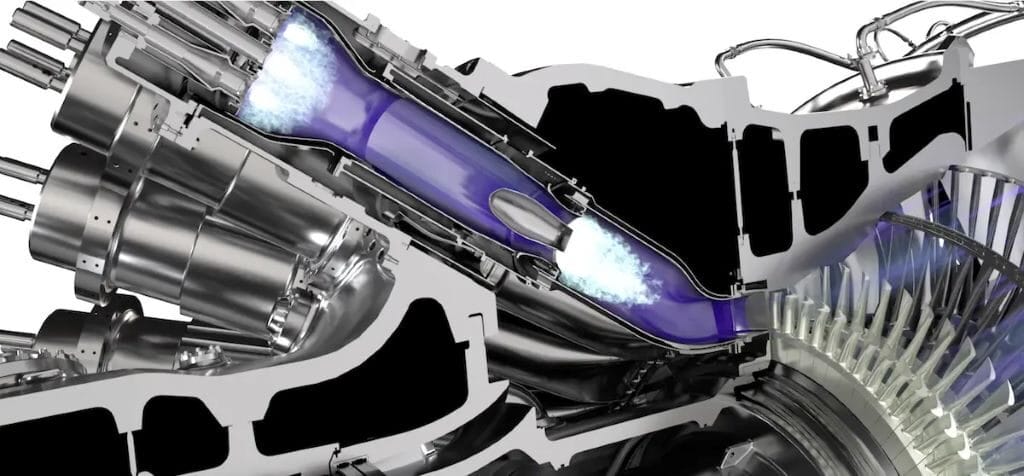
Constant Pressure Sequential Combustion (CPSC) Technology
To maximize cycle efficiency while keeping emissions at very low levels, modern gas turbines must achieve a balance between ultra-high combustion temperatures, robust flame stabilization, and greater flexibility regarding both engine operation and fuel type. Sequential combustion has demonstrated its advantages in achieving such ambitious goals.
The use of two combustion systems, one that utilizes aerodynamic flame stabilization and the other stabilized by auto-ignition, provides exceptional performance in terms of NOx and CO emissions, reduction capability, and greater flexibility in optimizing the combustion chamber for different fuel types. The inherent flexibility of sequential combustion has already been shown to enable clean and efficient operation across a wide variety of fuels with very high hydrogen contents.
Source: flex4h2.eu