






 Portuguese
  Spanish


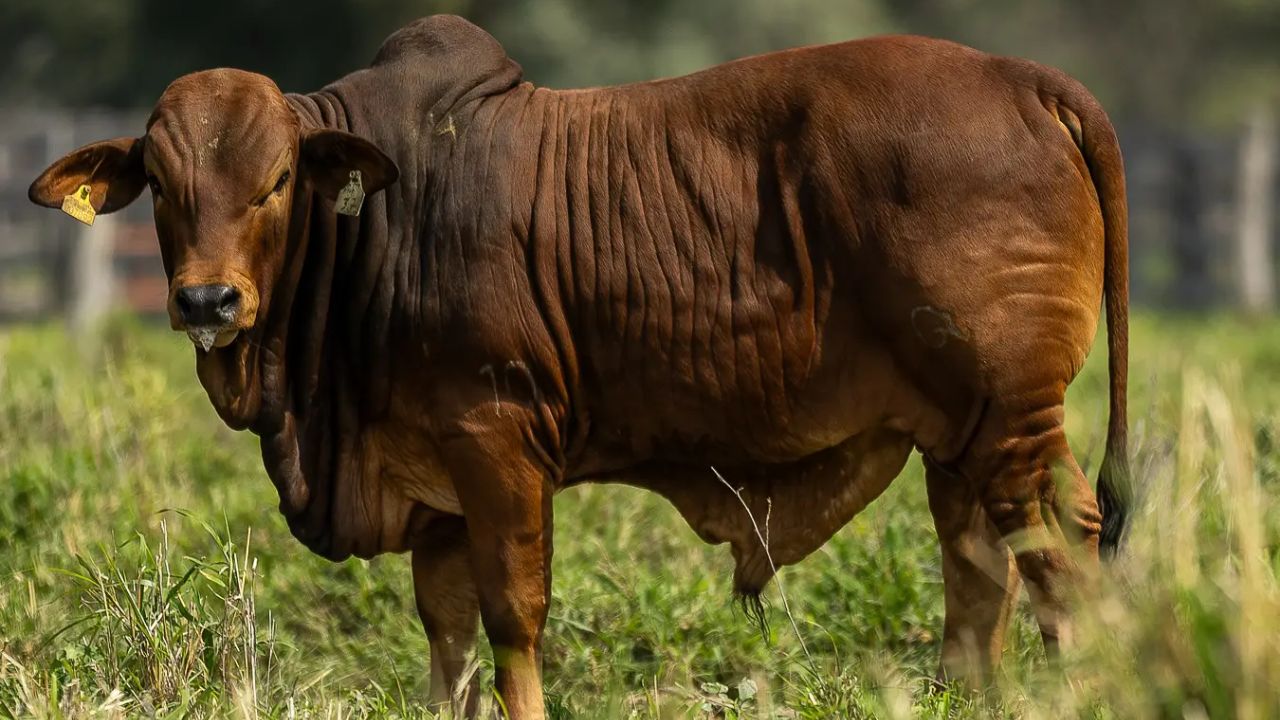
Boran Breed, of African Origin, Unites Hardiness, Fertility and Musculature, Being Increasingly Used in Industrial Crossbreeding Alongside Nelore. Understand Why It Has Been Gaining Promotion in Brazilian Livestock.
The livestock industry in Brazil is experiencing a new moment. The search for greater productivity, efficiency and adaptability in pasture systems has intensified the adoption of new genetic strategies. Among them, the Boran breed emerges as a promising alternative alongside the established Nelore.
The expansion of the Boran breed in Brazil has been accelerated, especially in regions such as the Midwest and the North, where hardiness and heat resistance are basic requirements for good results. But after all, does Boran compete with Nelore or does it join forces with it?
Boran Breed: Powerful Genetic Composition
The Boran is the result of a rare and advantageous genetic combination. Its formation consists of:
-
India’s Sugar Export Cuts and Ethanol Shift Amid El Niño Threat Could Impact Global Prices and Stocks

-
Quarantine Pest Threatening Palm Trees Puts Brazilian Authorities on Alert, Prompts Monitoring at University of Taubaté and Potential Control Measures Across São Paulo
-
Global Alert: Report Finds 159 Pesticides in Coffee Beans Sold in Europe, Posing Serious Risks to Millions of Farm Workers
-
Low-Demand Brazilian Beef Offal Gains Popularity Abroad: Indonesia Purchases $19.5 Million, Boosting Revenue and Reducing Waste



- 64% Zebu (Guzerá and Gir)
- 24% European Taurine (Shorthorn)
- 12% African Taurine (such as Ndama)
This mix provides a beef cattle with a robust carcass, developed hump, short light coat, and pigmented skin—a combination that results in high yield and thermal resistance.
It’s no wonder that Boran attracts the attention of experienced breeders. Its origin dates back centuries of natural selection made by nomads from Kenya, Ethiopia, and Somalia, who shaped a breed that is resilient, fertile, and adaptable.
The most valued characteristics include:
- High hardiness in arid climates
- Females with excellent maternal ability
- Clear musculature and carcass with great finishing
- Feeding efficiency and good weight conversion
- Ability to adapt to tropical heat
With these attributes, Boran fits perfectly into extensive livestock systems with supplementation—a common reality in Brazil.
Industrial Crossbreeding: The Boran’s Trump Card
The greatest potential of the Boran breed lies in the trcross, a breeding method where Boran bulls are used on half-blood taurine females, such as Angus x Nelore, Brangus and Canchim.
According to zootechnician Alexandre Zadra, this practice has shown very positive results: “When used on these matrices, Boran helps to ‘tropicalize’ the calves, improving heat resistance, hardiness, and the uniformity of the progeny.”
Zadra also emphasizes that using it on pure taurine heifers requires attention due to the birth weight of the calves, which tends to be higher.
The Arrival of the Breed in Brazil
With consistent performance in the first commercial herds, the Boran has established itself as an important piece in tropicalized genetics.
Breeders who once relied solely on Nelore are now closely observing the benefits of the new African member.
Researchers from ILRI (International Livestock Research Institute) and other institutions in Africa collaborated to standardize and register the breed, facilitating its expansion to territories like Brazil.
The millennia of selection and genetic diversity make the Boran extremely competitive, especially when the goal is to obtain more productive and adapted calves.
Source: Compre Rural








-

-

-

-

-

6 people reacted to this.