






 Portuguese
  Spanish
  3 min of reading
  0 comments


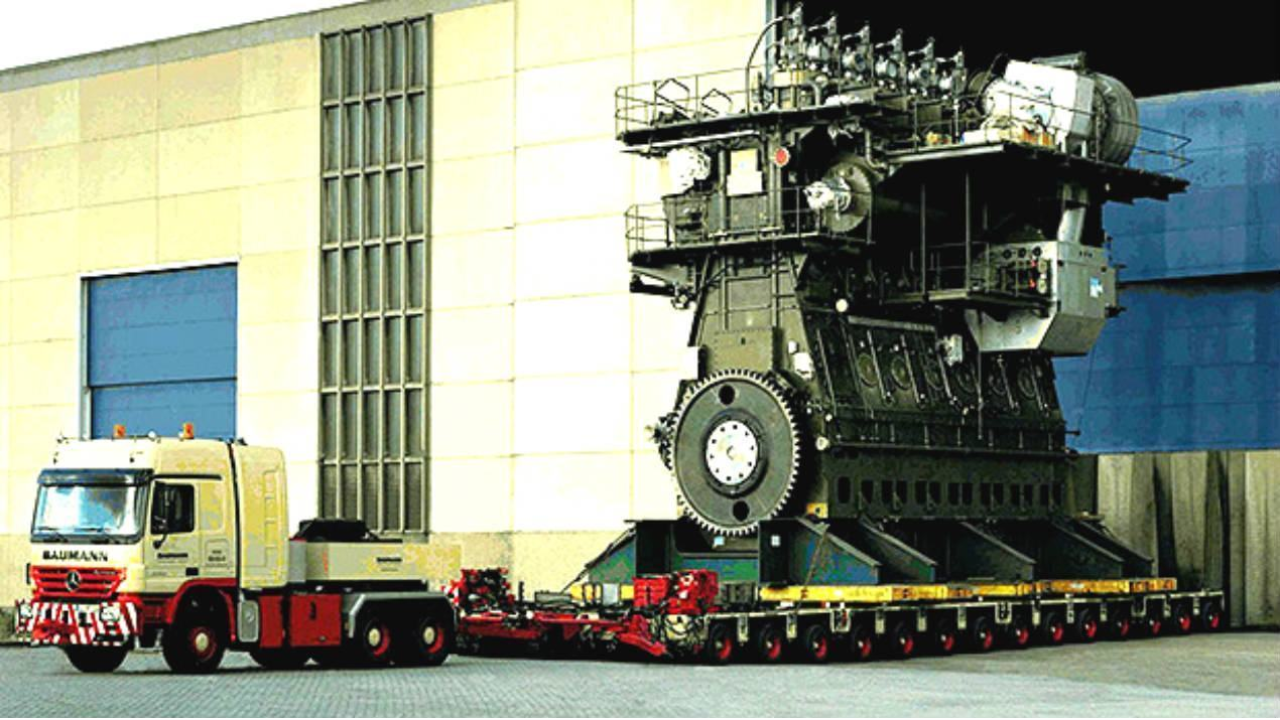
Discover the Machine That Redefines Naval Engineering, Moving Giants of the Oceans with Unmatched Power and Efficiency!
The journey of diesel engines began in the late 19th century, when Rudolf Diesel, a German engineer, patented his internal combustion engine in 1893.
This revolutionary engine used the principle of compression to ignite the fuel, offering significantly higher efficiency compared to steam and gasoline engines of the time.

The efficiency and durability of diesel engines quickly attracted the attention of various industries, including the naval sector.
-
Helicopter Drops 180 Tons of Sand and Gravel on Swedish River to Revive Ecosystem Damaged by Decades of Exploitation

-
Brazilian Company Launches Retro Smartphone with 48 MP Camera, T9 Keyboard, and Privacy Features for Social Media-Free Use

-
Self-Taught Chinese Farmer Builds 5-Ton Submarine from Scrap, Launches It in Anhui River
-
Invisible Induction Technology Enables Wireless Power for Blenders, Coffee Makers, and Air Fryers, Reducing Countertop Cables





Advancements in the 20th Century
During the following decades, diesel technology evolved. In the 1920s, diesel engines began to be widely used in locomotives and vessels, allowing for longer trips with fewer refueling stops.
The introduction of direct injection in the 1930s further enhanced efficiency and performance, solidifying diesel engines as the preferred choice for commercial and industrial applications.
The Modern Era of Diesel Engines
With the increasing demand for global maritime transport after World War II, diesel engines continued to develop.
In the 1950s and 1960s, the naval industry began adopting high-powered diesel engines, allowing larger and heavier vessels to navigate the oceans.

The focus on efficiency led to the development of turbochargers and advanced injection systems, improving performance and reducing emissions.
The Emergence of the Wärtsilä-Sulzer 14RT-flex96C
In 2006, Wärtsilä launched the 14RT-flex96C, a milestone in the evolution of diesel engines. With almost 110,000 HP and an impressive torque of 775,376 mkgf, this turbo diesel engine is not only the most powerful in the world but also redefines efficiency standards in the naval industry.
Equipped with a Common Rail injection system, it drastically reduces emissions and optimizes fuel consumption, operating at around 14,000 liters per hour.
Innovative Technologies and Sustainability
The Wärtsilä-Sulzer 14RT-flex96C is not just a giant in terms of power but also an example of sustainable engineering.

It harnesses waste heat to generate electricity, converting about 12% of the energy that would be wasted into usable energy.
This innovation is a testament to how engineering can balance power and environmental responsibility.
The Impact and Legacy of Diesel Engines
Today, over 300 ships worldwide are equipped with engines from the RT-flex96C family, setting new standards of power and efficiency.
The Wärtsilä-Sulzer 14RT-flex96C is more than just a machine; it is a symbol of the progress of diesel technology, sustaining global trade and shaping the future of maritime transportation.
Toward New Horizons in Maritime Propulsion
The history of diesel engines is a narrative of innovation and adaptation.
From the early days of Rudolf Diesel to the modern colossus that is the Wärtsilä-Sulzer 14RT-flex96C, this trajectory reveals human ingenuity in overcoming challenges and driving progress.
As we look to the future, the evolution of diesel engines continues to be a vibrant field, promising more sustainable and efficient innovations.




-

-

-

12 people reacted to this.