






 Portuguese
  Spanish


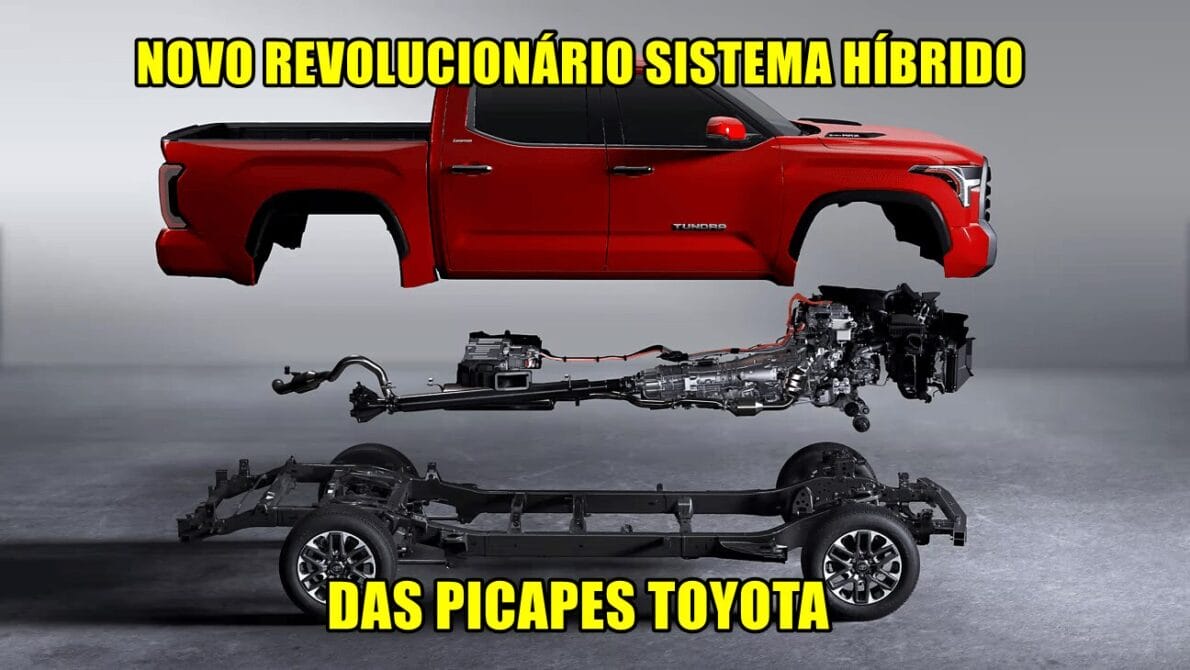

The New Toyota Hilux With Revolutionary Hybrid System Is Coming to Brazil. Technology That Increases Power and Reduces Fuel Consumption!
With over 25 years of expertise in manufacturing hybrid vehicles, Toyota is bringing this advanced technology to the heart of its pickup line, a segment that has historically been more conservative in terms of technological innovation.
Toyota’s pickups, notably recognized for their reliability, are beginning to embrace a more sustainable and efficient future with the introduction of new hybrid powertrains.
Hybrid Technology Adapted for High Performance
The adaptation of hybrid technology in pickups is a significant milestone for Toyota. The company has introduced two distinct hybrid systems for its trucks: a robust turbocharged V-6 for the Tundra and Sequoia models, and an efficient four-cylinder turbo, which now powers the Tacoma, 4Runner, and Land Cruiser. In particular, the four-cylinder system deserves attention, not only for its promise of efficiency but also for the potential to equip the renowned Hilux in the future.
-
Banco do Brasil and Uber Launch Cashback Program Offering Up to 3.5 Loan Installments Back, Drivers Gain Access to New Cars Worth Up to $30,000 Through Move Brasil Initiative

-
Looking for a Car for Dirt Roads? Fiat Uno, Strada, and Volkswagen Gol Offer Durability and Affordability

-
MG Motor to Produce Two Electric Cars in Brazil with $75 Million Investment, Creating 600 Jobs
-
Nissan Kicks S Direct 2018: Affordable Used SUV with Over 13 km/l Fuel Efficiency, 432-Liter Trunk, and CVT Automatic Transmission


This new system, called i-Force Max, is different from Toyota’s older hybrid systems, such as those in the Prius or Corolla. Simplified for better understanding and effectiveness, it includes a 2.4-liter turbocharged gasoline engine, an eight-speed automatic transmission, and a 48-Volt electric motor-generator positioned between them. This configuration provides an impressive combined power of 330 hp and a torque of 64.3 kgfm, offering robust performance without sacrificing efficiency.
Sustainable and Reliable Performance
Sheldon Brown, chief engineer of the Tacoma project, clarifies that the engine design was strategically conceived to optimize both torque and power curves, especially during critical acceleration moments. “It helps us maximize the peak torque, and when turbo efficiency drops, the electric motor takes over to maintain performance,” explains Brown.
The fuel economy is not Toyota’s main priority, but rather performance. Compared to gasoline versions, the hybrid Tacoma offers a modest gain of approximately 0.8 km/l in the city, 0.43 km/l on the highway, and 0.43 km/l in combined use. However, it is the improvement in performance and responsiveness that defines the true value of this hybrid system.
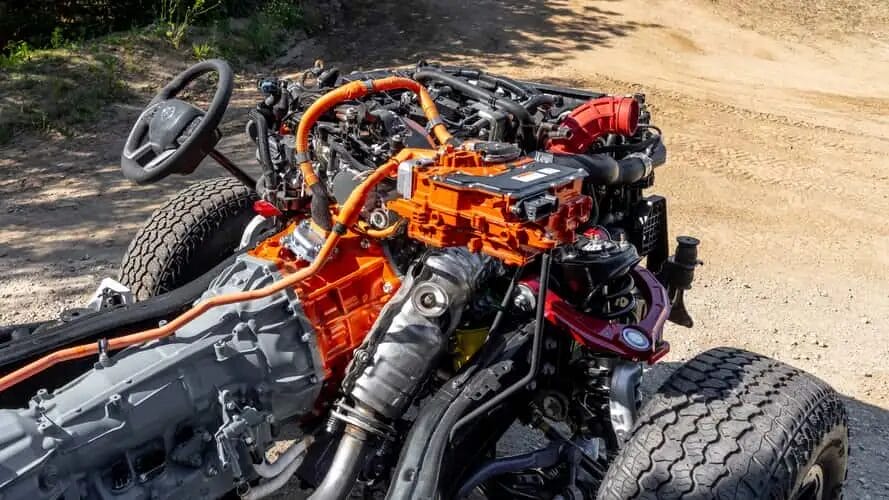
The Future of Toyota Hybrid Pickups
The issue of reliability is critical, especially for a brand like Toyota, which prides itself on the durability of its vehicles. The use of nickel-metal hydride batteries, although not the most advanced in terms of energy density, is a conscious choice for its proven longevity and reliability. “We love this technology for its durability,” emphasizes Brown.
Additionally, integrating a conventional automatic transmission was essential to not compromise towing capacity and off-road performance, aspects that are crucial for pickup enthusiasts. Toyota’s system calibration allows for a driving experience where the presence of the hybrid powertrain is nearly imperceptible, except for the increased available torque.
A Legacy of Continued Innovation from Toyota
Initial impressions are extremely positive and indicate that Toyota has gotten its strategy for electrifying pickups right. With an approach that perfectly balances performance, maneuverability, and sustainability, Toyota is not only adapting its pickups for the future but also reaffirming its commitment to responsible innovation. As more testing is conducted and time passes, it becomes evident that Toyota is on the right path to defining the future of hybrid pickups.
In this dynamic and ever-evolving landscape, consumers who value both performance and environmental responsibility will find Toyota hybrid pickups a choice that meets their needs without compromising the quality and reliability they expect from the brand. Thus, Toyota not only follows global electrification trends but also leads by example, showing that it is possible to harmonize technological innovation with sustainable and reliable practices.


