Portuguese
  Spanish


With 20 minutes of conversation at the beginning of classes, the Municipal School GET IV Centenário, in Maré, achieved 97% literacy at the appropriate age, eliminated school dropout, and may see its methodology incorporated by 350 municipal schools in Rio after becoming a finalist for an international education award in 2026
Literacy became one of the main results of a simple yet profound change adopted by the Municipal School GET IV Centenário, located in Maré, north zone of Rio de Janeiro. The unit began to reserve the first 20 minutes of the day to listen to children after police operations and achieved 97% of students literate at the appropriate age.
The case gained national projection on June 25, 2026, when Agência Brasil reported that the school is among the finalists for the World’s Best School Prizes 2026, in the Overcoming Adversity category. According to the Rio de Janeiro City Hall, the methodology could be incorporated by another 350 units of the municipal network.
School in Maré was recognized in an international education award
The Municipal School GET IV Centenário is part of the Technological Educational Gymnasium model and serves children aged 6 to 11. The unit is located in Maré, a territory formed by 16 favelas marked by disputes between armed groups and police operations. It was in this context that the school transformed welcoming into a pedagogical strategy.
-
Five-Year-Old Turns Crayon Drawings of Colorful Socks into a Brand, Raising $200,000 to Aid Vulnerable Children

-
California Teacher Converts Moving Truck into Spacious, Light-Filled Mobile Home to Overcome Zoning Restrictions and Cut Costs

-
Daughter of a Construction Worker and a Baker, Bruna Achieves Dream of Studying Medicine at Brazil’s Prestigious USP at 21

-
City Provides Disposable Cameras to Residents to Capture Downtown, Uncovering Hidden Value Beyond Appearances


The recognition came with the inclusion of the unit among the ten finalists in the Overcoming Adversity category at the World’s Best School Prizes. The award is promoted by the T4 Education platform and is supported by the Lemann Foundation, American Express, and Accenture.
The turnaround began after police operations in the region
According to the report by Agência Brasil, the school realized the need to create a space for conversation after a police operation. Director Alessandra Aguiar reported that the students needed to talk about what they experienced, felt, and carried into the classroom.
From this perception, Café com Música e Prosa emerged, a socio-emotional welcoming practice linked to the Fábrica de Sonhos project. The initiative began to open the school day with listening, dialogue, and attention to children’s concerns before the start of traditional subjects.
Twenty minutes of listening became part of the school routine
The proposal adopted by the school is straightforward: every day, before the subjects, the first 20 minutes are dedicated to listening to the students. During this time, children can talk about feelings, fears, expectations, family problems, territorial experiences, and dreams for the future.
This point is central because the school did not treat listening as an isolated action or occasional event. Welcoming became a pedagogical routine. Instead of expecting the child to ignore the impact of violence upon entering the classroom, the team created a structured moment to recognize what they bring from home, the street, and the community.
Literacy advanced along with bonding and permanence
The most concrete result reported by the source is significant: the school eliminated school dropout and achieved 97% literacy at the appropriate age. In a unit located in a vulnerable area, this data shows that permanence, bonding, and learning go hand in hand.
Director Alessandra Aguiar summarizes the logic of the methodology by arguing that there is no learning without relationship. In practice, the school brought students, families, and the pedagogical team closer, creating an environment where children feel safer to stay, participate, and learn.
Fábrica de Sonhos project puts the student at the center
Fábrica de Sonhos is not limited to daily conversation. According to Agência Brasil, the project gathers practices that put the student at the center of the learning process. Technology enters as a tool for children to investigate real community problems and develop practical solutions.
This approach broadens the role of the school. Instead of working only on content disconnected from students’ lives, the unit uses the territory as a starting point to develop knowledge. The child is no longer seen just as a content receiver but becomes part of constructing the answers.
Families also enter school planning
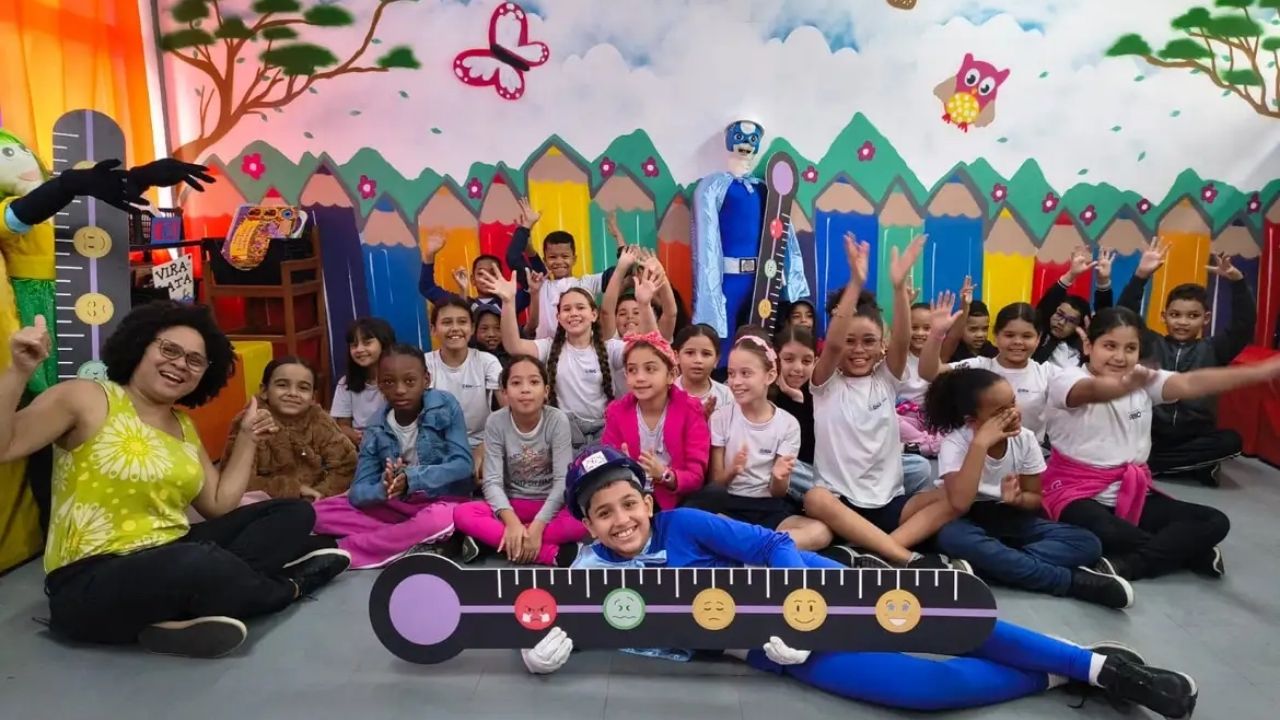
Another point highlighted by the report is the participation of families. At the beginning of the year, guardians are invited for collaborative planning, share goals, present projects, and define responsibilities together with the school.
This involvement helps explain why the methodology goes beyond the classroom. Literacy does not depend solely on the teacher in front of the class, but on a broader environment, with trust, family presence, monitoring, and clarity about the role of each part in the students’ development.
Maré records a history of violence that crosses the school
Maré is described in the source as a region constantly affected by police operations and disputes between armed groups. According to the De Olho na Maré project, cited by Agência Brasil, there were 231 operations between 2016 and 2025, with 160 deaths and 1,538 acts of violence recorded in the period.
These numbers help the reader understand the magnitude of the challenge faced by the school. When a child lives in a territory crossed by fear, interruptions, and insecurity, learning can be impacted. The response of GET IV Centenário was to recognize this reality without abandoning pedagogical demands.
Methodology could reach 350 municipal schools in Rio
The Rio de Janeiro City Hall reported that the methodology applied at GET IV Centenário will be incorporated into another 350 schools in the municipal network, with the possibility of expansion to more units. The source does not detail the complete implementation schedule, nor does it inform which schools will be covered first.
Even so, the data indicates that the Maré experience has ceased to be just a local practice. If the expansion materializes, the municipal network will be able to test on a scale a proposal based on daily listening, family participation, technology, bonding, and student protagonism.
Brazil had two schools among the world finalists
In addition to GET IV Centenário, another Brazilian school was also announced as a finalist for the World’s Best Schools Award 2026: the Baniwa Kalipana School, in São Gabriel da Cachoeira, Amazonas. It competes in the Environmental Action category.
The presence of the two Brazilian units among the finalists broadens the reach of the news, but the models are different. While the school in Maré was recognized for overcoming adversities in a vulnerable urban context, the Amazonian school stands out for integrating traditional knowledge, territory, environmental management, and indigenous knowledge into the curriculum.
Award will have popular voting and winners in November
The announcement of the finalists took place on June 25, 2026. According to Agência Brasil, the popular voting is open online until October 29, and the winners of each category will be announced in November.
The winning and finalist schools will also be invited to the World Schools Summit, in London, on January 16 and 17, 2027. The meeting will bring together educators, leaders, and policymakers to share experiences and educational practices.
What this story reveals about learning
The experience of Escola Municipal GET IV Centenário shows that literacy is not just a matter of reading and writing methods. In vulnerable contexts, learning also depends on emotional security, listening, bonding, and continuity.
The case does not offer an automatic formula for all schools. Each territory has its own challenges. But the experience of Maré suggests that listening to children in a structured way, every day, can pave the way to improve attendance, confidence, and school performance without ignoring the reality outside the school walls.
A school that turned listening into concrete results
By eliminating school dropout, achieving 97% literacy at the appropriate age, and becoming a finalist for an international award, GET IV Centenário placed Maré at the center of an urgent discussion about public education, violence, and learning.
The question that remains is simple and difficult at the same time: if 20 minutes of daily listening helped a school in a vulnerable area change its results, how many other units could advance by treating bonding, family, and welcoming as a real part of learning?
Do you believe this methodology should be expanded to more public schools? Leave your opinion in the comments.