Portuguese
  Spanish


An international team of scientists spent weeks probing the deep waters of the South Atlantic, right off the coast of Brazil, and returned to the surface with an unexpected treasure: more than thirty marine species that no one had ever seen or described, creatures that live in darkness and had never appeared to science.
The seabed remains the least known place on our own planet, and each expedition that descends there usually brings surprise. This was the case on a mission aboard the research vessel Falkor (too), from the Schmidt Ocean Institute, which scoured the so-called midwater zone, that strip of the ocean far from light and far from the bottom, in the tropical South Atlantic, in Brazilian waters. The result was breathtaking: more than thirty new life forms for science.
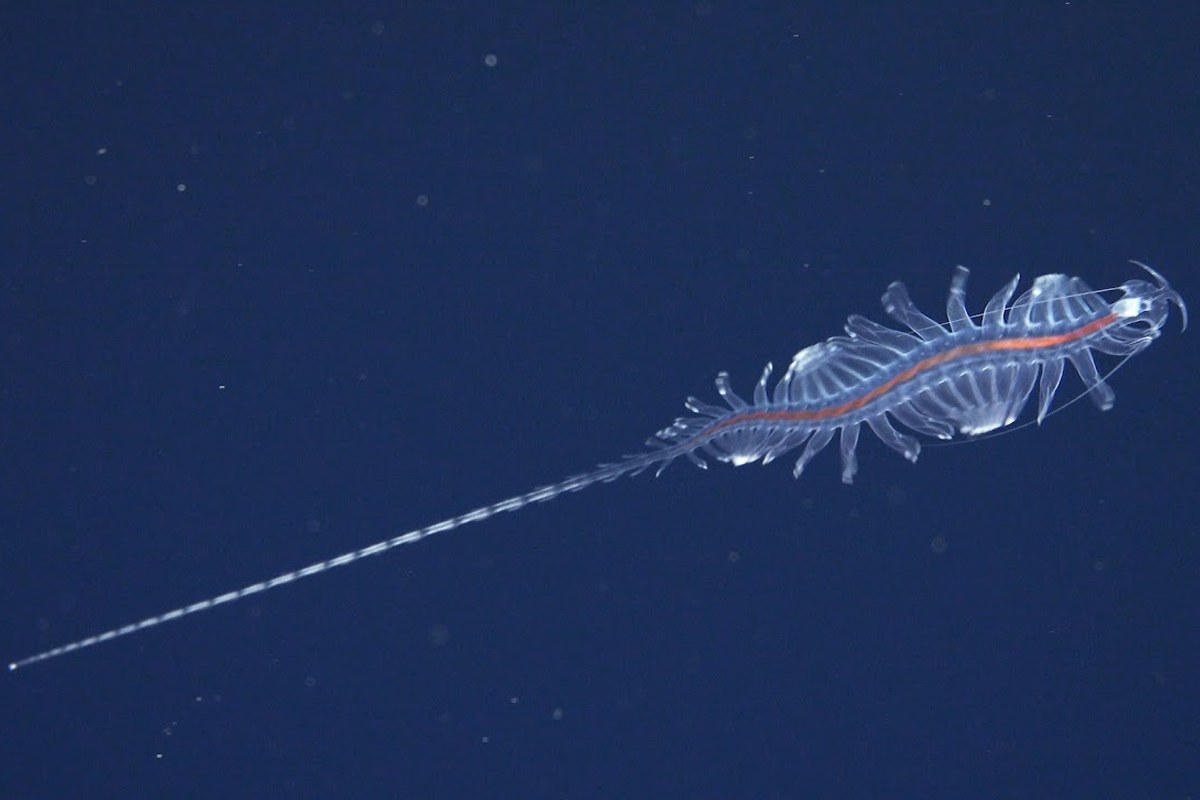
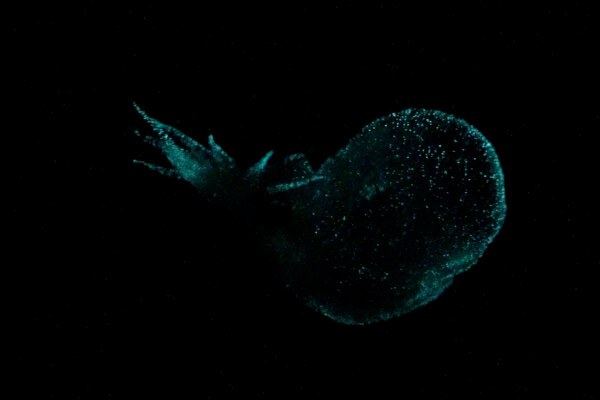
These are animals that most people would never imagine exist: gelatinous and translucent creatures, bioluminescent animals that glow in the dark, organisms with strange shapes adapted to a life under crushing pressure and without a single ray of sunlight. Each of them is a missing piece in the enormous puzzle of how life works in the largest and most mysterious environment on Earth.
The life that dwells in the dark
The midwater zone is one of the most inhospitable and fascinating places that exist. Hundreds or thousands of meters below the surface, no light reaches, the temperature is icy, and the water pressure would crush any of us. And yet, it is full of life: fish with huge eyes to capture the slightest light, animals that produce their own glow to hunt or communicate, transparent bodies that become almost invisible in the dark.
-
Nigerian Professor Invents Electricity-Free Refrigerator Using Clay Pots and Wet Sand, Extending Shelf Life of Vegetables to 27 Days; 7,000 Units Distributed in Energy-Deprived Villages

-
Flower Farms Supplying London and Amsterdam Face Backlash for Environmental Impact on African Lake, Threatening Jobs for 50,000 Workers

-
World’s Largest Container Ship Departs Shanghai with 24,000 Containers, Set to Debut in Europe in July

-
NASA Explores How Microgravity and Sensors Alter Soccer Ball Spin in Space



Studying these creatures is extremely difficult, and that’s why they remain so unknown. Bringing them to the surface without destroying them requires robotic submersibles, special cameras, and a lot of patience, because an organism adapted to the pressure of the depths usually does not survive the journey to the surface. Each new species cataloged represents hours of meticulous work and a little more understanding of a world right there, underwater, and yet almost unexplored.
A global census of the oceans
This discovery off the Brazilian coast is part of a much larger effort. An international project called the Ocean Census has been organizing expeditions around the world to accelerate the cataloging of marine life, and just in the last year, it has surpassed one thousand one hundred and twenty-one new species registered, a huge leap compared to the previous pace. The goal is ambitious: to map the biodiversity of the seas before it disappears without even being known.
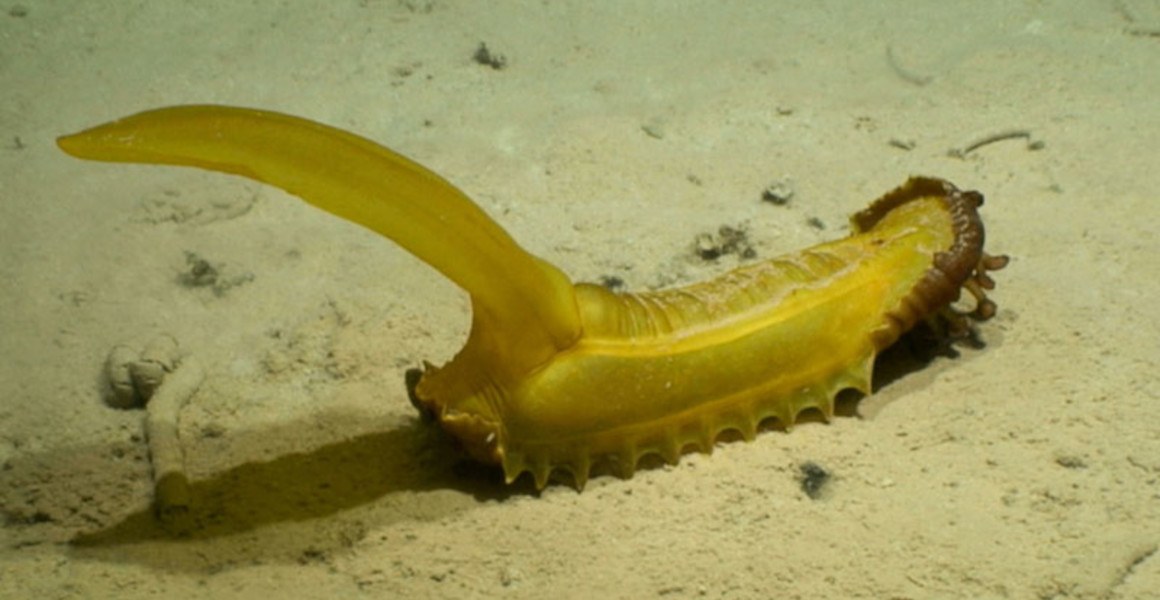
The number is alarming for another reason: it shows how much we still don’t know. It is estimated that most species in the deep ocean remain unnamed and undescribed, waiting for someone to find them. We send probes to Mars and know the surface of the Moon better than we know the seabed of our own backyard, and expeditions like this one are slowly trying to correct this distortion.
Curiously, a large part of the new species cataloged in the world comes not only from unprecedented dives but also from old samples stored in museums and laboratories, waiting for someone to have time to study them. There are drawers and jars full of organisms collected years ago that have never been formally described, simply because there are not enough specialists and resources for this meticulous task. Marine life is so vast that science has accumulated a backlog of discoveries waiting for a name.
New technologies are speeding up this work. Robotic submersibles that film in high definition, rapid genetic sequencing, and even artificial intelligence to compare shapes and patterns help researchers identify a new species much faster than in the past. What used to take years of microscope analysis can now be confirmed in months, and that’s why the pace of discoveries in the deep sea has finally started to accelerate.
Why this matters, and a lot
It may seem like just scientific curiosity, but knowing this life has practical weight. The deep ocean regulates the planet’s climate, absorbs carbon dioxide and heat, and many of these unknown creatures may hold chemical secrets useful for medicines and new materials. We cannot protect or responsibly utilize what we don’t even know exists, and that’s why cataloging biodiversity comes before any decision about what to do with the seas.
The timing also matters. Right now, when deep-sea mining is being discussed to extract minerals from the ocean floor, discovering how much unknown life still resides down there raises a red flag. How can we authorize the upheaval of an environment we barely begin to understand? Each new species found is also an argument for caution before tampering with the seabed.
There’s something poetic about knowing that these discoveries came from the waters off our coast. Brazil has an immense coastline and a marine wealth that has barely begun to be studied, and expeditions like these show that the Brazilian ocean is a first-rate scientific frontier. I confess I imagine how many incredible creatures still swim there in the dark, waiting for someone to come down and meet them.
In the end, each of these thirty species is a humble reminder: no matter how advanced science becomes, the planet still holds enormous mysteries right beneath our surface, and discovering them remains one of the most beautiful and necessary adventures we can still experience.
How many unknown life forms still swim in the dark off the Brazilian coast?