Portuguese
  Spanish


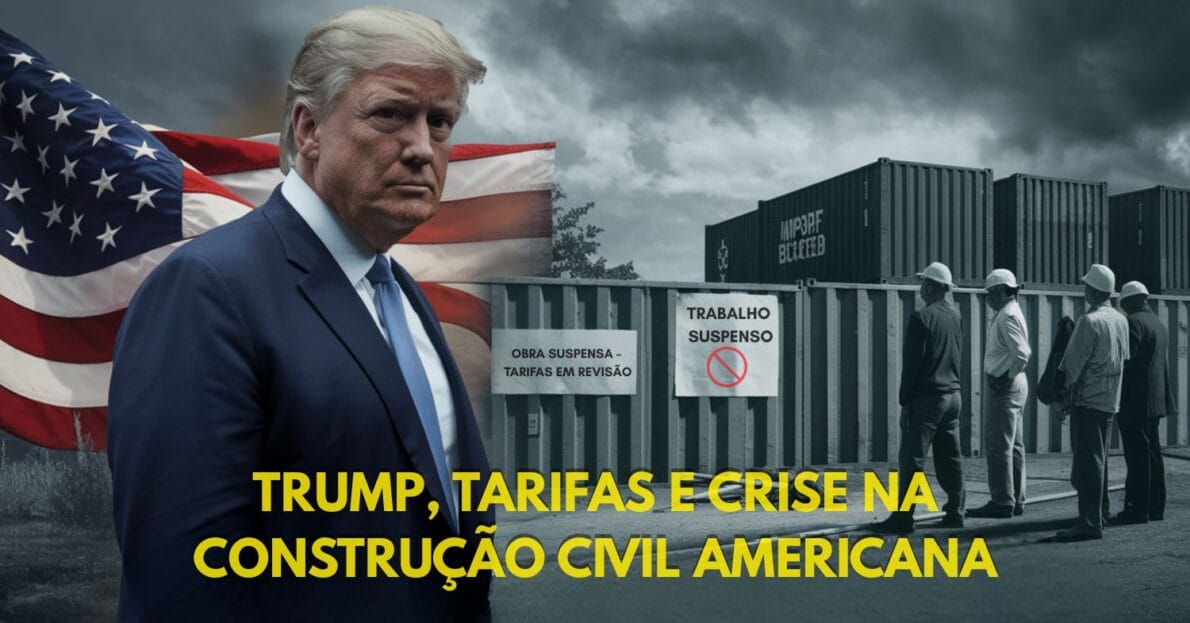

Construction Industry in the USA Points to Project Delays and Increased Caution Due to Trade Policies Implemented During the Trump Administration.
The construction sector in the USA is facing a scenario of uncertainty and project slowdowns, a reflection of the trade policies adopted by former President Donald Trump. The statement was made on Tuesday (16) by Thomas Hasler, CEO of Sika, a Swiss multinational that supplies chemical additives for infrastructure and commercial and industrial buildings.
According to Hasler, the construction industry in the USA started the year with strong performance and good expectations, mainly due to investments in infrastructure and the movement of companies studying productive relocations within American territory. However, the announcement of new tariffs by Trump directed at Mexico and Canada changed the scenario.
Indirect Impact of Tariffs on the USA Construction Sector
Although the construction sector is largely a local market within the USA, the uncertainties generated by Trump’s tariffs have impacted the economic environment and influenced the decision-making of entrepreneurs and investors. According to Hasler, the effect was felt quickly, with projects being delayed or canceled due to instability.
-
U.S. City Builds Tiny Home Village on Water Company Land to House 136 Homeless People: Inside the Social Housing Units

-
Woman Turns Shipping Container into Home, Embraces Rural Life to Cut Monthly Expenses to Just Over $330
-
France Revamps 530 Social Housing Units with Large Balconies and Glass Facades Without Demolishing Existing Buildings

-
Facing high rent, couple transforms parents’ garage into a fully functional apartment, creating a complete home at a fraction of the market cost.




“The construction sector was not directly affected by the tariffs but felt the effects of the changing economic climate,” he stated. “Some projects were pushed to the back burner, and others were simply postponed.”


Sika operates as a supplier of materials such as waterproofing and structural reinforcements for floors, walls, and roofs. Its products are present in commercial, industrial, and infrastructure projects. Therefore, the company’s performance often serves as an indicator of the pace of construction across different regions.
Slowdown in Sales and Caution in the Sector
Sika’s results in the first quarter of 2025 confirm this trend of slowdown. According to the data released by the company, there was a drop in the sales pace in North America, which raised concerns about the impact of trade policies and Trump’s tariffs on the sector.
Hasler explained that many of Sika’s clients are waiting for new developments before making investment decisions, especially regarding factory relocations and the adaptation of supply chains. The uncertainty about the continuation or reversal of the tariffs announced during Trump’s administration has generated insecurity among industry players.
Infrastructure Remains Stable Despite Uncertainties
Despite the caution observed in private projects, the infrastructure segment remains more stable in the USA, according to Sika’s executive. Public works and projects funded by state and federal governments are still underway, sustaining part of the demand for inputs and services.
“The infrastructure sector has proven to be very resilient,” said Hasler, highlighting that the continuation of ongoing works has mitigated the impacts of the slowdown observed in other areas of the construction sector.
Uncertainty About the Future of the Market
There is still no consensus among experts on how long this phase of instability may last. Hasler emphasized that the situation is volatile and can change at any moment, depending on the political and economic decisions made by the federal government.
“Unpredictability has increased,” he stated. “Markets have become more uncertain, and clients are waiting for more clarifications before moving forward with their projects.”
The executive’s observation reflects a scenario where Trump’s tariffs, even after the end of his term, continue to affect market behavior and create distrust in sectors most sensitive to variations in costs and imported inputs.
Effects for the Sector in the Medium Term
The weakening of confidence in regulatory stability could lead to an investment hold-up in the medium term if the situation is not clarified. The construction sector in the USA, which traditionally drives a wide production chain, may experience a deeper impact if uncertainty surrounding Trump’s tariffs persists.
In the meantime, companies continue to closely monitor market movements, awaiting definitions that allow them to resume projects and long-term decisions with more security.
Source: ETInfra.com