






 Portuguese
  Spanish


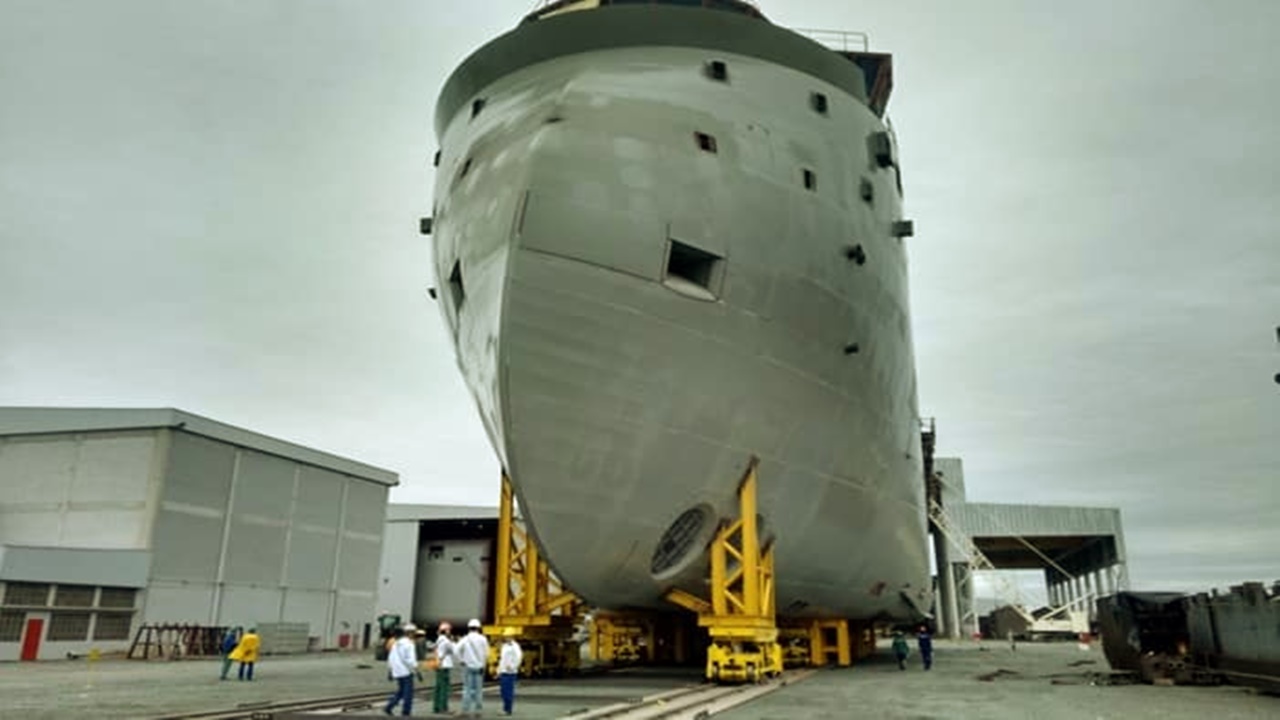

Estaleiro Brasil Sul – The New Name of Shipyard Oceana Is Undergoing a Revolution, Attracting International Interest and Promises to Generate 2,000 Direct Jobs and About 6,000 Indirect Jobs at the Peak of Construction
The construction project for the Brazilian Navy ships at the Brasil Sul shipyard in Itajaí, by the Águas Azuis consortium, may turn Santa Catarina into a cluster for the sector in Latin America. Additionally, last Tuesday (07/27), the Commander of the Navy, Admiral Almir Garnier Santos, visited the facilities of the Brasil Sul Shipyard – ThyssenKrupp, where the Navy’s “Tamandaré” class ships will be built starting in 2022.
Read Also
- Multinational Halliburton Started Yesterday (08/09) Recruitment and Selection in Bahia, Macaé, Rio de Janeiro, and Mossoró for Candidates with No Experience Seeking Their First Job in Its Internship and Apprenticeship Program
- Constructor Andrade Gutierrez Calls for Job Openings in Civil Construction for Professionals with Incomplete Elementary, High School, and University Education on This Day, August 10
- Totally Free and Online Event Teaches Brazilians How to Get the Desired Job and Work in Canada
- Coca-Cola Offers More Than 200 Entry-Level Job Openings as Helpers in SP, SC, and More States on This Day, August 09
- Motorola Calls for 45 Job Openings at Different Levels in Its Factory in São Paulo
The Brasil Sul Shipyard – the new name of the Oceana shipyard – is undergoing a revolution. The structure is being renovated to accommodate the construction of four ships commissioned by the Brazilian Navy, a project worth R$ 9 billion.
Recently, the shipyard also hosted a visit from representatives of the Chilean Navy for prospecting, demonstrating that the naval defense industry is emerging as an alternative for offshore shipbuilding aimed at oil and gas exploration, which was decimated after the oil crisis and Operation Lava Jato.
-
Eni Acquires 25% Stake in Chilean Lithium Project, Plans to Invest Up to $225 Million in Eco-Friendly Extraction Method

-
French Brand Transforms 6 Million Brazilian PET Bottles into Sustainable Sneakers for Global Fashion Market
-
Abandoned Factory in Rio’s North Zone Becomes Urban Hazard with Standing Water and Debris

-
The U.S. Navy Conducts Submarine Tests in Idaho Lake to Detect Underwater Noises Hidden by the Ocean


Steel Plates Will Begin to Be Cut in April 2022, and the Expectation Is to Generate 2,000 Direct Jobs and About 6,000 Indirect Jobs
The construction of the frigates is set to officially begin. Steel plates will start to be cut in April next year, but results are already showing in tax revenue.
The Águas Azuis consortium, which won the bid to design and produce the vessels and is led by the German company Thyssenkrupp, is already the second-largest tax revenue producer in the municipality, just behind a technology company. It has left behind giants like BRF and APM Terminals, the lessee of the Port of Itajaí.
The expectation is that the construction of the ships will generate 2,000 direct jobs at the peak of construction and up to 6,000 indirect jobs. So far, no hiring of employees for the production line has been opened – but it is common for people to seek the shipyard to submit their resumes.
Municipality Prepares for Ship Construction Works
Rodrigo Duarte, CEO of Itajaí Participações – a public company promoting business in Itajaí – said that this is a time for seeking local, regional, and state partnerships to supply the ship construction.
The municipality in Santa Catarina is also preparing infrastructure for the shipbuilding phase for the Navy’s frigates. Truck traffic around the shipyard, located on the banks of the Itajaí-Açu River, is expected to increase significantly. In December, for instance, the arrival of 200 trucks loaded with steel for the ships is anticipated.







