






 Portuguese
  Spanish


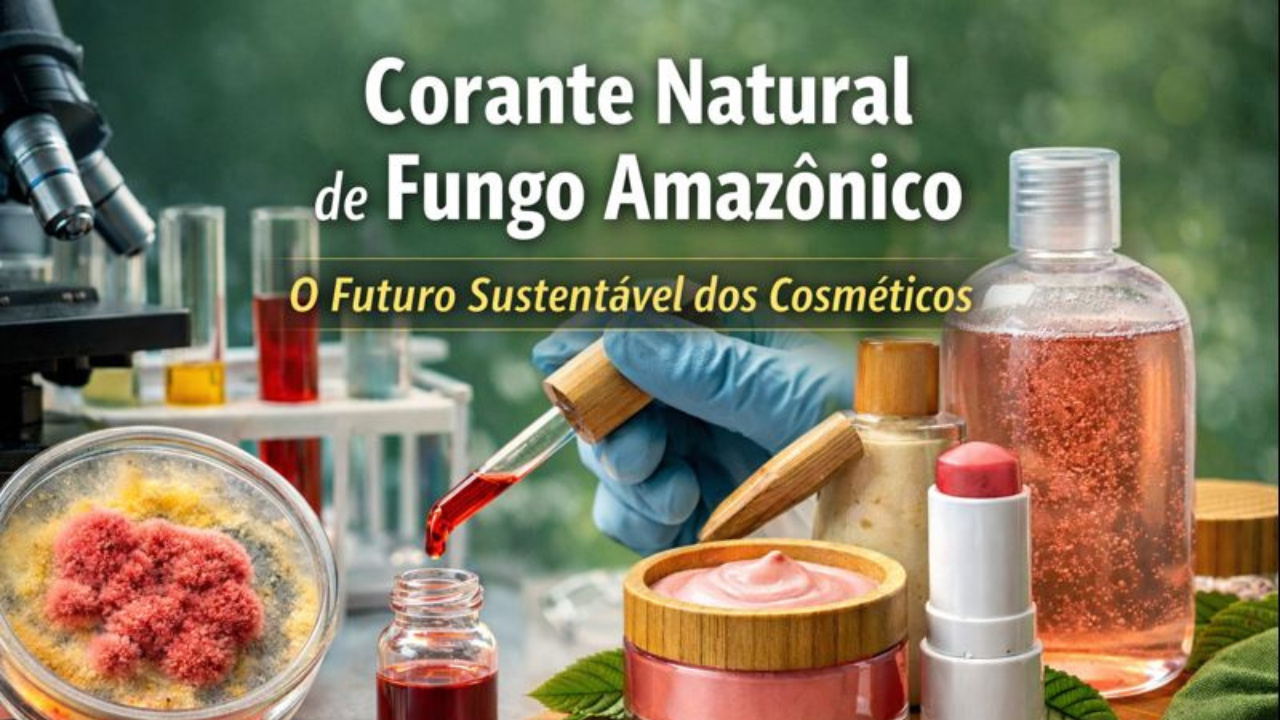


Research With Amazonian Fungus Points to Safe, Effective Natural Dye With Industrial Potential for Cosmetics.
A natural dye obtained from an Amazonian fungus emerges as a real alternative to synthetic pigments used by the beauty industry.
Developed by Brazilian and Portuguese researchers, the compound was recently tested in creams, shampoos, and gel sticks, with positive results in safety, stability, and performance.
Thus, the research was conducted by scientists linked to biotechnology, focusing on the creation of sustainable cosmetics, in a global context of restrictions on the use of artificial dyes due to health and environmental risks.
-
Iraq floats and sinks under an arm of the Euphrates 10 giant concrete boxes of 46,000 tons and 125 meters each to assemble a 2.4 km submerged tunnel and open a new land route between Asia and Europe.

-
Scientists use more than 20,000 artificial birds and solar speakers to “trick” seabirds, reactivate nesting routes, and revive a colony on an island that seemed abandoned.

-
She spent 73 years breathing inside an iron lung, survived the aftereffects of polio, and became the last woman in the United States dependent on the equipment before dying at 78 years old.
-
Brazilian students created a $1 filter using pine bark, cotton, and 3D-printed parts to clean cassava wastewater, reduce the toxicity of a hazardous waste, and transform contaminated water into biofertilizer.




The study was led by Juliana Barone Teixeira, under the guidance of Valéria de Carvalho Santos-Ebinuma from São Paulo State University, in partnership with Joana Marques Marto from the University of Lisbon.
Thus, the research also received support from FAPESP and collaboration from scientists at the University of São Paulo.
Initial Results Put Natural Dye on the Industry’s Radar
Right from the first tests, the natural dye demonstrated high potential for industrial application.
Incorporated into different cosmetic formulations, the pigment maintained texture, functionality, and visual appearance, without compromising the consumer experience.
Additionally, it exhibited antioxidant and antibacterial action, characteristics valued in skin care products.
In laboratory tests, the extract of the Amazonian fungus reduced by over 75% substances that react with oxygen upon contact with the skin, helping to minimize compounds associated with cellular damage.
Another relevant data point is that more than 60% of the analyzed cells remained viable after application, indicating that the use of the dye does not compromise skin health.
“We managed to demonstrate that this dye can be applied in cosmetic formulations while maintaining safety, functionality, texture, and overall performance, without causing negative impact on the formulation or the experience of potential customers,” states Teixeira, the article’s author.
Why Microbial Dyes Are Gaining Ground
Thus, the search for microbial dyes has intensified as countries tighten regulations against synthetic pigments.
These substances have been associated with allergies and other adverse effects, pressuring manufacturers to seek safer and environmentally responsible solutions.
In this scenario, biotechnology emerges as a strategic ally. By using microorganisms to produce natural compounds, researchers can reduce environmental impacts and expand the range of industrial applications.
Despite this, microbial dyes are still little explored commercially, especially in the cosmetics sector.
A Decade of Research to Reach Cosmetics
According to Ebinuma, the journey to the current results has been long. “What initially drew attention to this fungus was the color.
Thus, from there we started a series of studies. It took more than ten years to reach this production stage,” he reports.
The fungus is capable of producing shades ranging from yellow to deep red, something particularly attractive to beauty brands.
Marketing research indicates that color directly influences purchasing decisions, evoking emotions and sensations that strengthen the consumer’s bond with the product.
Partnerships Accelerate Testing in Sustainable Cosmetics
To enable practical applications, the group sought international collaboration.
“We looked for a partner who worked directly with cosmetics, so Professor Joana from the University of Lisbon helped us test different formulations,” Ebinuma explains.
This exchange was essential to evaluate the behavior of the natural dye in real products, bringing academic research closer to the demands of the sustainable cosmetics market.
Biotechnology Helps Shift Perception of Microorganisms
In addition to its technological potential, the work also serves an educational role. “Not all microorganisms cause harm or generate health problems.
Thus, some produce extremely beneficial compounds. It is precisely in this field that biotechnology operates, using living beings or parts of them for the benefit of society,” Ebinuma highlights.
The studies began during the researcher’s doctorate, when she met Maria Francisca Simas Teixeira, curator of the culture collection at the Federal University of Amazonas, a national reference in mycology, who identified the fungus in trees on the university campus.
Production Scale Is the Next Challenge
Currently, around 20 students are involved in research, which is also advancing toward applications in fabrics and foods, such as gelatins.
The main obstacle now is to increase the production scale.
“Today we can produce about 1 gram of this dye, but the goal is to reach 10 grams.
So we are studying the pathways that can lead us from this initial volume to a larger scale,” Ebinuma affirms.
If the challenge is overcome, the Amazonian fungus could establish Brazil as a reference in the development of microbial dyes, combining innovation, sustainability, and competitiveness for the global cosmetics industry.
See more at: Amazonian Fungus Shows Potential to Replace Dyes


