






 Portuguese
  Spanish


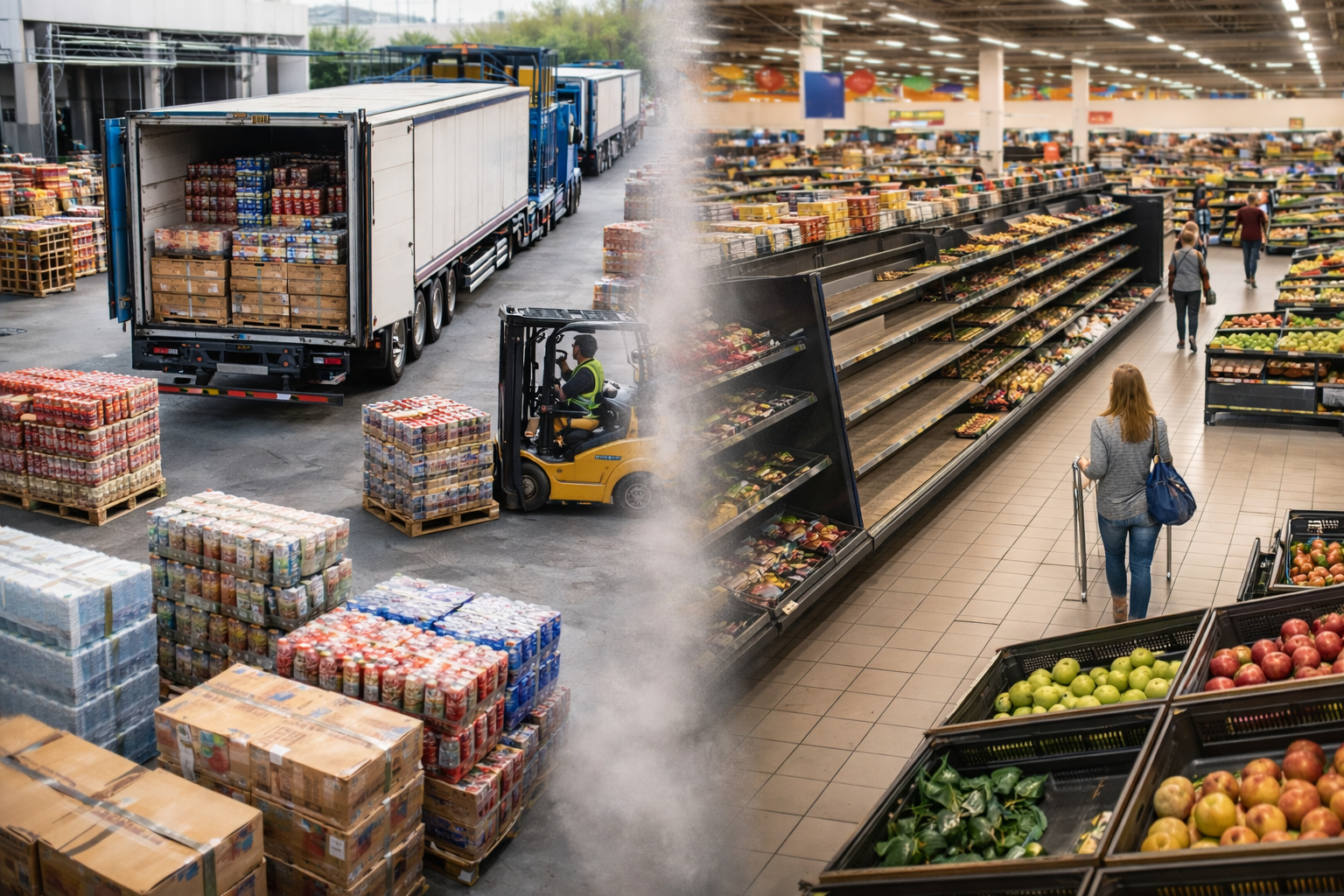


Understand How the Shortage of Workers and Automated Systems Are Halting Deliveries and Affecting In-Store Supply
Trucks loaded, distribution centers stocked, and yet empty shelves have become a concern for major supermarket chains since the second half of 2024. The scenario, which at first glance seems contradictory, reveals a growing problem in the supply chain.
According to sector analyses released throughout 2025 by retail entities and the National Confederation of Trade (CNC), the obstacle is not a lack of stock. The main cause lies in the combination of labor shortage and accelerated automation in logistics, which has been halting entire operations and preventing available products from reaching the stores.

Operational Investigation Reveals Digital Bottlenecks in Logistics
Since 2023, companies have intensified investments in automated systems to increase efficiency and reduce operational failures. As a result, processes that previously depended on quick decisions by teams have come to rely on digital authorizations and integrated platforms.
-
Brazil’s Lula Government Allocates $463 Million Quota for Electric Car Parts, Waives Import Tax Until December, Sparking Competition Among BYD, Automakers, and Unions as Consumers Question Impact on Prices and Local Industry

-
Clarification and Right of Reply Notice

-
Elon Musk Becomes World’s First Trillionaire with $1.1 Trillion Fortune; Could This End Global Hunger?
-
Brazilian Executive Takes Helm of Heineken Amid Decline in Sales: 51-Year-Old Has Led Operations Across Four Continents and Managed a $7 Billion Empire




When data inconsistencies arise, trucks are blocked in internal systems. Similarly, when platforms fail to communicate correctly, deliveries are automatically suspended. Thus, even though the goods are ready to be shipped, the operational flow is interrupted by digital locks.
Sector reports published in 2025 by logistics experts emphasize that the problem is not the absence of product. The critical point lies in the blockage of operational flow.
Direct Impacts on In-Store Supply
As a result, perishable products remain in distribution centers longer than expected. At the same time, delayed deliveries reduce the variety available on the shelves.
Consumers find fewer options, even with stock available in warehouses. Meanwhile, the reduction of teams in logistics and retail has worsened the scenario.
Since 2024, lean teams have begun operating with less margin for unforeseen events. As such, any technological failure quickly becomes an operational crisis. Experts warn that efficiency cannot mean structural fragility, especially in a sector that relies on continuous flow.
Automation Requires Balance with Human Supervision
Automation has brought significant gains, such as reduction of operational errors, better inventory control, and logistical traceability. These advances have contributed to raising efficiency standards in the supermarket sector.
However, the limitation of human oversight has increased vulnerabilities. Without alternative plans or room for emergency manual decisions, systemic failures can end up paralyzing entire deliveries.
Retail entities emphasized throughout 2025 that technological modernization must be accompanied by clear contingency protocols. The goal is to avoid complete blockages in the supply chain.
Process Review Enters the Retail Agenda
In food supply, delays directly impact the end consumer. Furthermore, they affect the perception of trust in supermarket chains.
For this reason, experts advocate for the balance between technology and active human supervision as a crucial factor for operational stability. In light of recent episodes, chains have begun internal reviews of logistical processes.
Companies have also started to discuss contingency mechanisms to mitigate risks and reduce exclusive reliance on digital systems. The sector recognizes that innovation is essential but admits that strategic human decisions remain indispensable.
Otherwise, even with full trucks and stocked distribution centers, the shelves may continue to remain empty, keeping the logistical challenge as one of the main points of attention for retail.
Given this scenario, should the sector further prioritize automation or reinforce the strategic role of human teams to ensure stability in supply?





Um país onde os empresários pagam mal o funcionário, não tem plano de carreira, não querem investir em treinamento e formação. Agora não podem reclamar
Creio que o problema está localizado nos mesmos pontos de outros seguimentos. Um Plano de Contingência claro, rápido, e de fácil acionamento.
Se alguém me desse uma chance para trabalhar eu faria um bom trabalho mas…