






 Portuguese
  Spanish
 3 min of reading
  0 comments


Researcher from UFC Identifies Rare Optical Effect in Quixeramobim, Marking Historical Discovery in Global Mineralogy
The Ceará gained international prominence in 2024 with a scientific revelation of great impact. Furthermore, researcher Isaac Gomes de Oliveira, a PhD in geology from the Federal University of Ceará (UFC), identified crystals in the Sertão Central, in Quixeramobim, with unprecedented optical properties.
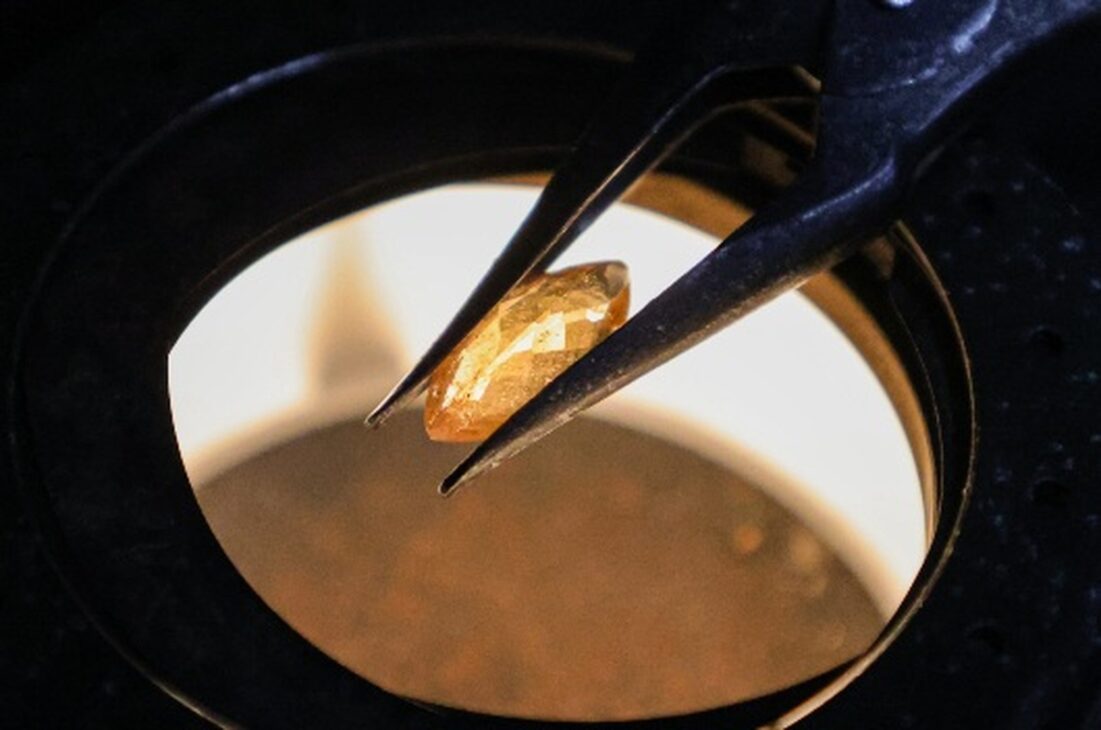
Thus, Isaac used a device created during his undergraduate studies. In this way, the equipment, aimed at gem analysis, allowed for the documentation of an entirely new optical phenomenon.
Unprecedented Optical Phenomenon Documented
During the studies conducted in April 2024, the crystals were analyzed under light incidence. Consequently, propagation occurred in multiple directions of vibration.
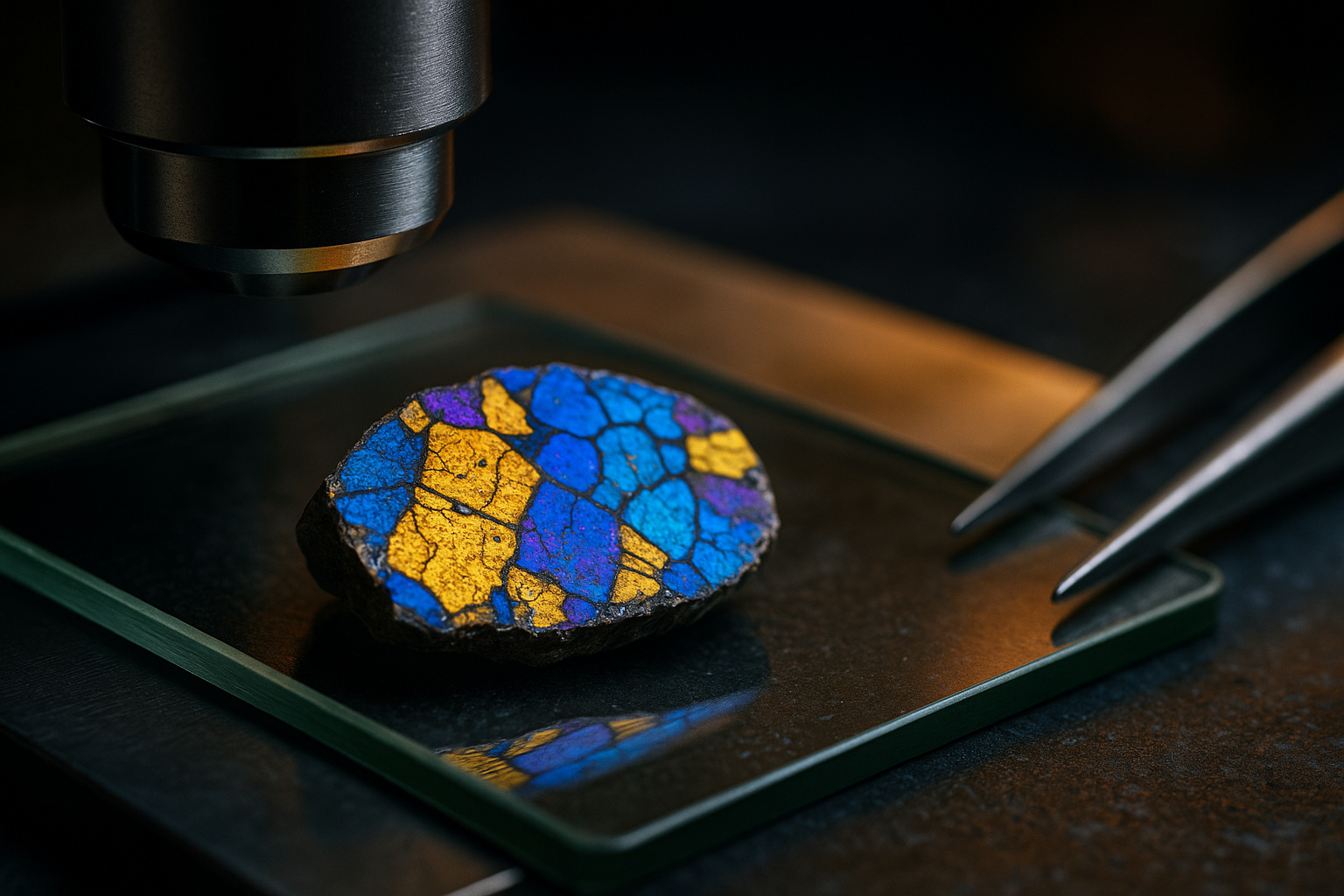
This effect generated an unprecedented chromatic overlay. Therefore, the combination resulted in simultaneous and unique colors. The researcher named the phenomenon “mosaic”.
Moreover, the naming was due to the fact that the shades of blue, yellow, and purple appeared together in the analyses, in a consistent and surprising manner.
Therefore, according to Isaac, this discovery could transform future applications in optical technology, expanding academic research and also industrial innovations.
Technical Investigation and Scientific Support
The research received support from experts at UFC, University of Campinas (Unicamp), and University of British Columbia (UBC), in Canada. Thus, this cooperation strengthened the credibility of the results.
According to Isaac, “the discovery of the new interference figure, called mosaic, represents an unprecedented phenomenon in mineralogy”.
Additionally, he emphasized that, after about 70 years, finally an unprecedented optical effect was documented, resulting from the interaction between order and disorder in crystals.
In this way, this condition generates a complex overlay of colors and patterns, profoundly altering the scientific understanding of the interaction of light with minerals.
-
More than 100 scientists warn of a new era of persistent droughts in India, China, the United States, the Mediterranean, and parts of Africa, with rivers under stress and the risk of continuous water shortages.

-
Solar buoys with ultrasound arrive at the Tietê River to try to curb the advance of algae, monitor water quality, and protect areas used by tourists, fishermen, and residents.
-
3D printers become a business in the hands of two students from Manaus and reveal early talent for entrepreneurship
-
China took 46 years to surround its largest desert with a 3,000-kilometer green belt, but the megaproject against sandstorms still faces drought, low tree survival, and advancing desertification in the Taklamakan.





Impacts for Science and Technology
As a result, the observed effects expand understanding of the atomic structure of minerals. Furthermore, they can generate impacts in gemology, crystallography, and optical physics.
Thus, the advancement paves the way for new technological applications related to light control, especially in sectors of scientific and industrial innovation.
Finally, the discovery positions Ceará as a center of global scientific relevance, strengthening Brazil’s role in mineral research and technological advancements.
The Future of Research in Ceará
Since May 2024, investigations have continued with detailed analyses and constant reviews. In addition, researchers are working on international publications to definitively validate the phenomenon.
Thus, the uniqueness attracts global attention. In this way, the phenomenon could mark a turning point in the study of the interaction between light and minerals.
Finally, experts believe that this advancement will consolidate Brazil as a reference in discoveries that merge science, innovation, and optical technology.
And you, do you believe that the phenomenon discovered in the Ceará hinterland should be prioritized for technological advancements or kept in the academic field to deepen scientific knowledge?






-

-

-

-

-

16 people reacted to this.