






 Portuguese
  Spanish


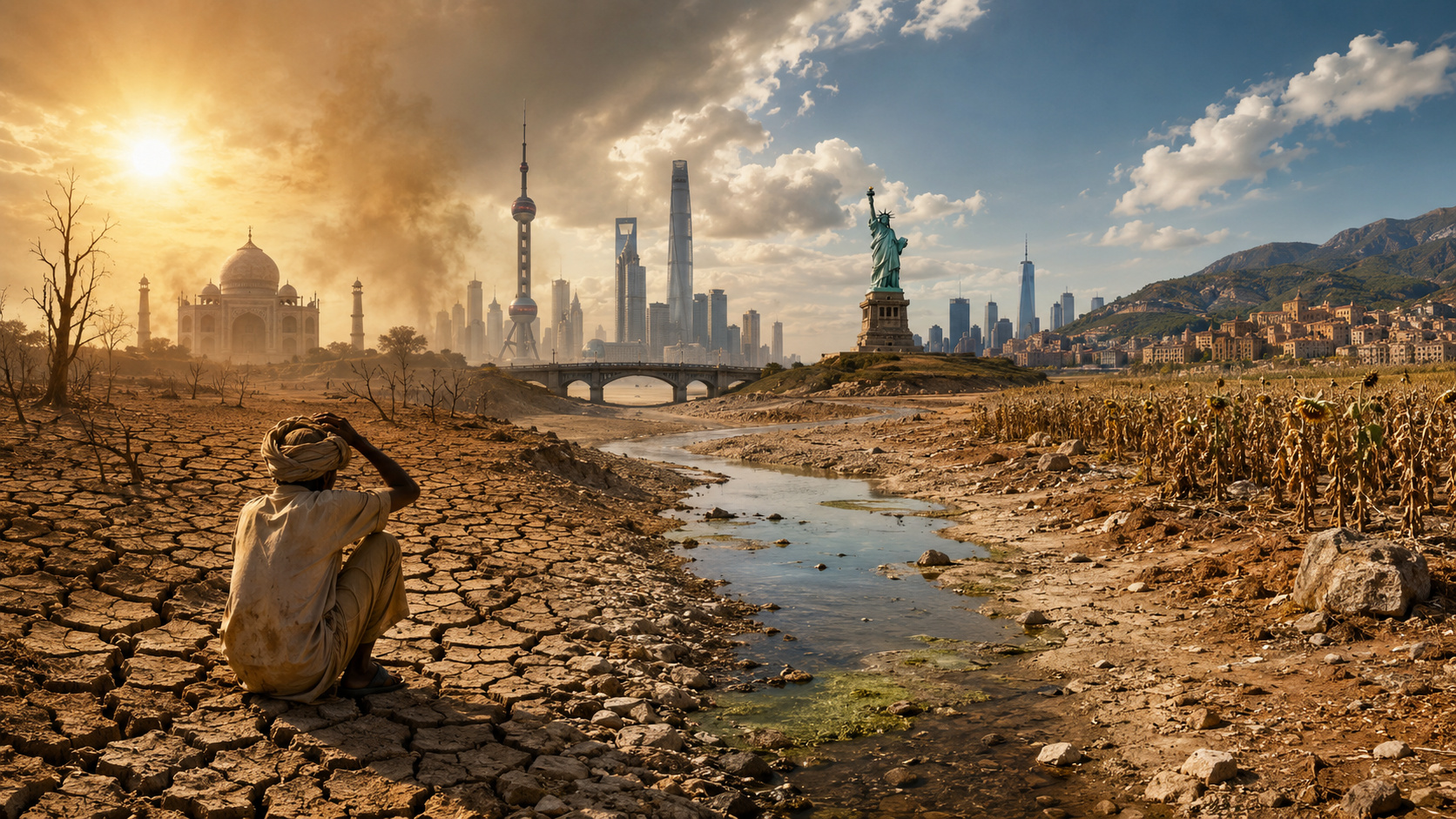

Study published in Nature Communications indicates that persistent droughts may affect large regions by 2100, with increasing risk to water, rivers, agriculture, and energy.
A study published in Nature Communications on September 23, 2025 raised the alarm about global water security by indicating that large regions of the planet may face persistent droughts and extreme water scarcity by 2100. The research used 100 ensemble members of CESM2-LE in the main analysis and incorporated simulations from CNRM to test the sensitivity of the results in different climate and socioeconomic scenarios.
The central point of the work is that the future crisis should not appear only as isolated drought episodes. The study indicates an advance of longer, continuous, and difficult-to-reverse conditions, with simultaneous reduction in rainfall, decrease in river flow, increase in evapotranspiration, and growing human demand pressure on the available supply.
Persistent drought and water scarcity may affect large regions before the end of the century
The research identifies the emergence of what the authors call Day Zero Drought, a type of extreme water scarcity where the combination of prolonged precipitation deficit, reduced river flow, and high consumption pushes supply systems to critical levels. Instead of a short event, the projected risk is of a multi-year and structural condition.
-
A fossil kept for years in a small museum in Montreal concealed 450-million-year-old soft tissue, a discovery that has only happened once before in history.

-
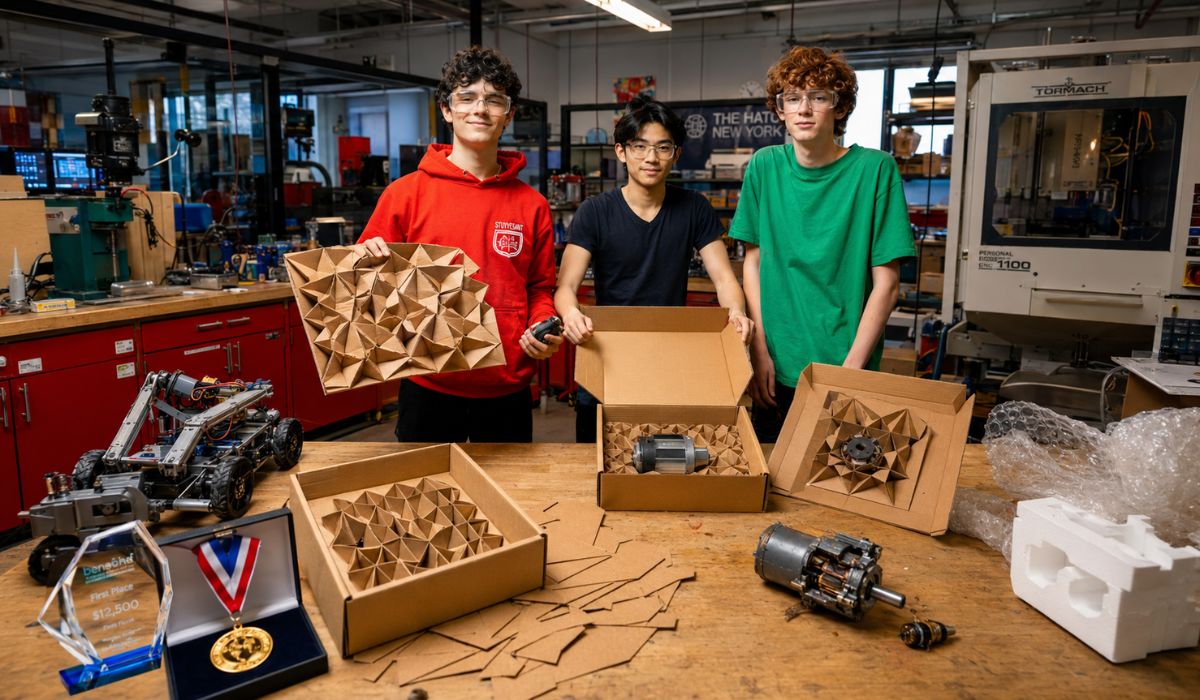
Three teenagers transform cut cardboard into Japanese origami-style packaging that promises to retire styrofoam and bubble wrap, win a $12,500 prize, and target giants like Amazon, FedEx, and Home Depot after a robot motor arrived broken.

-
The large jar blender has a rival: Oster Ultra Power bets on 1,000 W, six stainless steel blades, and two portable cups with leak-proof lids.

-
Tesla injected an additional $250 million into the German factory, doubled the battery cell target, and opened its own production line for startups.




According to the analysis released by Phys.org based on the study, the risk could affect almost three-quarters of drought-prone regions by 2100, even with differences between climate scenarios. This helps to show that the threat is not limited to a few countries but spreads across various strategic areas of the planet.
India, China, United States, Mediterranean, and Africa appear among the main hotspots
The study highlights critical areas such as the western United States, the Mediterranean region, northern and southern Africa, India, northern China, and southern Australia. In these regions, models project an intensification of water scarcity due to the combination of lower supply and higher consumption pressure.
These hotspots concentrate large populations, intensive agriculture, major urban centers, and already pressured water systems. This increases the potential impact on supply, irrigation, economic stability, and long-term planning.
Rivers, reservoirs, and water supply enter a zone of chronic stress
One of the most important points of the study is the imbalance between water supply and demand. The authors combined indicators of balance between precipitation and evapotranspiration, river flow, water scarcity, and reservoir depletion time to show that, in several regions, human pressure tends to increasingly surpass the natural replenishment capacity.
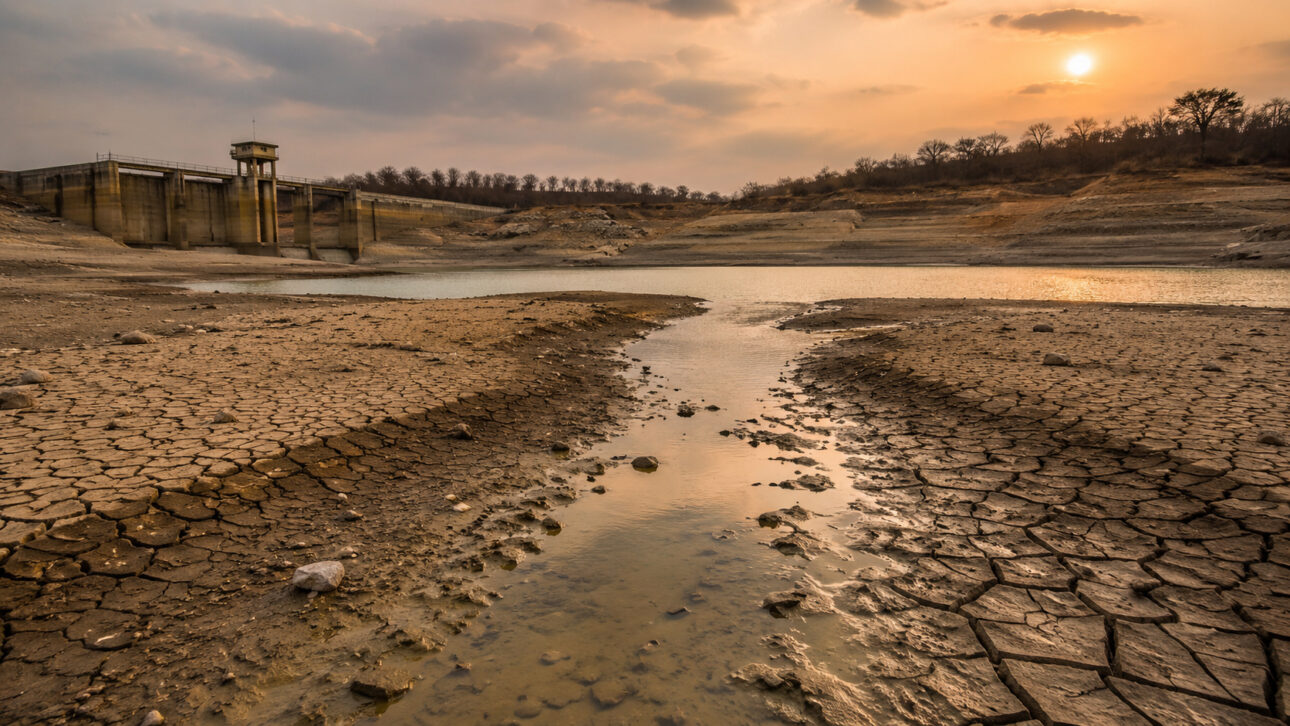
The work shows that reliance on reservoirs can mask the problem for some time but also increase vulnerability when droughts are prolonged. In a scenario of continuous deficit, stored water ceases to function as a buffer and begins to accelerate exposure to water collapse.
Future droughts tend to last longer and have less recovery time
The most important difference compared to traditional droughts is the duration. The study projects more severe multi-year droughts, with shorter recovery intervals between episodes. This transforms drought into a persistent condition, not just a temporary climate anomaly.
According to the authors, by the end of the century, almost all regions evaluated under warmer scenarios present a high risk of severe and pronounced drought. This indicates that the future trend is not only for more intense events but for a structural change in how water stress is distributed over time.
Climate change alters the water cycle and increases rainfall irregularity
The study directly links the advancement of water scarcity to global warming. The increase in temperature intensifies evapotranspiration, modifies atmospheric circulation, and alters precipitation distribution, making the hydrological cycle more unstable.

In some regions, this means less rain and lower flow. In others, it can mean more unstable extremes, with prolonged dry periods alternating with intense precipitation events, but without sufficient replenishment of water stocks. This irregularity complicates storage, management, and planning.
Agriculture, energy, and supply are among the most vulnerable sectors
The reduction in water availability tends to directly pressure irrigated agriculture, food production, and industrial use. Regions already dependent on seasonal rainfall or large river systems become more exposed when the imbalance between consumption and supply becomes permanent.
The impact also reaches energy generation, especially in systems that depend on reservoirs and large volumes of water. When rivers lose flow and reservoirs recede, the water crisis ceases to be just an environmental problem and starts affecting production, prices, and economic security.
Lower emission scenarios reduce damage, but do not eliminate risk
The authors make it clear that the water future still depends on the global climate trajectory. In higher emission scenarios, the impacts appear with greater extent, severity, and duration. In mitigation scenarios, the risks continue to exist, but with less magnitude.
According to Phys.org, even in scenarios compatible with the 1.5°C target, hundreds of millions of people may still face unprecedented water scarcity. This reinforces that mitigation reduces damage but does not replace the need for local adaptation, efficient management, and institutional preparation.
The study warns that drought may cease to be an event and become a condition
The main message of the work is that future drought may cease to be interpreted as an episodic event and start functioning as a persistent condition in various regions of the planet. When this happens, the pressure spreads to rivers, reservoirs, cities, agriculture, energy, and social stability simultaneously.
Instead of just asking when the next drought will come, the study forces a tougher question: what happens when recovery between droughts ceases to exist in parts of the world? It is this change in scale and duration that transforms the current water alert into a structural risk for the 21st century.


