






 Portuguese
  Spanish
  4 min of reading
  0 comments


Pilot project in Sabino foresees 14 solar devices, real-time monitoring, and continuous analysis of water quality in an area equivalent to 130 football fields
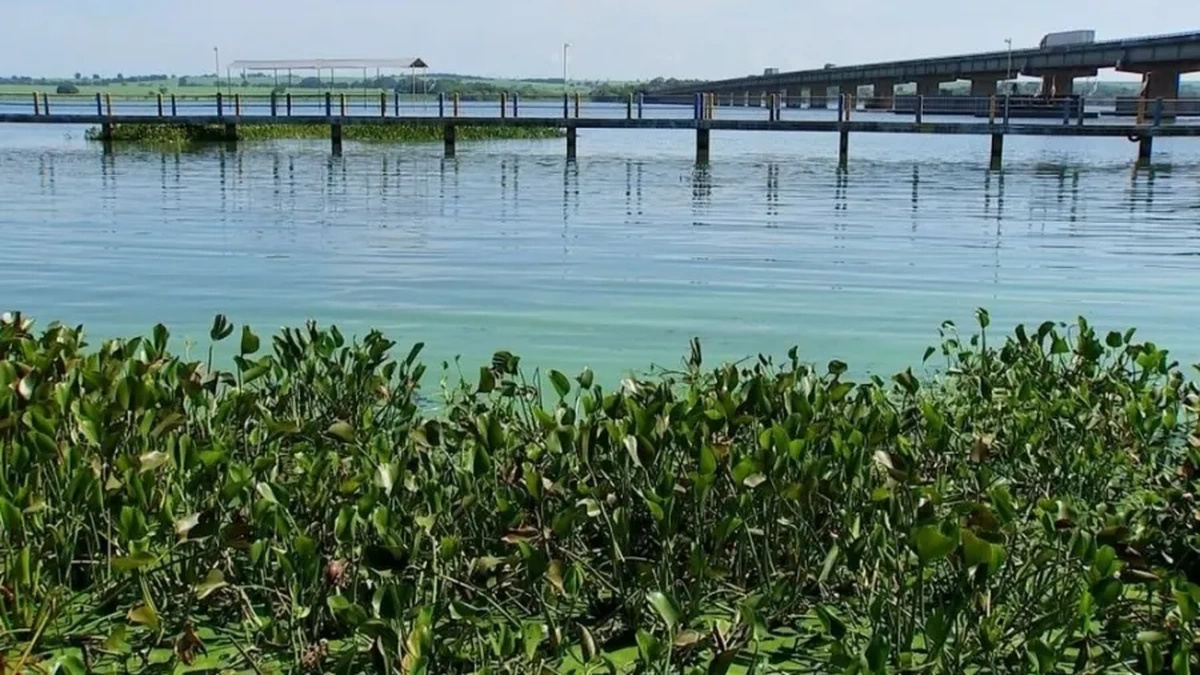
Cetesb will implement, in August 2026, a system of intelligent buoys with ultrasonic waves to reduce the proliferation of algae in the Tietê River, in the interior of São Paulo. The pilot project will be installed in the Esgotão Stream, in Sabino, a municipality located 472 km from the capital of São Paulo, in an area marked by the formation of greenish patches known as “green scum”.
The measure is part of the IntegraTietê Program and targets a problem that affects tourism, fishing, leisure, and navigation in sections of the river. According to information from Cetesb, Agência SP, and Agência Estado, the region between Barra Bonita and Sabino experiences intense episodes of algae and water hyacinths during periods of low flow.
Intelligent buoys arrive at Tietê with solar and ultrasound technology
The project foresees the installation of 14 interconnected intelligent buoys, capable of emitting ultrasonic waves and continuously monitoring the water. Additionally, the equipment will operate with solar energy and lithium batteries, without the application of chemical products.
-
More than 100 scientists warn of a new era of persistent droughts in India, China, the United States, the Mediterranean, and parts of Africa, with rivers under stress and the risk of continuous water shortages.

-
3D printers become a business in the hands of two students from Manaus and reveal early talent for entrepreneurship
-
China took 46 years to surround its largest desert with a 3,000-kilometer green belt, but the megaproject against sandstorms still faces drought, low tree survival, and advancing desertification in the Taklamakan.

-
Desert sand, previously discarded by construction, becomes an ecological brick in the United Arab Emirates, using slag and industrial ash, reducing dependence on Portland cement and making a bold bet to cut carbon without kilns or thermal curing in an experimental scale.



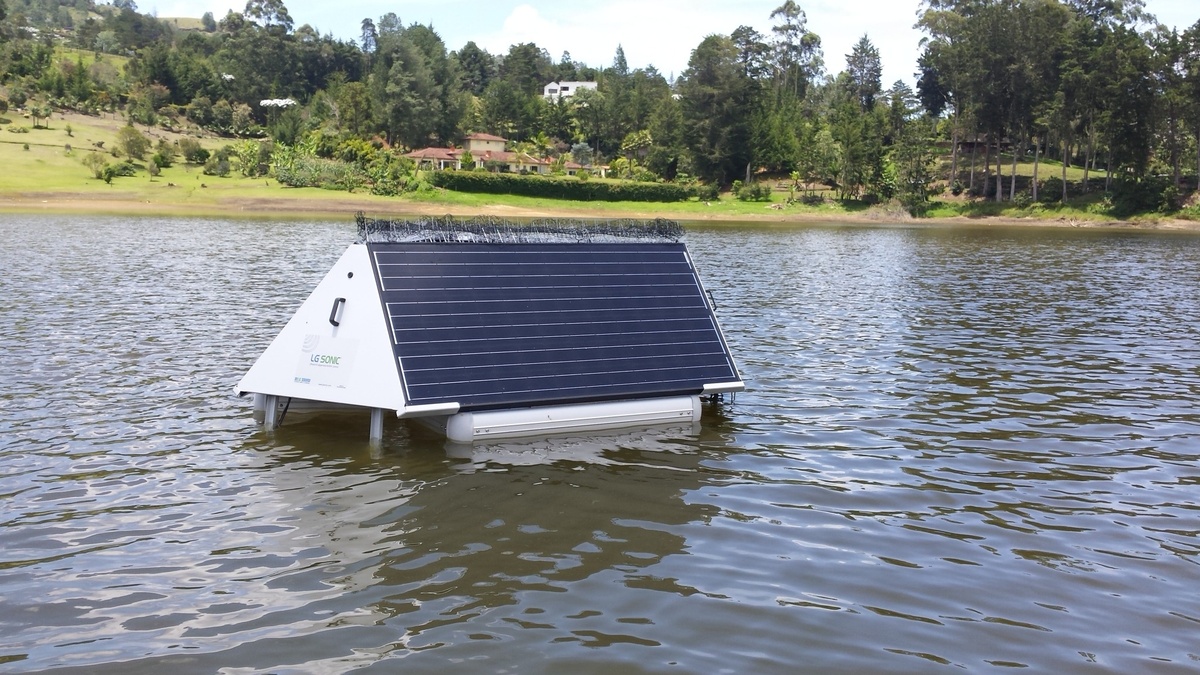
The technology was developed in the Netherlands and is already operating in more than 60 countries, according to Cetesb. Therefore, the choice seeks to combine performance in large areas, low environmental impact, and technical response to the advancement of blooms.
With an estimated investment of R$ 9 million, the system is expected to show the first results within 90 days after the start of operation. The monitored area is equivalent to 130 soccer fields, with enough volume to fill 2,800 Olympic swimming pools.

How ultrasound aims to reduce algae formation
The buoys emit ultrasonic waves at different frequencies to interfere with the flotation of algae. As a result, the organisms find it more difficult to remain on the water’s surface.
On the surface, algae receive sunlight and perform photosynthesis. Therefore, when they migrate to deeper layers, they lose favorable conditions to continue multiplying.
Each buoy will have a range of approximately 500 meters in diameter. Thus, each piece of equipment will cover an area similar to 28 soccer fields.
Additionally, algorithms will automatically adjust the frequency and intensity of the waves according to the conditions observed in the aquatic environment.
Sabino was chosen for its history of blooms and tourist relevance
The city of Sabino received the pilot project because it has characteristics considered suitable by Cetesb. The region has a history of blooms, a consistent base of environmental data, and importance for leisure, tourism, and fishing activities.
According to the CEO of Cetesb, Thomaz Toledo, these factors allow for the evaluation of environmental results and the benefits perceived by the population. Thus, the test will be able to measure the technology’s efficiency in a real situation.
Sensors will monitor oxygen, pH, turbidity, and temperature
The buoys will also act as automatic monitoring stations. The sensors will monitor indicators such as dissolved oxygen, pH, turbidity, temperature, chlorophyll, and phycocyanin.
Additionally, the project will include a meteorological station to cross-reference data on rain, wind, and temperature. This way, technicians will be able to identify conditions favorable to the emergence of blooms.
Excess nutrients cause the so-called “green scum”
The formation of greenish patches is linked to the excess of nutrients in the water, a process known as eutrophication. Additionally, heat and increased sunlight incidence favor the accelerated multiplication of algae and cyanobacteria.
This phenomenon harms the visual aspect of the river and can affect the water quality. Consequently, fishing, fish farming, nautical sports, and leisure activities may also suffer impacts.
Tietê Beaches Will Have Satellite Data and Artificial Intelligence
In addition to algae control, Cetesb announced a tool to check the bathing conditions of the Tietê River beaches. The initiative will use satellite images and artificial intelligence to monitor public beaches in rivers and reservoirs.
The results will be published weekly on a panel open to the public. Initially, the system will monitor eight beaches in three reservoirs.
In Barra Bonita, the beaches of Anhembi and Rio Bonito in Botucatu will be included. In Ibitinga, areas in Arealva and Iacanga will be monitored. In Promissão, the technology will monitor beaches in Mendonça, Sales, Ubarana, and Sabino.
Thus, the project combines environmental control, real-time monitoring, and public information in an attempt to reduce the impact of algae on the Tietê.







Be the first to react!