Portuguese
  Spanish


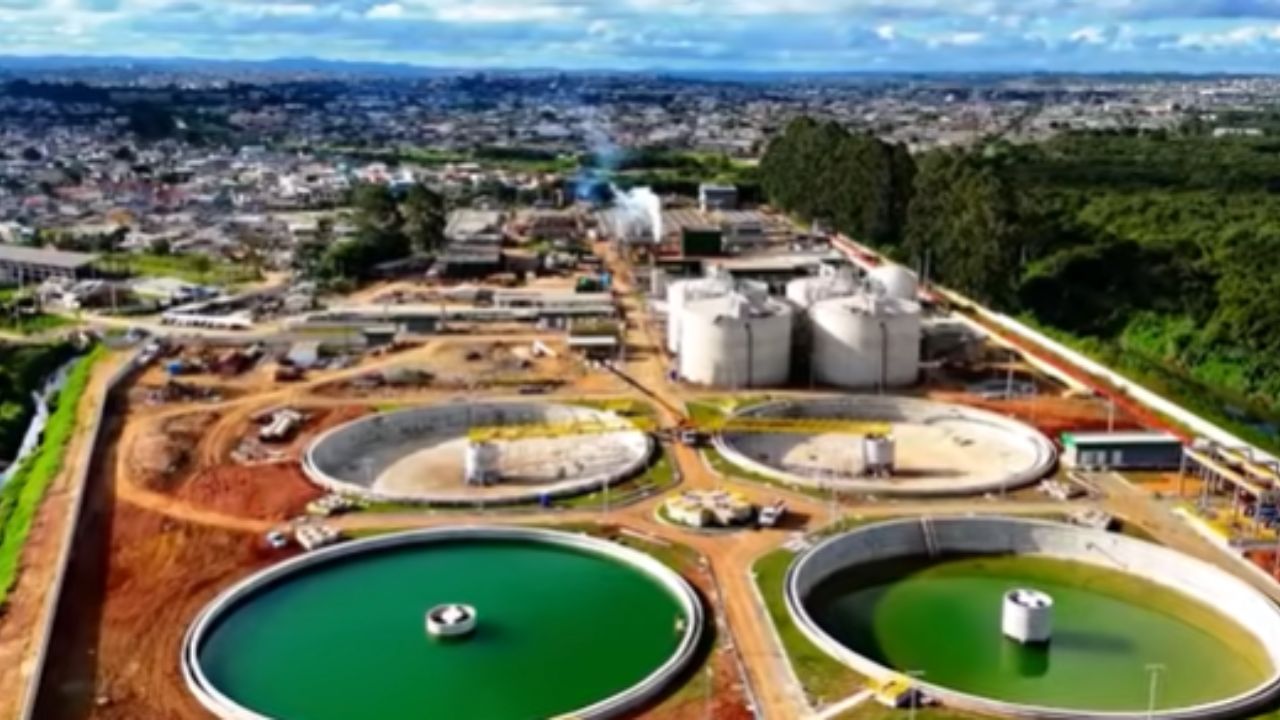

With Technology Capable of Generating Its Own Energy, the Expansion of ETE Atuba Sul Consolidates the Largest Sanitation Project in the Region, Benefiting 1 Million People.
Imagine turning on the faucet and knowing that, behind that flow of clean water, there is engineering of gigantic proportions quietly operating underground. This is exactly the scenario unfolding in Curitiba, where the largest sanitation project in southern Brazil is underway. According to detailed data from the Construction Time channel, the expansion of the Wastewater Treatment Station (ETE) Atuba Sul is not just a renovation, but a complete reengineering that mixes biology, public management, and high technology.
Located at the strategic boundary between the state capital and Pinhais, the structure receives a financial investment exceeding R$ 300 million. The objective is clear: to transform what no one wants to see into efficiency and sustainability. According to information gathered by Construction Time, this is the largest sanitation project in progress in the region, designed to ensure that the system operates 24 hours a day without interruptions, serving a population of more than 1 million residents with an unprecedented environmental excellence standard.
A 40% Increase in Treatment Capacity
The magnitude of the project impresses with its numbers and logistics. Currently, the system treats about 1,680 liters per second, a volume sufficient to fill an Olympic swimming pool every four minutes. However, with the completion of the largest sanitation project in the state, this capacity will jump to 2,100 liters per second, representing an increase of approximately 40% in total processing capacity.
-
Woman Turns Shipping Container into Home, Embraces Rural Life to Cut Monthly Expenses to Just Over $330

-
France Revamps 530 Social Housing Units with Large Balconies and Glass Facades Without Demolishing Existing Buildings

-
Facing high rent, couple transforms parents’ garage into a fully functional apartment, creating a complete home at a fraction of the market cost.
-
MIT Scientists Develop Method to Transform CO₂ into a Construction Ally, Boosting Cement Strength by 13% in 24 Hours for More Sustainable Infrastructure



The construction site resembles an industrial district, consisting of 42 construction units. Among the new structures, there are tanks with a capacity of nearly 8,000 m³, as well as new digestion and dehydration lines. As reported by Construction Time, the station will operate at a high efficiency standard, utilizing biological reactors equipped with air diffusers and automatic oxygen control systems, ensuring that the quality of the effluent returned to the river exceeds the required standards.
Technology That Transforms Sewage into Clean Energy
The major differentiator of this largest sanitation project in the South lies not only in concrete but in the concept of “clean industry.” The new ETE Atuba Sul was designed to reutilize the biogas generated in the reactors. This gas, primarily composed of methane, is captured, filtered, and directed to generators, converting into electricity that is reinjected into the system.
In addition to energy cogeneration, which reduces operational costs and CO2 emissions, the plant utilizes an innovative system for thermal drying of the sludge. After digestion, the waste passes through centrifuges and rotary dryers, reducing its moisture to less than 10%. This decreases the volume of the material by over 80%, facilitating transportation and enabling energy reuse or coprocessing, aligning the project with the most modern global sustainability practices.
Engineering Challenges and “Operational Coexistence”
To enable the expansion without compromising service to the public, the engineering team adopted a complex model of “operational coexistence”. This means that the new modules of the largest sanitation project are being constructed while the old plant continues to treat the city’s sewage. This synchronization required meticulous planning: each hydraulic diversion and temporary shutdown was calculated to avoid any environmental risk.
The earth movement at the site exceeded 5 million cubic meters, with the soil being stabilized with lime and cement to support structures weighing up to 2,000 tons. According to Construction Time, by October 2025, the physical advance of the project reached 93%, with total completion expected in the first half of 2026.
Total Control and Impact on Urban Future
Safety and automation are fundamental pillars of the project. The operation is monitored from an integrated control center, a climate-controlled room with videowalls where operators monitor the performance of each valve and pump in real time. The electrical system includes encapsulated transformers and shielded cabins, managed by logic controllers that automatically respond to demand spikes.
In addition to technical efficiency, the project prioritizes the well-being of the neighborhood with exhaust and biofiltration systems capable of eliminating up to 95% of perceptible odors. The investment of around R$ 300 per resident positions the largest sanitation project in the South as a model of efficient management, proving that sanitation is not an expense, but an investment that returns in health, environmental preservation, and quality of life for the coming decades.
Do you agree that investments in invisible infrastructure, such as sanitation, are just as important as major roadway projects? Do you think that this model of self-generation of energy should be standard in all cities? Share your opinion in the comments; we want to hear from those experiencing urban reality firsthand.