






 Portuguese
  Spanish


The Quarterly Index Fell 2.3% Due to a Decrease in Production and Capital Costs, Including Electricity, Fuel Oil, and Labor.
The industrial costs experienced a significant variation in the third quarter of 2023, according to the latest survey released by the National Confederation of Industry (CNI). There was a 2.3% decrease compared to the previous quarter, but costs remain at a high level, being 25.3% above pre-pandemic levels.
This reduction in industry costs is positive news for the sector; however, it is also important to pay attention to expenses and spending that directly influence the financial results of companies.
Production Costs Fall Due to Reduction in Intermediate Good Costs
According to the CNI’s economic team, the quarterly decline of 2.7% in production costs is a positive signal for the industry. However, even with this reduction, the index is still 41.5% higher than before the Covid-19 pandemic. All three components of production costs showed declines, with a highlight on the cost of intermediate goods, which fell by 3.4% and significantly contributed to the quarterly result. Despite this, the cost is still 47% higher than before the pandemic.
-
Bolivian Female Construction Workers Form Association to Combat Discrimination and 38% Pay Gap in the Industry

-
Near Amsterdam, residents buy land and discover they must also build streets, manage drainage, handle waste, and grow food on half their plot.
-
Without a mansion, without high investment, and without a traditional classroom, a teacher living in a 22 m² house taught students to build a 9 m² studio apartment with the equivalent of R$10,000.
-
Without her own home and pressured by rent, a 25-year-old bought a small 15-meter boat, gradually renovated the interior by herself, transformed the interior with paint, new flooring, a larger bathroom, and started living on the canals, paying much less per month.


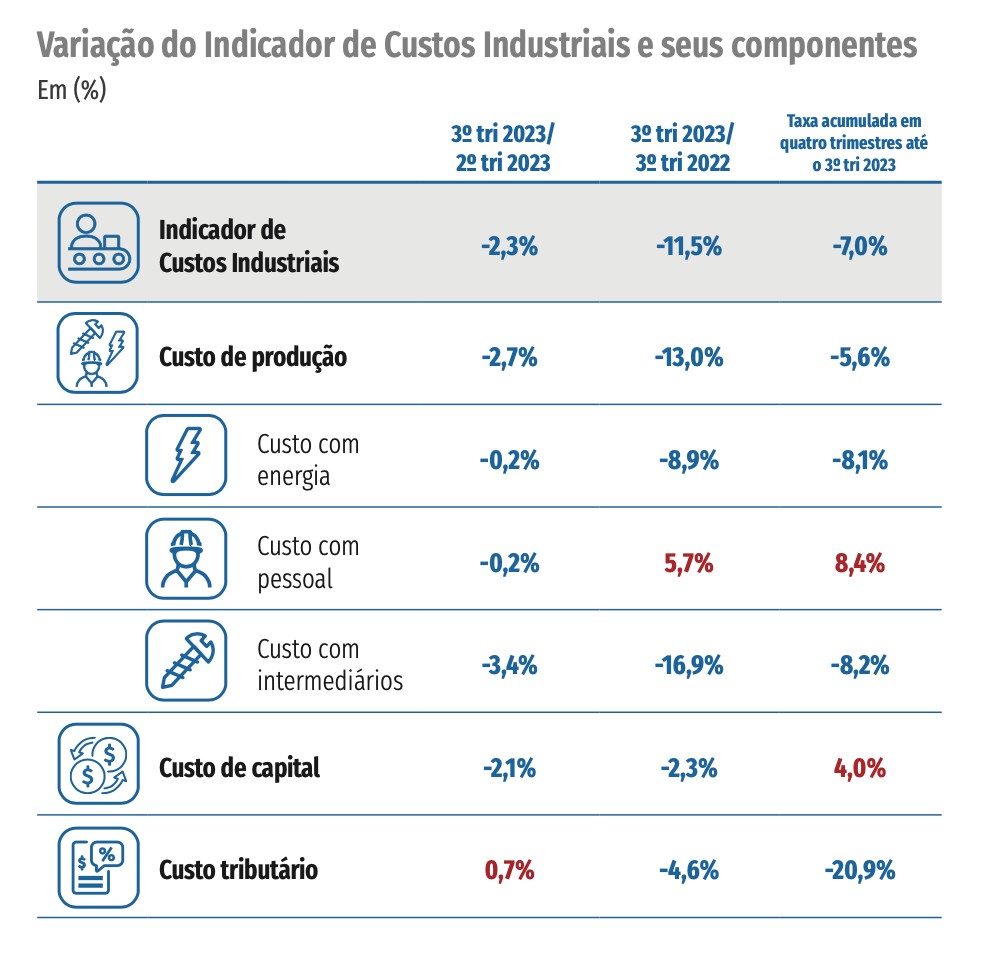
The other components of production costs recorded less significant declines. The reduction in electricity costs was 0.2% due to the decrease in natural gas prices, compensating for increases in electricity and fuel oil costs. Meanwhile, the cost of labor saw a barely noticeable decline of only 0.2%.
Decline in Capital Costs Occurs for the Second Consecutive Quarter
The released data shows that, after seven consecutive quarters of increase, there was a second consecutive decrease in the capital cost index, totaling 2.1%. According to CNI’s analysis, this decrease is related to the reduction in the basic interest rate, which saw two cuts of 0.5 percentage points during that quarter. Despite the decline, capital expenses still increased by 44.8% compared to the pre-pandemic period.
Tax Cost of Industry Is the Only Index That Shows Increase
The tax cost rose by 0.7% when comparing the third to the second quarter of 2023. This index is measured by the sum of federal and state taxes paid by the industry divided by the industrial GDP.
While federal taxes increased by 6.2%, state taxes rose by 7.2% during the period. The current values of industrial GDP also saw an increase of 6.1% in the quarter. Despite this increase, the tax cost is still at a lower level than at the beginning of 2022, but higher than what was observed before the pandemic.
Source: Portal da Indústria








Be the first to react!