





 Portuguese
  English
  Spanish
 4 min of reading
  1 comment


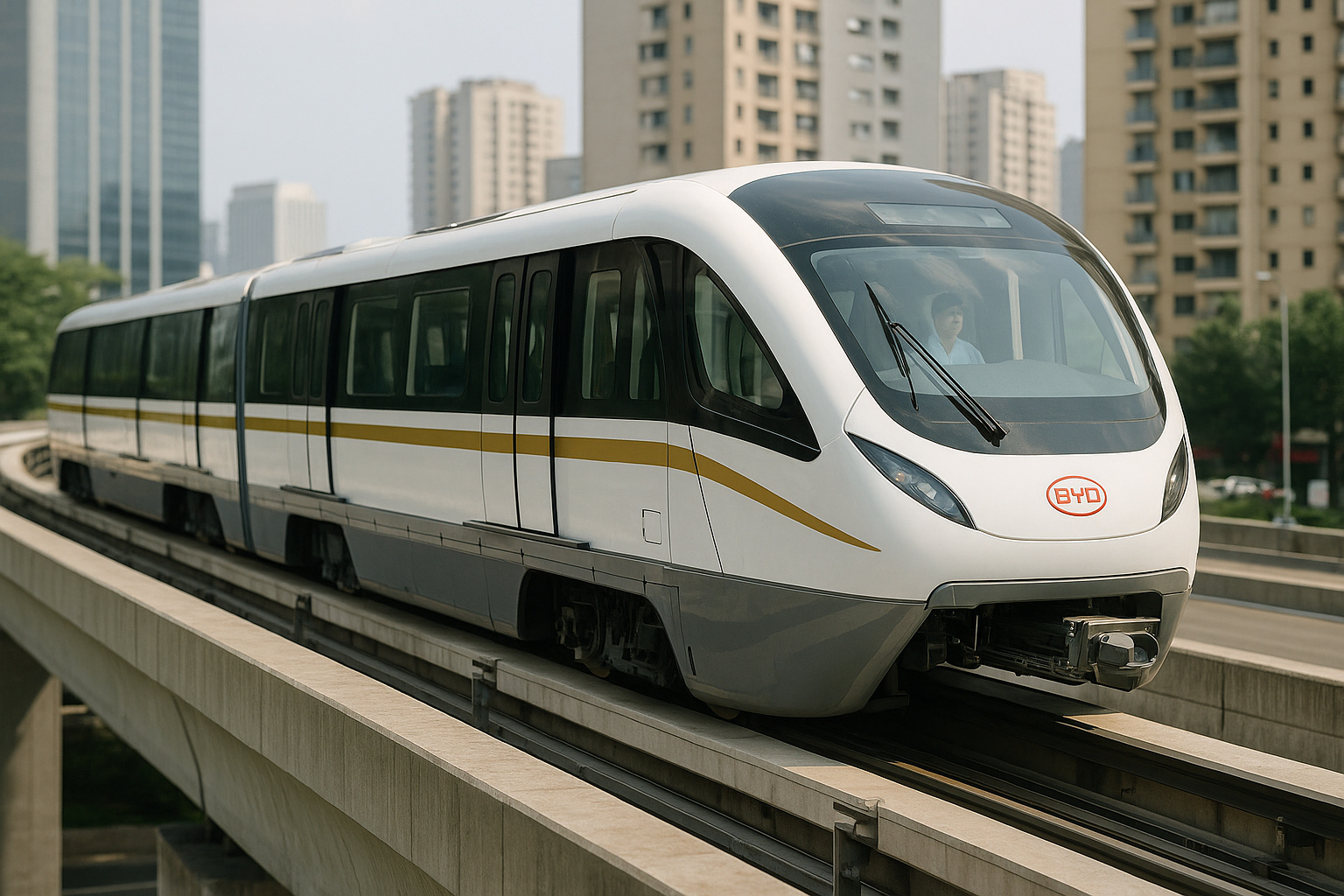


After Being Labeled A Failure In China, BYD’s SkyRail Gets A New Chance In Brazil With The Golden Line 17, A Billion-Dollar Project That Could Redefine The Future Of Urban Mobility And Recover The Global Credibility Of The Chinese Company.
The Chinese giant BYD, globally recognized for its success in the electric vehicle market, now faces a significant challenge. The company wants to prove that it can also revolutionize rail transportation. The SkyRail project, launched nearly a decade ago, came with futuristic promises but has faced difficulties since its inception in its home country.
Created in 2016 by entrepreneur Wang Chuanfu, the monorail was presented as a bet on sustainable urban mobility in China. The company invested over US$ 1 billion in the system and planned to take it to 200 Chinese cities. However, the project has only advanced in a few locations, such as Xi’an, Yinchuan, and Shenzhen, where it operates in a limited capacity.
Moreover, according to a report by Bloomberg published in October 2025, SkyRail was described as BYD’s “first major failure.” The manufacturer, which dominates the electric vehicle and battery market, still struggles to establish itself in rail transport, even though it maintains ambitious plans for global expansion.
-
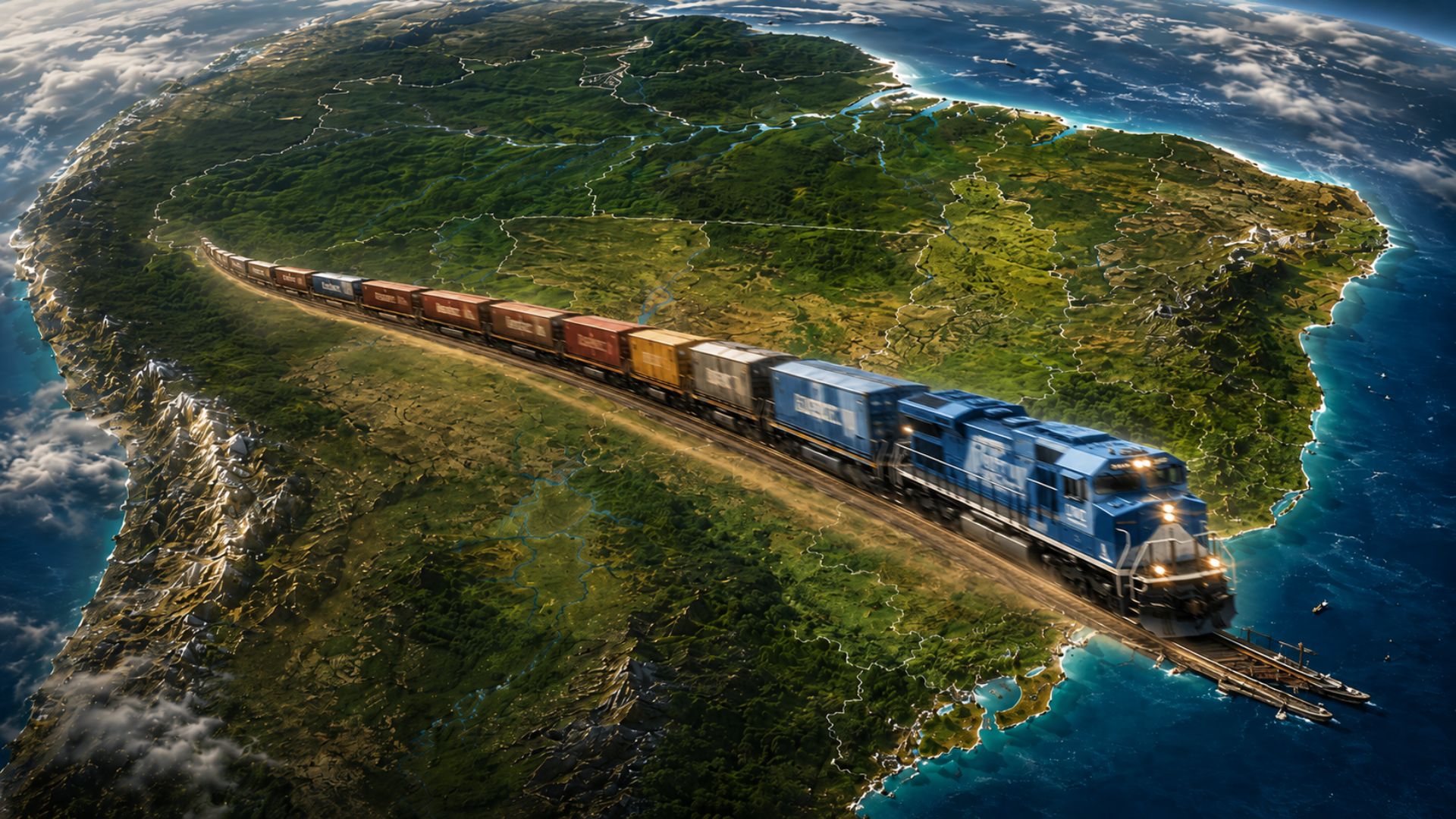
The Union will invest R$ 3.6 billion to revive the Malha Oeste, a 1,625 km abandoned railway that connects Corumbá to São Paulo, in a concession project recently approved by ANTT that promises to reconnect the Midwest to the Port of Santos and the borders with Bolivia and Paraguay.

-
Five cities in the North of Santa Catarina may once again be connected by passenger train after 35 years, in an effort that brings together municipal associations, the Joinville Chamber, and CIMU to reactivate the EF-485 and reduce the number of cars on the BR-280 and BR-116 highways.
-
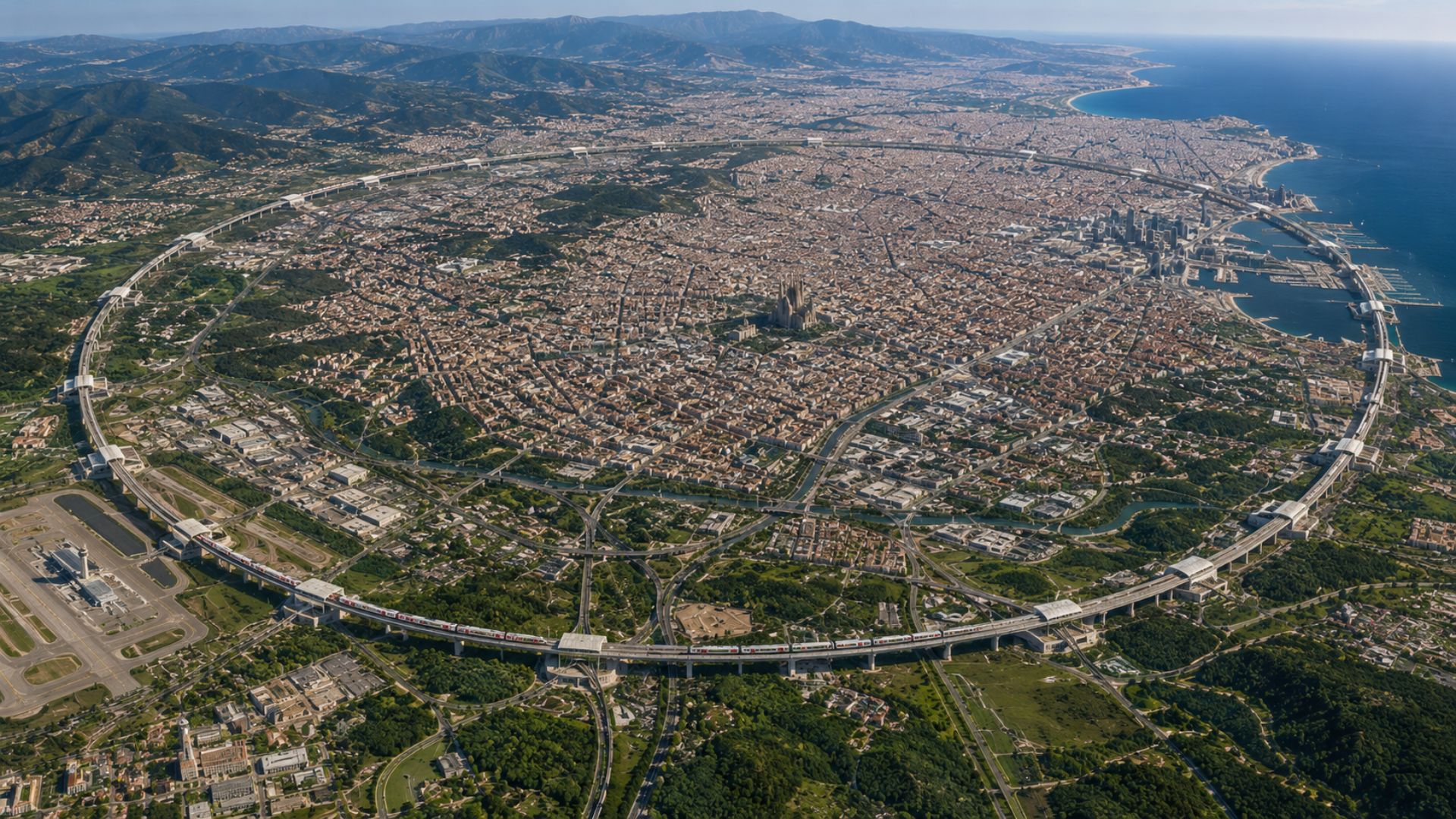
Catalonia approves a giant railway ring that will bypass Barcelona with 119 km of tracks and 39 stations, allowing passengers to cross the entire metropolis without ever needing to enter the city center.
-
To clear the railway that will connect Rio de Janeiro and Espírito Santo, Iphan wants an archaeological sweep equivalent to three times the size of the island of Fernando de Noronha, and the Ministry of Transport considers the requirement disproportionate and unfeasible.


Abandoned Stations and Rusty Trains Reveal The Deadlock In China
According to Business Standard, the expansion of SkyRail did not achieve the expected outcome. In cities such as Anyang and Guilin, there are unfinished stations and rusty trains, clear signs of disruption in the works. Additionally, the situation exposed the impact of a lack of government support and the slowing Chinese economy.
In 2021, the Chinese government suspended new funding for rail systems. The decision aimed to curb local debt, but ultimately harmed promising projects. BYD, which relied on these resources, saw its plans come to a standstill and consequently had to reformulate its strategy.
Still, the company reacted with SkyShuttle, a more compact, automated, and economical system. The model, similar to a people mover, did not attract new contracts, although it reinforced the company’s commitment to sustainable solutions. Wang Chuanfu, however, continues to advocate for a vision of modern, clean, and efficient urban transportation — and, above all, adapted to the needs of large cities.
Brazil Becomes The Stage For BYD’s Redemption
With the decline of the Chinese experience, Brazil emerged as the ideal setting for a fresh start. Thus, BYD took command of the Golden Line 17 of the São Paulo Metro, a project that had been stalled for years following the bankruptcy of the Malaysian Scomi, the former train supplier.
The Chinese manufacturer inherited the challenge of adapting SkyRail to the existing infrastructure and also installing signaling, control, and platform door systems. Therefore, the contract, valued at R$ 989 million, calls for 14 trains with five cars, 60.8 meters long, and capable of carrying 616 passengers. Additionally, the agreement includes the execution of infrastructure associated with the system, reinforcing BYD’s commitment to delivery.
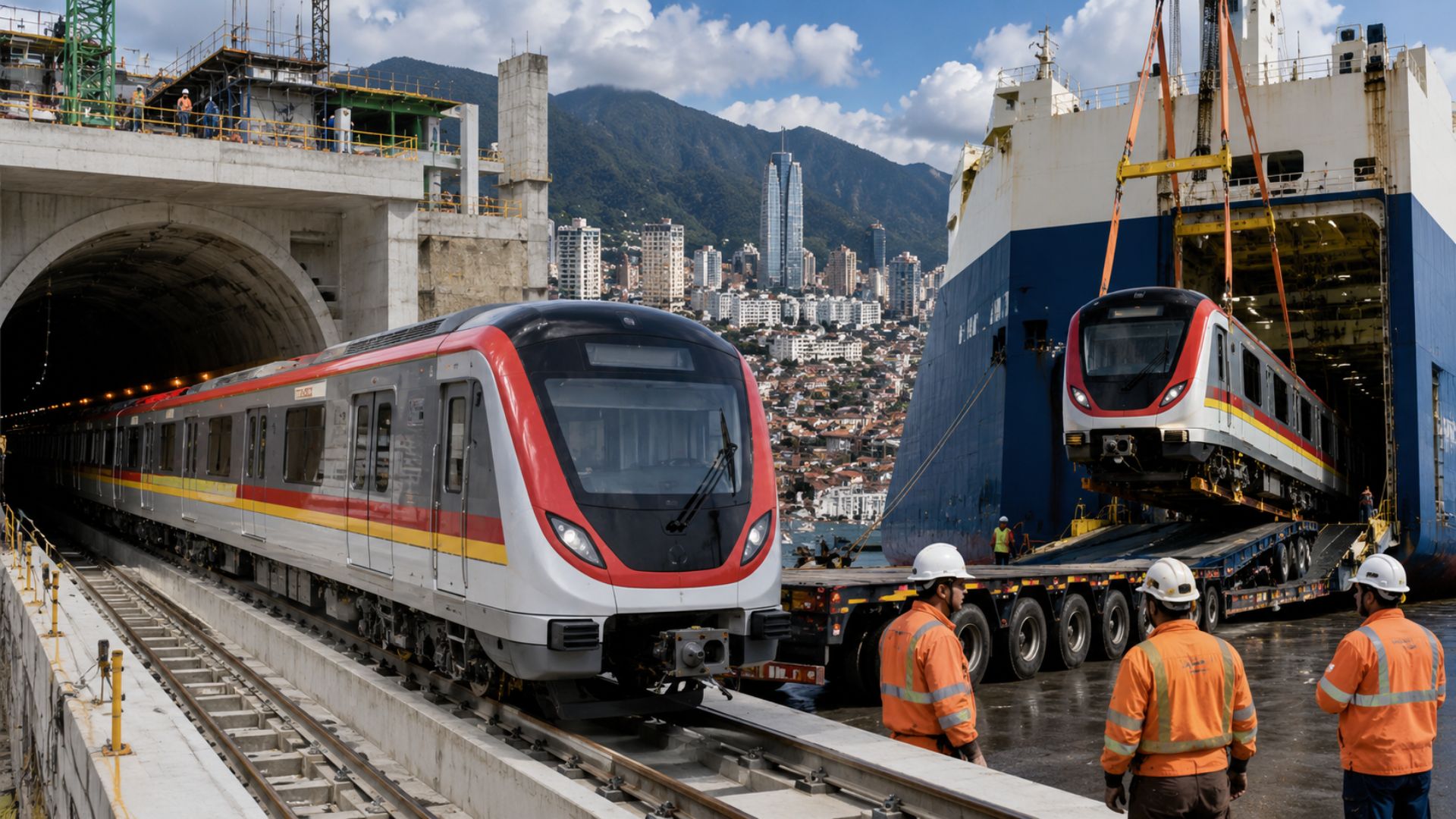
The first train arrived at the Port of Santos in July 2024, while the second disembarked in December of the same year, according to São Paulo Metro. The expectation is that the system will start operations in March 2026, becoming the first functional SkyRail outside Asia. In this way, BYD aims to show the world that the project can succeed when well-structured.
Golden Line 17 Represents Technical Challenge and Commercial Hope
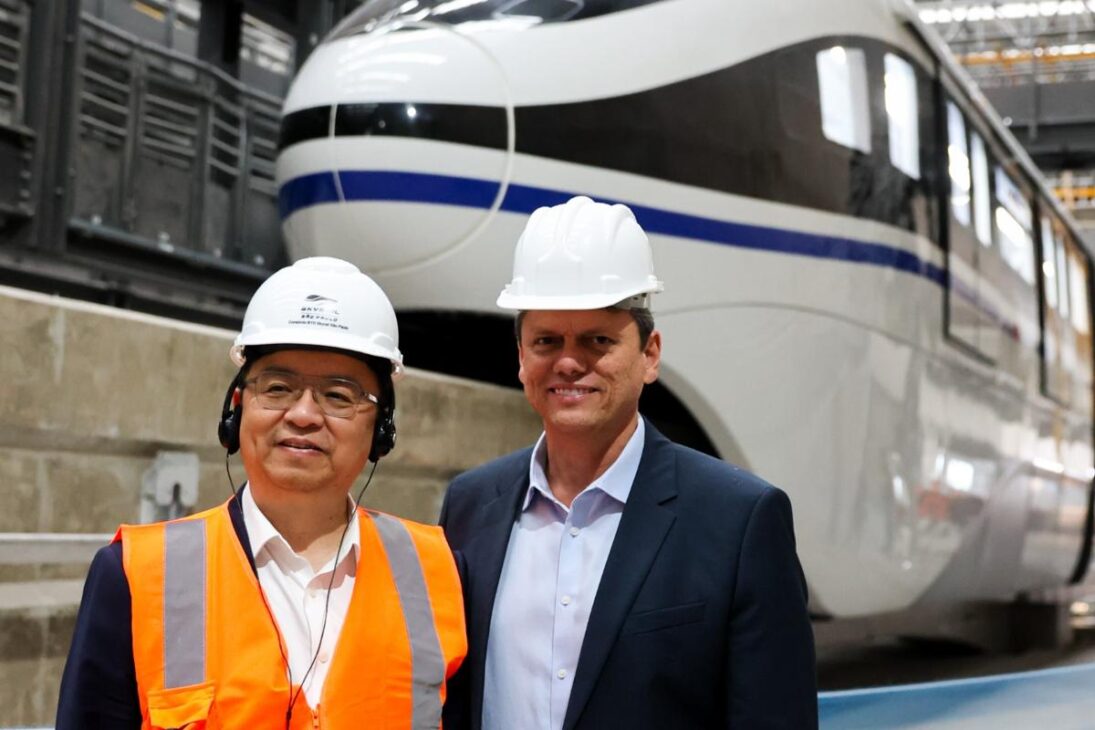
Despite the enthusiasm, the path to 2026 still presents many technical challenges. The Brazilian monorail needed adaptations to function on a guide beam designed for another model. Furthermore, BYD needs to regain public trust, shaken by issues with the Silver Line 15, which faced failures and delays.
Even with these obstacles, the company shows consistent progress. According to recent reports from the São Paulo government, there is constant progress in the works and weekly improvements in the system. Thus, the goal is to transform the former “cursed project” into a symbol of technological efficiency and overcoming.
According to the secretary of Metropolitan Transport in São Paulo, the new monorail should connect Morumbi to Congonhas Airport, reducing travel time and linking essential economic hubs of the capital. Moreover, the integration of the system is expected to boost the local economy and attract new investments in mobility.
From Failure to Redemption: What’s at Stake for BYD
The performance of the Golden Line 17 could define the future of BYD in the rail sector. If the project succeeds, the company will be able to reverse the stigma of SkyRail and open doors for new international contracts. However, if the system fails, the risk of solidifying the image of a failed billion-dollar investment will increase considerably.
Wang Chuanfu, recognized for his persistence and for transforming BYD into a global powerhouse, recently stated that the Golden Line will mark the beginning of a new technological era. For him, Brazil is “the ideal showcase” to prove that SkyRail can be efficient, sustainable, and profitable, even in challenging contexts.
With the opening scheduled for March 2026, the country is preparing to discover if the train of the future will truly leave behind the image of abandonment and finally win over Brazilian passengers. In this way, BYD aims to transform an old failure into national pride and shows that persistence and innovation are still viable tracks for success.
What do you think should happen with BYD’s SkyRail? Will it prove its efficiency and transform transportation in Brazil, or will it repeat the mistakes made in China?







Que terrível essa frase final “O que você acha que deve acontecer com o SkyRail da BYD? Ele conseguirá provar sua eficiência e transformar o transporte no Brasil ou repetirá os erros cometidos na China?”
A BYD não cometeu nenhum erro na China, aconteceu que os contratos em cidades onde o projeto não progrediu foi por falta de financiamento externo, não foi culpa da BYD. Eu detesto comentários de clickbait…
Existem mais de 50 empresas chinesas produtoras de veículos elétricos, elas são donas de várias marcas, cada uma com um conceito de estilo de carro elétrico, seja focado em compactos, em SUVs, ou em MiniVan de LUXO como a DENZA da BYD com Mercedes Benz, totalizando mais de 170 marcas chinesas, pertencentes a mais de 50 empresas…
As estimativas são que a maior parte massiva dessas MARCAS vão desaparecer na China, é apenas as já consolidadas vão permanecer ativas, e a BYD é uma delas que não vai cair, justamente por ter se tornado a número 1 no planeta Terra em vendas de carros elétricos, superando a japonesa NISSAN (número 1 na Europa) e a Tesla (número 1 no Mundo antes da BYD ultrapassar a Tesla).
A BYD só vai crescer, e tudo o que o Wang Chuanfu quer é ajudar o planeta Terra e por isso ele pensa em sustentabilidade, e para ajudar a população a migrar para os elétricos, a BYD é focada em baixa margem de lucro, ao mesmo tempo que mantém o nível de qualidade e confiabilidade no máximo.
Meu sonho de consumo era um NISSAN EL GRAND VIP ou o NISSAN SERENA, mas ambos foram cancelados pela Nissan de lançar no Brasil. Por isso não quero mais saber de Nissan e agora estou de olho na BYD e sua linha de Mini Vans DENZA, na qual o modelo hirbrido tem quase 1mil km de autonomia com 1 carga + tanque cheio.
É melhor que seja híbrido por garantia… Assim, tanto em apagão quanto em escassez de combustível, não ficaremos sem nos locomover…
O problema é o preço… Todas as MiniVans existentes (seja Nissan , Honda, Toyota, de marcas chinesas, incluindo a DENZA da BYD com Mercedes Benz – seja de combustível gasolina, seja 100% elétrico ou Híbrido) são de Luxo, focadas em ricos, artistas de TV, Atores, Atrizes, K-Pops, etc… Então tem preços inflacionados… É impossível para meros mortais de salário mínimo conseguir comprar uma…