






 Portuguese
  Spanish


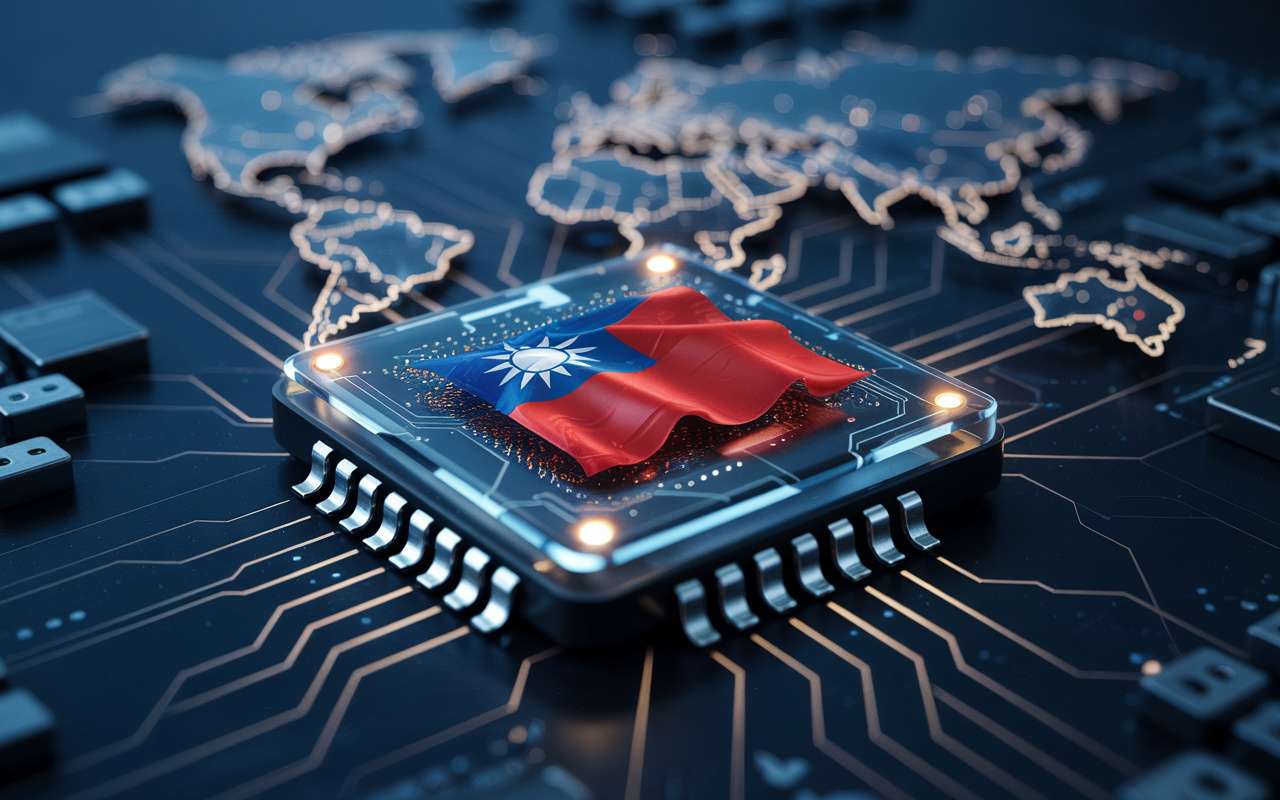

From Sugar Exporter to Microchip Power: How Taiwan Dominated Global Semiconductor Production and Put the US and China in a Geopolitical Race for the Technology of the Future.
The small island of Taiwan, once known for exporting sugar and clothing, has become a superpower in chip manufacturing — and this has reshaped global geopolitics. The prominence of TSMC (Taiwan Semiconductor Manufacturing Company), the largest semiconductor manufacturer on the planet, has placed the country at the center of the dispute between the United States and China for technological supremacy.
But how did Taiwan make this impressive leap? The answer lies in a generation of visionary engineers, strategic government decisions, and an industrial model that revolutionized the entire semiconductor chain.
A Fishing Village and an American Dream
The turning point begins with stories like that of Shih Chin-tay, a young Taiwanese man raised among sugarcane fields and fishing villages. At 23, in 1969, he set off to Princeton University in the US, determined to learn from the technological power that had just sent a man to the Moon.
-
Workers renovating a playground in northern England uncover 176 World War II bombs buried underground; training artifacts still contained explosives.

-
Brazilian Architect Transforms Waste into Sustainable Homes with Solar Power and Rainwater Systems for 40 Years

-
Security Guard Becomes Doctor at Louisiana Hospital Where He Once Worked, Studied Chemistry Between Shifts

-
Woman Rescued from Luxury Complex in Brazil Worked Without Pay for 55 Years, May Be Entitled to Over $300,000





Upon returning, Shih did not bring back just a diploma, but the conviction that his homeland could go beyond sugar. It was this belief that led him and other engineers trained abroad to begin reshaping Taiwan’s economy, with a total focus on silicon chips.
The Foundation of the Industry: Research Institute and the First Chips
In the 1970s, with government support, Shih and his colleagues founded the Industrial Technology Research Institute in Hsinchu, a city now considered the Asian “Silicon Valley.” There, the seed was planted for what would become TSMC.
The first major experiment was a pilot factory in partnership with the American RCA, which quickly surpassed the original US plant in efficiency and quality. This gave the Taiwanese government the confidence to invest heavily in the field.
The Establishment of TSMC and the Decision That Changed Everything
The turning point occurred in 1987, with the founding of TSMC. The government recruited Morris Chang, a Sino-American engineer veteran of Texas Instruments. Instead of competing with giants like Intel or NEC, Chang proposed a radical model: TSMC would not create its own products, only manufacture chips on order for other companies.
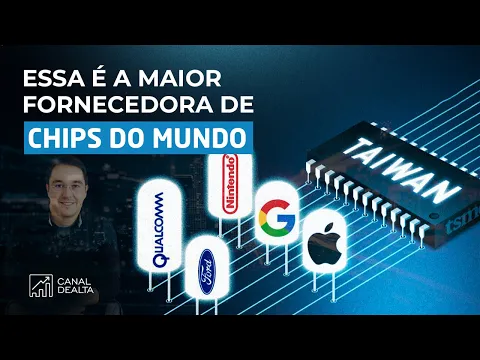
It was this “foundry only” model that allowed startups like Apple, Nvidia, and Qualcomm access to the production of high-performance chips — without needing to build factories.
Unmatched Efficiency and a “Secret Recipe”
Today, TSMC produces chips with an 80% yield per wafer, compared to 50% in the US in the 1970s and 60% in Japan in the 1980s. This is due to a unique combination: modern facilities, highly skilled labor, and an obsession with continuous improvement.
With the advancement of extreme ultraviolet lithography, TSMC is able to engrave over 100 billion circuits on a single chip. Each microprocessor from the company is a miracle of engineering and precision, comparable to haute cuisine: the same recipe, but the best “chef” always wins.
Modest Salaries and a Culture of Extreme Effort
One of the less-discussed but essential factors is the Taiwanese work culture. Local engineers earn less than their peers in Silicon Valley, but the salaries are considered good by the island’s standards.
The work hours? Long shifts, daily meetings at 7:30 AM, full availability on weekends. According to reports, it is this almost military discipline that supports the island’s industrial excellence.
The $40 Billion Factory in the US and the Challenges of Reshoring
In 2022, TSMC responded to pleas from the Biden administration and announced a factory in Arizona, with an investment of $40 billion. The construction was celebrated as a symbol of American reindustrialization — but problems soon arose.
Lack of skilled workers, union resistance, and delays pushed the start of chip production to 2025. Even TSMC’s founder, Morris Chang, criticized the project: “It’s expensive, inefficient, and useless.”
The Silicon Shield and the Fear of Chinese Invasion
The global dependence on Taiwan’s chips also generates tension. China, which claims the island as part of its territory, threatens to invade — which would be catastrophic for the global economy.
The iPhone 12, for example, uses over 1,400 microchips. A modern car uses between 1,500 and 3,000. A blockade of semiconductor flow from Taiwan could paralyze factories, markets, and governments.
This central role has led many to call the country the “silicon shield”: an asset so valuable that perhaps the world will protect it to ensure its own stability.
Complex Global Supply Chain: No One Dominates Everything
Despite TSMC’s leadership in manufacturing, the global chip supply chain is interdependent. Silicon comes from China, chemicals from Germany and Japan, optical equipment from Carl Zeiss, and the most advanced machines from Dutch ASML.
Chip designs come from the US and from Arm, based in the UK. The attempt to exclude China from this network is viewed by experts as a strategic mistake.
The Warning From Someone Who Saw It All Happen
Now 77 years old, Shih Chin-tay watches the growing tension with concern. For him, Taiwan’s success is due to international cooperation — and cannot be replicated in isolation.
“If anyone wants to recreate this model on their own, good luck,” he says. “What we did worked because we collaborated with the entire world.”


