Portuguese
  Spanish



Labor Court Ruling Analyzed Prolonged Bathroom Breaks and Upheld Dismissal for Just Cause in China.
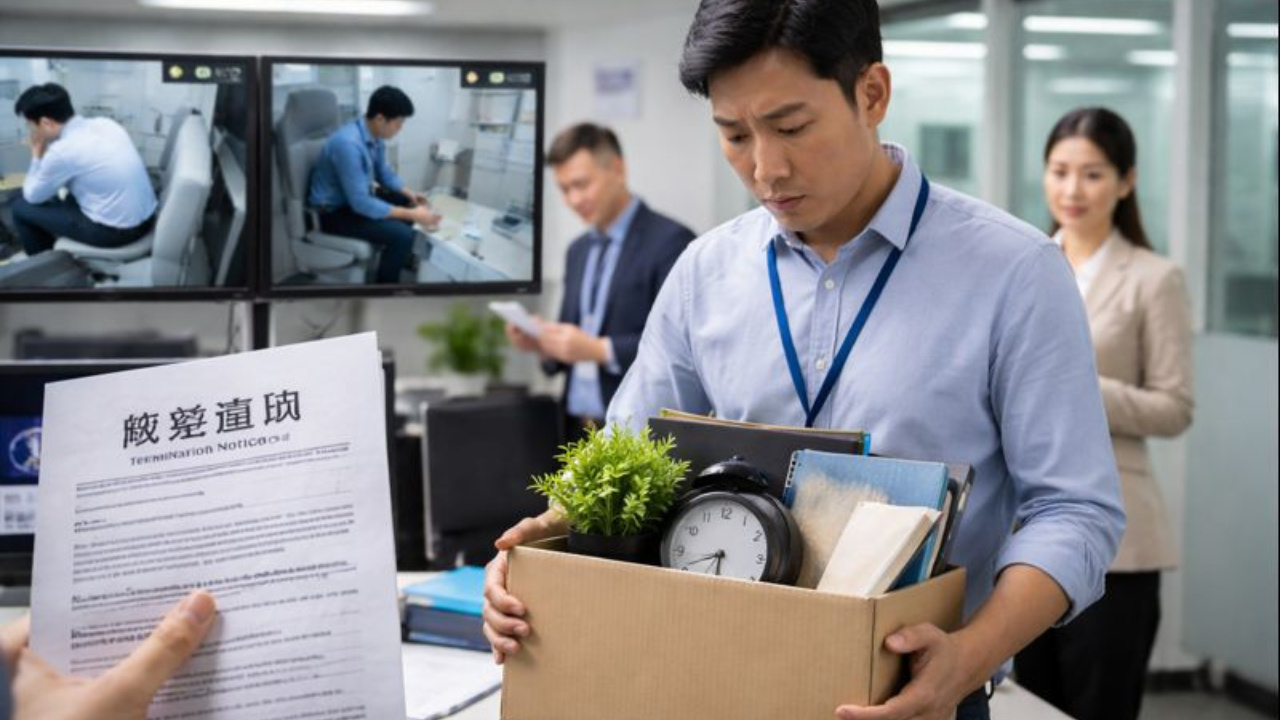
A dismissed engineer in China had his dismissal confirmed by the court after taking prolonged bathroom breaks during working hours between April and May 2024, in the eastern part of the country.
The case involved an employee identified as Li, who had worked for over a decade at a company in Jiangsu Province and claimed health issues to justify his absences.
However, after reviewing the evidence, the court understood that there was an abuse of rights, validating the termination for just cause and establishing a partial agreement between the parties, which rekindled the debate over labor rights in China.
-
Dismissing a retired worker or one eligible for retirement constitutes ageism and creates a duty to compensate: a unanimous decision by the TRT mandates reinstatement to employment, payment of back wages, and upholds compensation of R$ 15,000 for discrimination.

-
Work less and produce more? Nobel Prize in Economics explains why shorter workdays can increase productivity

-
Unions are growing again in Brazil after more than a decade, but they face an urgent challenge to win back digital workers and maintain relevance.
-
From the typewriter to the home office: how work has changed and why new generations think differently




Understand the Case of the Dismissed Engineer in China
The episode gained national attention after the Shanghai Federation of Trade Unions revealed the details of the case.
For about a month, the engineer took 14 bathroom breaks that the company deemed excessive.
Some of these absences exceeded one hour, with the longest lasting around four hours.
According to the company, the behavior directly jeopardized the workflow and the fulfillment of internal demands.
Prolonged Bathroom Breaks Motivated the Dismissal
According to the records presented in the case, the employee failed to respond to messages sent through a corporate application while he was away from his post.
The company emphasized that the role required constant availability.
Additionally, surveillance camera footage confirmed the frequent absences, reinforcing the argument that the prolonged bathroom breaks exceeded the reasonable use permitted by law.
The Medical Claim and the Court’s Assessment
Li claimed he suffered from hemorrhoids, a condition that, according to him, would justify his long trips to the bathroom.
However, the court noted that the medical records presented referred to a period after the absences.
The labor court ruling also highlighted that the engineer did not inform the company of his condition in advance nor requested medical leave, a procedure stipulated in the contract.
For the judges, the time spent in the bathroom “far exceeded” normal physiological needs.
Contract Provided for Dismissal for Just Cause
The engineer had been with the company since 2010 and had signed an indefinite-term contract in 2014.
The document established clear rules regarding unauthorized absences.
According to the agreement, accumulating three days of unjustified absences within a period of 180 days could result in dismissal for just cause, which was considered in the ruling.
Before the dismissal, the company also requested formal authorization from the labor union.
Request for Compensation and Financial Agreement
After the dismissal, Li filed a lawsuit seeking compensation of 320,000 yuan, equivalent to about R$ 250,000, claiming illegal termination of the contract.
After two trials, the court chose to mediate a settlement.
Considering the length of service and the difficulty of the engineer’s re-employment in the market, the company agreed to pay a financial assistance of 30,000 yuan, approximately R$ 23,000.
Labor Rights in China and Similar Decisions
The case of the dismissed engineer in China is not isolated. In 2023, another worker from the same province was dismissed after a six-hour bathroom break in a single day, a decision that was also upheld by the court.
Although labor rights in China guarantee reasonable use of restroom facilities, courts have been analyzing situations on a case-by-case basis.
When there are signs of abuse, legal protection may not fully apply to the worker.
Debate Remains a Topic in the Country
Discussions about the boundaries between physiological needs and professional obligations continue to be frequent in China.
Experts point out that the balance between worker health and corporate productivity still generates divergent interpretations.
Thus, decisions like this reinforce the tendency for rigorous evaluations, where each detail—records, prior communication, and medical substantiation—can be decisive for the legal outcome.