






 Portuguese
  Spanish
  4 min of reading
  4 comments


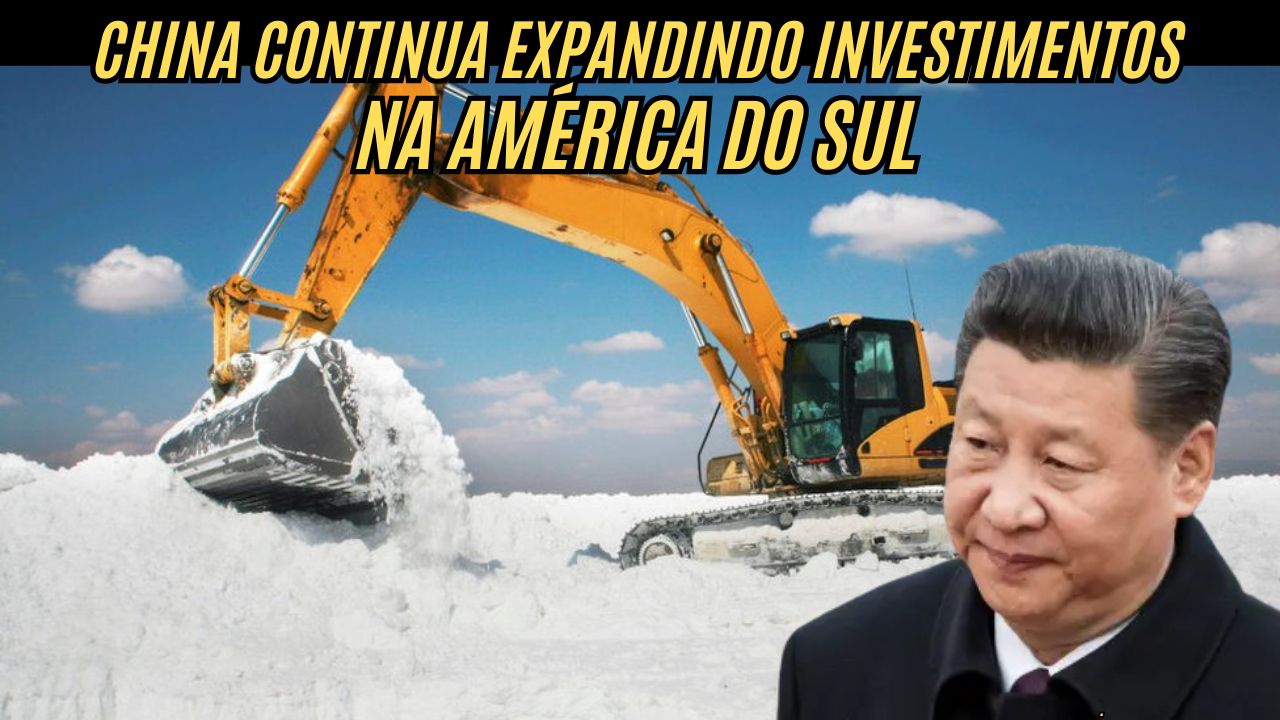


China Expands Dominance With US$ 1 Billion Agreement On Bolivia’s Lithium. Partnership Expands Chinese Influence In The Global Battery Market And Raises Concerns About Bolivian Sovereignty.
After business dealings in a Brazilian uranium mine, China has taken another strategic step in the race for control of essential resources for the global energy transition. Last Tuesday (26), Bolivia announced a US$ 1 billion agreement with CBC Investments, a subsidiary of Chinese battery giant CATL, to build two lithium production plants in the Salar de Uyuni, the largest reserve of the mineral in the world.
The partnership reinforces China’s presence in the “Lithium Triangle,” comprised of Bolivia, Chile, and Argentina, which contains the largest global reserves of this mineral. Aiming to produce 35,000 metric tons of lithium carbonate annually, the investment solidifies Bolivia’s dependence on Chinese financing and technology, a growing concern in the local political and economic landscape.
“This is a fundamental contract, of utmost importance for the country due to all the generation of investments and resources from the export of lithium carbonate,” said Bolivian President Luis Arce, highlighting the agreement’s impact on the country’s economy.
-
The Central Bank ends the R$ 500 limit on Pix by approximation, and account holders will be able to use the general Pix limit to pay any amount by tapping their phone on the terminal starting in October 2026.

-
A collective political will that allows for the creation of a cross-party and state agenda, focusing on concrete actions such as reducing the Custo Brasil; commitment to fiscal balance; feasible goals that enhance professional qualification and the adoption of a myriad of incentives aimed at innovation.

-
PIX from BRICS becomes reality: BRICS Pay advances to enable international payments without the dollar; system inspired by Pix and based on blockchain could move up to 20% of global trade by 2030, while bloc countries already account for 40% of the world economy.
-
After a motorcycle accident at 17, a Bahian agronomist borrowed R$ 40 from his mother, transformed a homemade granola recipe into Tia Sônia, and reached R$ 120 million, targeting São Paulo with 300 tons monthly and 80 products.




Lithium Geopolitics: China Advances And Raises Alarm

Bolivia’s lithium is essential for lithium-ion batteries, used in electric vehicles and other technological devices. China, which already dominates battery manufacturing, seeks to secure control over the sources of this strategic mineral. As highlighted by The Epoch Times, the Chinese Communist Party (CCP) sees the agreement as more than just an investment: it is an important piece in its plan to expand influence in the global market and maintain its competitive edge in the technological and military sectors.
Moreover, China’s presence in Bolivia’s mining sector reflects a pattern. According to Eduardo Gamarra, an international relations expert at the University of Florida, “China has taken advantage of the circumstances in the region, managing to penetrate precarious economies that lacked access to conventional credit, promising investments and loans.”
Bolivia already owes about US$ 6 billion to China, increasing economic dependency. Although the state-owned company Yacimientos de Litio Bolivianos (YLB) holds a 51% stake in the project, experts warn of the risks of excessive external influence on the country’s sovereignty.
China And Russia: Strategic Rivalry In The Salar de Uyuni
China is not alone in this race. Russia, through the state-owned company Rosatom, has also invested in Bolivia’s lithium, with a US$ 976 million contract for another plant in the Salar de Uyuni, now projected to produce 25,000 tons of lithium per year. These investments, both Chinese and Russian, solidify Bolivia’s position as a key player in the global lithium supply but also raise questions about the real benefits for the local economy.
South America As A Focus Of Chinese Interest
China’s involvement goes beyond Bolivia. In Chile, Argentina, and Brazil, the Chinese have already taken the lead in similar initiatives, with billions of dollars invested in lithium extraction projects and other resources. These investments are part of a larger effort by Beijing to secure its position as a leader in the global energy transition.
The impact of this expansion is not only economic but also geopolitical. China’s presence in strategic sectors of South America enhances its influence in the region and exposes local countries to a new type of dependency.
The Future Of Bolivia’s Lithium
With the largest reserves of the mineral in the world, Bolivia is at the center of a global dispute over lithium. The Chinese investment promises to boost the economy, but at what cost? With concerns about sovereignty and autonomy, the country finds itself in a delicate balance between leveraging its natural wealth and preserving its economic independence.
Meanwhile, China continues its mission to consolidate its dominance over the global battery market, ensuring control over the resource that will power the planet’s energy future.





Quando prenderam o Evo Morales então presidente da Bolívia, porque disse na estatal de TV e rádio que nenhuma empreiteira iria tirar o lítio da Bolívia, as empreiteiras são desses países ( Japão, Coréia do Sul, Canadá, Dinamarca e França), que o governo iria criar uma estatal para esse fim e todo o lucro seria investido em infraestrutura, saúde e educação do povo Bolíviano , europeus e Norte americanos deram logo um golpe nele e a vice aprovou que as empreiteiras desses países poderiam tirar o lítio, assim como tiram o petróleo da Guiana Francesa que só recebe das empreiteiras 5% do valor do petróleo, então está tudo bem?! Agora vcs esquecem de dizer que a China vai montar uma fábrica de carros elétricos, uma fábrica de caminhões e ônibus e talvez uma fábrica de baterias para veículos elétricos. Aí lá na Argentina tem **** de americanos que está entregando o lítio para os americanos sem industrializar nada só vendendo comodites , a mesma coisa acontece no Chile.
Vou comentar porque até acho que as publicações do site são interessantes. Comercializar urânio, um mineral estratégico, no Brasil fere a soberania nacional. Logo, essa resenha é uma notícia falsa e descredibiliza o próprio site de vocês. Abraço
Ridículo essas Fake News!