






 Portuguese
  Spanish


Charred Bread Was Found In Excavation And Leads To Recreation Of An Ancestral Recipe With Local And Sustainable Ingredients
Recently, an archaeological archaeology discovery surprised the world by revealing a piece of charred bread approximately 5,000 years old, according to the website G1/Globo. This food fossil was found in Küllüoba, near the city of Eskisehir, in present-day Turkey, and dates back to the Bronze Age. The bread, which was buried under a newly constructed house, was largely preserved in its original form due to the burning and burial process.
The archaeologist and excavation director, Murat Türkteki, commented: “This is the oldest baked bread discovered in an excavation. Normally, we only find crumbs, but here it was preserved because it was burned and buried.” The discovery was made in September 2024, when the bread was found charred with about 12 centimeters in diameter, resembling a host.
The Significance Of The Discovery
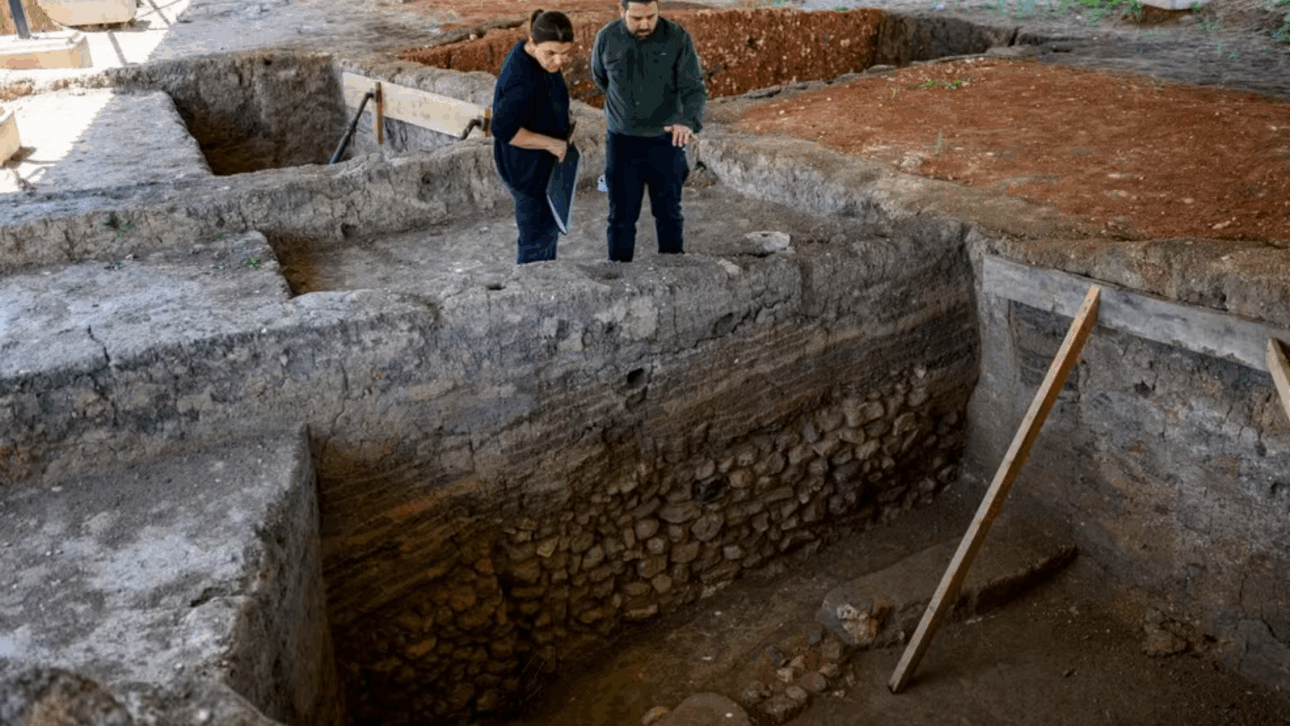
The fact that a piece of bread was torn off before burial suggests that there may have been a ritual of abundance associated with the construction of the house. The lack of written evidence about the Küllüoba Anatolian civilization makes the analysis even more intriguing. Have you ever stopped to think about how a simple food can connect us with the practices and traditions of ancient civilizations?
-
Brazilian Startup Develops Solar-Powered Mobile Factory, Recycles 100,000 Panels in Under a Year, Recovering Silver and Copper

-
Your Door Lock, Gate Padlock, and Hotel Key Card Likely Come from the World’s Largest Lock Manufacturer, the Swedish Group Behind Yale and Brazil’s Papaiz
-
Major Brazilian Ethanol Producer Becomes Largest Owner of Planted Forest in Mato Grosso, Aiming to Power Plants with Renewable Energy Instead of Fossil Fuels
-
In 1980, three brothers in a Chinese village collected discarded buttons, sparking the transformation of the area into the world’s button capital, producing billions annually for global fashion.


The Hattians, a people who inhabited Anatolia before the Hittites, were known for their trade and craftsmanship activities. The region of Eskisehir, where the bread was found, was an urban agglomeration with a well-defined social structure. This discovery not only provides a glimpse into the diet of the time but also into the cultural and social practices of its inhabitants.
The Importance Of Cultural Preservation
The preservation of items like the bread from Küllüoba is fundamental for understanding the cultural practices of ancient civilizations. The way the inhabitants of the region fed themselves, the plants they cultivated, and even the rituals they performed are valuable clues about daily life. What other foods do you think could be discovered in future excavations? How might this change our perception of the past?
Fueled by excitement surrounding the discovery, the Eskisehir municipality decided to recreate the original recipe of the bread from Küllüoba. Although the farro wheat used in the original recipe no longer exists in Turkey, the municipality opted to use a similar variety, Kavilca wheat, along with bulgur and lentils. “While talking to our excavation director, I wondered if we could reproduce this bread,” said Ayse Ünlüce, mayor of Eskisehir.
The Recreation Of The Ancient Bread
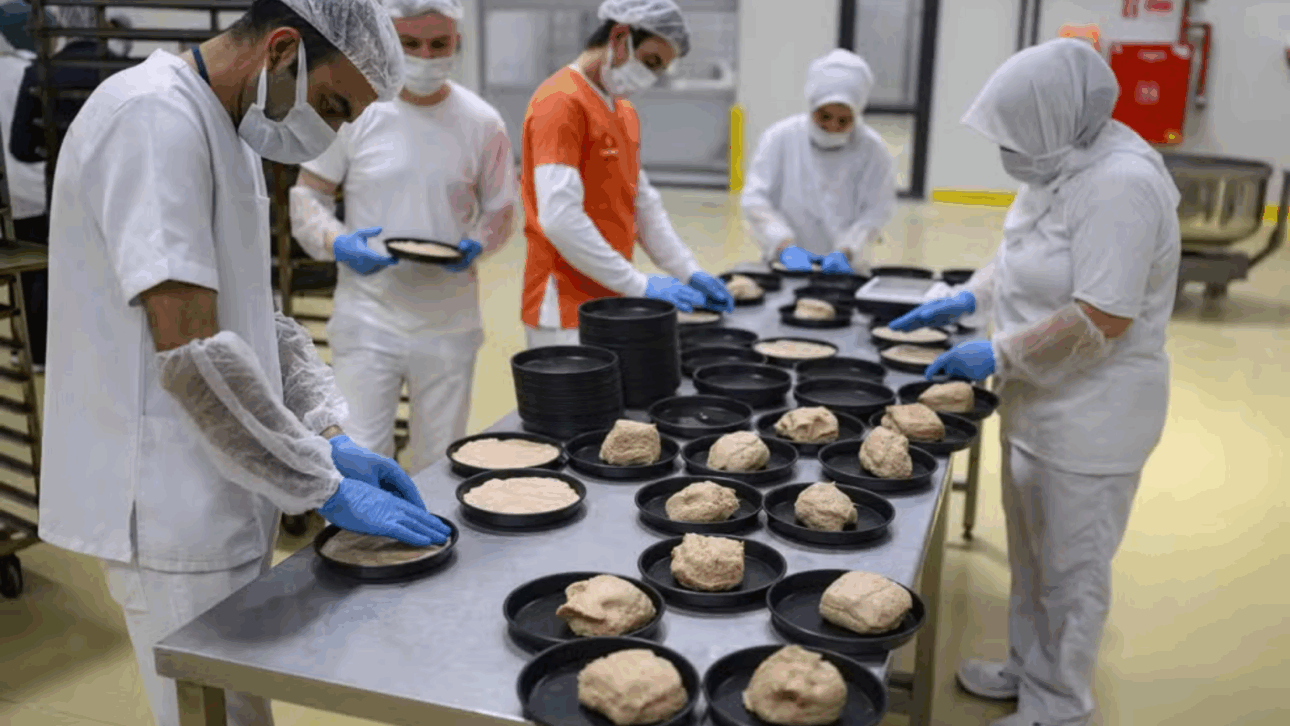
At the local bakery Halk Ekmek, known as “People’s Bread”, 300 Küllüoba breads are produced daily by hand. “The combination of ancient wheat flour, lentils, and bulgur produces a rich bread with low gluten and no preservatives,” stated Serap Güler, the bakery’s director. The first batches of Küllüoba bread, sold in packages of 300 grams for 50 Turkish liras (approximately R$ 7.21), sold out quickly.
Consumers showed great enthusiasm for the new offering, and many commented on the importance of preserving cultural heritage through food. “I rushed because I was afraid nothing would be left. I was curious to know what this ancient bread tasted like,” said a customer. It’s fascinating to think about how food can serve as a bridge between the past and the present, isn’t it?
The Importance Of Sustainable Agriculture
The discovery of this fossilized bread has also brought to light the need to rethink agricultural practices in the region, which currently faces a climate crisis. “We are facing a climate crisis, but we still cultivate corn and sunflower, which require a lot of water,” explained Mayor Ünlüce. “We must, like our ancestors, focus on crops that require less water.”
One of the mayor’s goals is to revive the cultivation of Kavilca wheat, which is drought and disease resistant. “We need very strong public policies on this issue. Cultivating ancient wheats would be a symbolic advancement in this regard,” she emphasized. This initiative not only preserves cultural heritage but also promotes sustainable agricultural practices that could benefit future generations.
Reflections On The Future
The discovery of Küllüoba bread invites us to reflect on our relationship with food and agriculture. As we face climate challenges, it’s essential that we look to the past for solutions. Do you believe that learning from ancient agricultural practices can help us tackle current challenges? What more can we learn about sustainability from archaeological discoveries?
Do you also feel inspired by this discovery and the sustainability initiatives associated with it? Share your thoughts and opinions in the comments!




Minha esposa faz um igualzinho (preto, duro e seco), e ela nem leva tanto tempo assim …