






 Portuguese
  Spanish
  5 min of reading
  0 comments


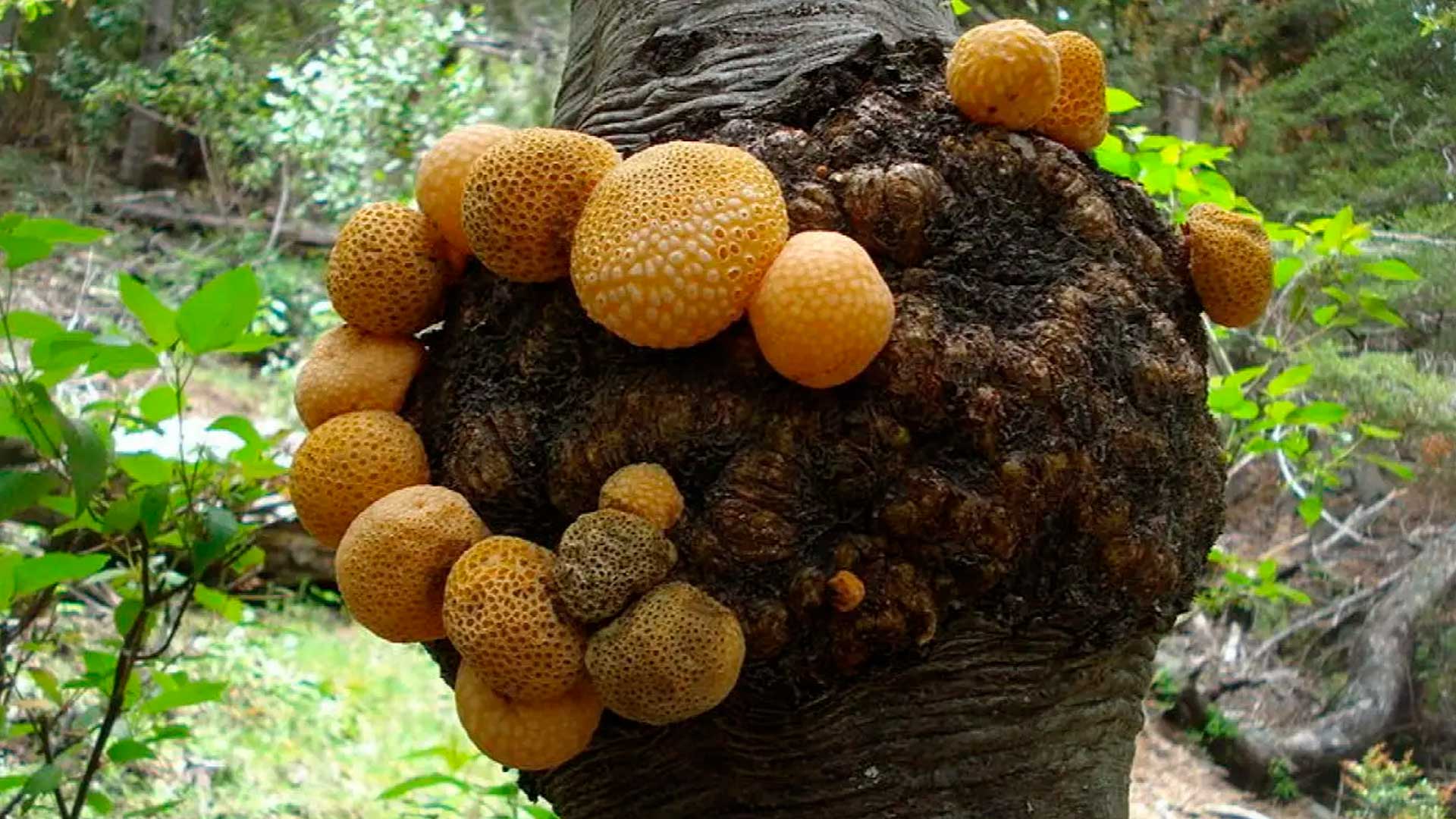
Hidden Biodiversity in Patagonia Confused Science and a Study Now Confirms Two New Species of Fungi Exclusive to Argentina
A scientific article published in December 2025 described two new species of fungi from the genus Cyttaria, recorded in Patagonian Andean forests of Argentina. The research combined fieldwork and genetic analyses to separate very similar organisms. The result reinforces the ecological value of the region and the need for conservation.
Argentinian Patagonia came onto the global mycology radar after the confirmation of two unprecedented species of fungi that had not been formally recorded by science. The work was published in the journal Mycological Progress on December 8, 2025, published by Springer Nature.
The study describes Cyttaria gamundiae and Cyttaria pumilionis, fungi associated with trees from the Nothofagaceae family. The two species were identified as parasites of lenga (Nothofagus pumilio), a tree typical of cold, high areas of southern South America.
-
While scientists test giant balls on the seabed, a startup wants to sink concrete and steel tanks held by cages filled with stones up to 700 meters deep to transform compressed air into an invisible underwater battery.

-
Former NASA engineer transforms drones into “seed helicopters” capable of firing 300 balls per minute, targeting degraded areas with half-meter precision, and planting up to 40 million trees per year in a new race for aerial reforestation.

-
Brazil deploys drones to scatter seeds on nearly inaccessible slopes and attempts to transform degraded hills into forests with aerial planting up to 100 times faster, in a green offensive launched in Rio de Janeiro.
-
Second half of June brings more intense cold, polar air mass, and above-average rainfall in Brazil





The research involves scientists linked to the Argentinian scientific system and includes authors such as Yamila Arias and Gabriela C. González, among other specialists from the group. The scientific output itself is registered in institutional databases from Conicet, which list the article and its link to the journal.
In addition to the academic impact, the discovery draws attention as it indicates that local biodiversity may be underestimated even in relatively well-known groups and even with popular edible species. The genus Cyttaria includes the so-called llao llao, also known as pan de indio, associated with trees of the Nothofagus genus.
What the Study Described and Why It Changes the Map of Cyttaria Fungi in Argentinian Patagonia
The focus of the article is a review of the genus Cyttaria in the far south, with the formal description of two new species for science. In the summary of the work, the authors indicate that they are obligate biotrophs and were found in Andean forests of Argentina, with records cited for Chubut and Tierra del Fuego.
A central point is that Cyttaria gamundiae and Cyttaria pumilionis look very similar to already recognized species. The scientific text mentions morphological similarities with C. hookeri and C. hariotii, which helps to understand why these specimens remained “hidden” for so long amid previous classifications.
In practice, the publication expands the list of known species in the region and reinforces the idea of endemism, as the description is linked to specific Patagonian ecosystems. This also paves the way for new questions about coevolution between fungi and host trees.
How the Collecting Was Done in the Patagonian Andean Forests and What Got Noticed in 2022
According to information released in Argentina, the collections took place in areas with lengas and other Nothofagus formations, including provinces such as Neuquén, Río Negro, Chubut, and Tierra del Fuego. The same report notes that, in the first observations of 2022, subtle morphological and ecological differences emerged in samples previously treated as a single species.
From there, the team advanced to a broader review, combining field and laboratory to resolve the question. This type of investigation is common when a group has very similar species and when factors like environment and host can “mask” real differences.
Genetics and Microscopy Helped to Separate Almost Identical Species
The article describes a package of methods that combines morphology and genetics to support the creation of new species. The morphological stage involves documentation through microscopy, which helps to standardize measurements and observable characteristics of fruiting bodies.
The decisive part, however, came from molecular data. The authors report using three genetic markers, including nucSSU, nucLSU, and TEF1 regions, to compare samples and check consistent divergences.
With this data, phylogenetic analyses were conducted to evaluate relationships between lineages and levels of variability. The summary of the article states that morphological differences existed but were subtle, and that genetics confirmed the separation with divergence aligned to already accepted limits for species in the genus.
This type of case is typically classified as cryptic fungi, when organisms appear the same to the naked eye but are not the same from a genetic standpoint. The study highlights the presence of cryptic species in Cyttaria and indicates that this can even challenge concepts regarding pathogen-host relationships.
As a practical outcome, the work also informs the availability of an identification key for species, something useful for future ecological research and biodiversity surveys.
Endemism and Conservation Gain Strength with the Alert About Invisible Biodiversity
The confirmation of endemic species reinforces the argument that Patagonian Andean forests function as reservoirs of unique life. When a region harbors species that do not appear anywhere else, any environmental pressure tends to have more severe consequences, as there is no “reserve population” outside of it.
The scientific article itself points out the importance of framing for future research and conservation efforts, as correctly identifying a species is the first step to monitoring distribution, interaction with hosts, and risks associated with environmental changes.
There is also an indirect cultural and economic component, as Cyttaria includes edible fungi known in Patagonia, associated with native trees and traditional uses. The species Cyttaria hariotii, for example, is described as edible and a parasite of Nothofagus, which helps contextualize why this group draws so much attention in the region.
Ancestral Knowledge and Homage to Irma Gamundi Come to the Center of the Story
Local accounts highlight that indigenous peoples such as the Yaghan already differentiated types of Cyttaria by observing the host tree, an empirical clue that aligns with the modern idea of separating species by consistent patterns. In this context, the homage of the name Cyttaria gamundiae to mycologist Irma Gamundi, recognized for her contributions to the study of the genus, is mentioned.
Regarding the Yaghan, general records indicate this indigenous people as one of the groups in the extreme south of the continent, with traditional territory in the archipelago south of Tierra del Fuego. This connection to the local nature helps explain why traditional observations can anticipate questions that science only formalizes decades later.
In the end, the discovery also serves as a reminder of how academic knowledge and traditional observation can complement each other, especially in regions where biodiversity and culture walk hand in hand.
If these species are so similar that they remained “hidden” for years, how many others may still be going unnoticed in Patagonia and other biomes? And when science “rediscover” something that indigenous peoples have already distinguished, is this recognition or appropriation of traditional knowledge? Leave your comment with your opinion on this discussion and the importance of funding research and conserving these unique forests.







-

-

2 people reacted to this.