






 Portuguese
  Spanish


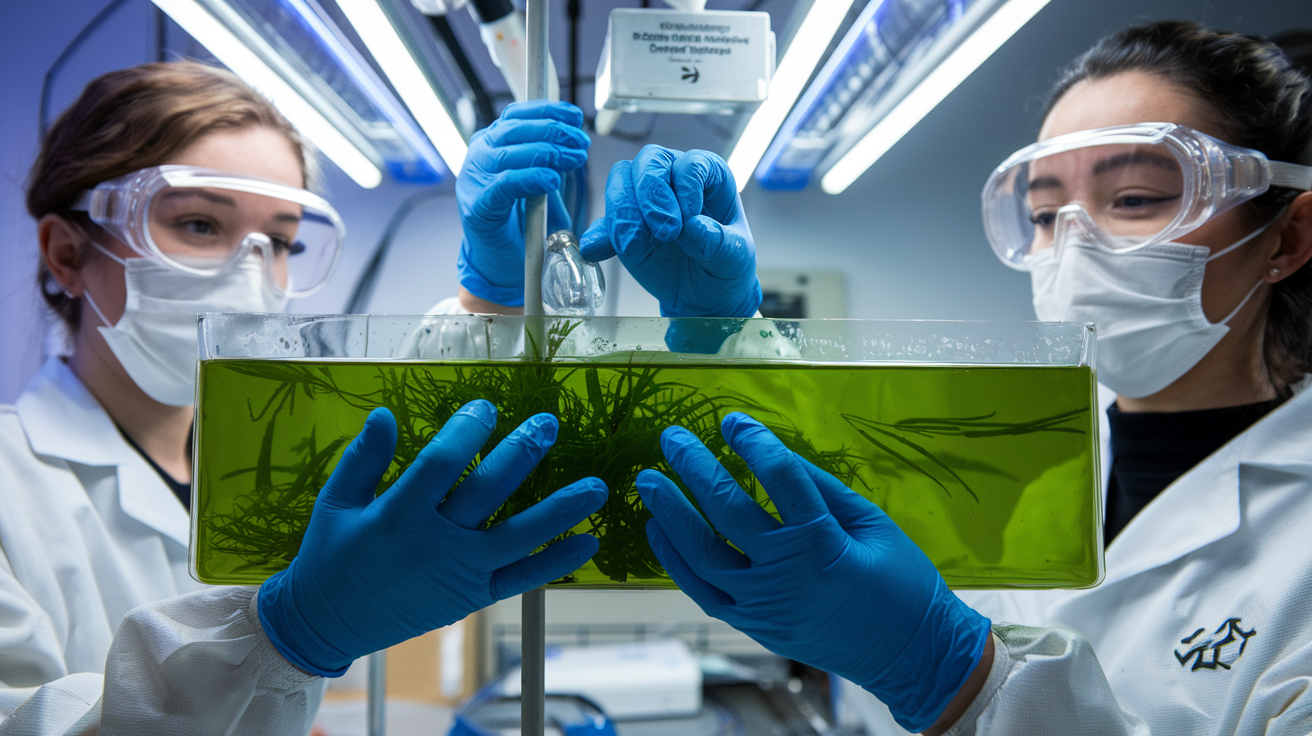

International Research Reveals How Dormant Organisms for Thousands of Years Come Back to Life and Help Understand Marine Evolution and the Effects of Climate Change.
An international team of scientists managed to reactivate microalgae that had been dormant for almost seven thousand years on the floor of the Baltic Sea. The research, considered groundbreaking, was recently published in the journal The ISME Journal and opens new possibilities for understanding the evolution of marine ecosystems and the biological response to climate change over the millennia.
These dormant organisms were preserved in deep layers of marine sediments, in conditions without light and oxygen. Using advanced isolation and cultivation techniques, researchers were able to “wake up” these cells, which quickly resumed vital functions such as photosynthesis and cell growth.
Microalgae Preserved for Almost 7,000 Years
The study was led by the Leibniz Institute and involved researchers from different countries. They collected samples from the Baltic Sea sediments and identified strains of the species Skeletonema marinoi, a type of diatom that is very common in marine environments. These dormant organisms were in a specialized form of survival, with thick cell structures and internal energy reserves.
-
Oceanographer Turns Abandoned Fishing Nets from Brazilian Waters into Bags, Creating Jobs and Earning Over $7,000 Monthly

-
Australia deploys poisoned sausages and uses traps, shooting, and fences in a battle against invasive cats that kill over 1.5 billion native animals annually, threatening more than 200 species.

-
NASA Rover Captures “Tired Face” on Mars, Highlighting Human Brain’s Tendency to See Faces in Rock Formations

-
Ancient Stone City in the Desert, Once Home to 30,000, Puzzles Scientists with Nabateans’ Water Mastery 2,000 Years Ago





The major surprise came with the successful reactivation of the microalgae, which not only came back to life but also exhibited activity levels comparable to their modern descendants. Scientists observed that even after millennia without metabolic activity, the cells maintained their ability to perform photosynthesis and produce oxygen.
Resurrection Ecology: A New Tool to Study the Past
This innovative approach has been termed “resurrection ecology” by researchers. Unlike analyses based solely on fossils or indirect records, this method allows for the direct study of dormant organisms recovered from natural environments. Marine sediments function, in this context, as true time capsules, preserving biological and environmental information from the distant past.
With the reactivated microalgae, the researchers were able to perform genetic analyses and compare ancient populations with current ones. The results indicate that there has been a gradual adaptation over time, revealing important clues about the evolution of marine phytoplankton and its response to climatic and ecological changes.
Implications for the Study of Climate Change
The research goes beyond simple scientific curiosity. By comparing the genetic and functional characteristics of microalgae separated by thousands of years, scientists hope to understand how phytoplankton responds to variations in temperature, salinity, and nutrients in the ocean. This information is crucial for predicting the impacts of global warming on marine ecosystems in the future.
The researchers now plan to simulate different environmental scenarios in the laboratory to observe how these ancient strains of dormant organisms react to changes. This may help identify genes or mechanisms that confer greater resistance to extreme conditions, contributing to conservation strategies and marine resource management.
Dormancy: An Efficient Survival Strategy
The ability of these microalgae to remain alive for thousands of years is due to a physiological state known as dormancy. Unlike hibernation or sporulation, dormancy in algae involves the formation of specialized cells, with thick walls and biochemical mechanisms that protect cellular integrity for long periods.
During the winter, for example, many species of microalgae enter this state to survive the cold and low light, sinking into the sediments until conditions become favorable again. In extreme situations, as demonstrated in the study of the Baltic Sea, this state can last millennia.
The process of “waking up” these cells involves the resumption of metabolic activity, including cell division and photosynthesis. The reactivation observed by scientists indicates that these dormant organisms preserve repair and protection mechanisms even after thousands of years.
A New Frontier for Biology and Ecology
Besides revealing the capacity for long-term survival, the study also shows how marine sediments can be used as natural archives of life on Earth. The genetic information preserved in these dormant organisms provides a detailed timeline of how species have adapted to the environment over the centuries.
For scientists, this is a unique opportunity to study the biology of longevity, understand the limits of life, and develop more accurate predictive models for the evolution of marine ecosystems. The continuation of the project involves new excavations and analyses of different oceanic regions.
Source: Techno-Science


