Portuguese
  Spanish


Understand How Offshore Wind Energy Transforms the Energy Sector and Drives Innovations in the Global Market Sustainably.
Currently, offshore wind energy has gained prominence on the world stage.
This renewable energy source is one of the most promising for the future because it uses turbines installed offshore that capture stronger and more consistent winds than those found on land.
To understand how this technology is shaping the market, it is important to know its origin, evolution, and the impact it generates in areas such as energy, technology, shipbuilding, and the global economy.
-
Brazil filled the Northeast with wind turbines but now faces the side effect of 705 giant blades reaching the end of their lifespan by 2032 just in Rio Grande do Norte, while the world projects 43 million tons of waste by 2050.

-
Brazil has filled the Northeast with wind turbines, but now it faces the side effect of 705 giant blades reaching the end of their useful life by 2032 just in Rio Grande do Norte, while the world projects 43 million tons of waste by 2050.
-
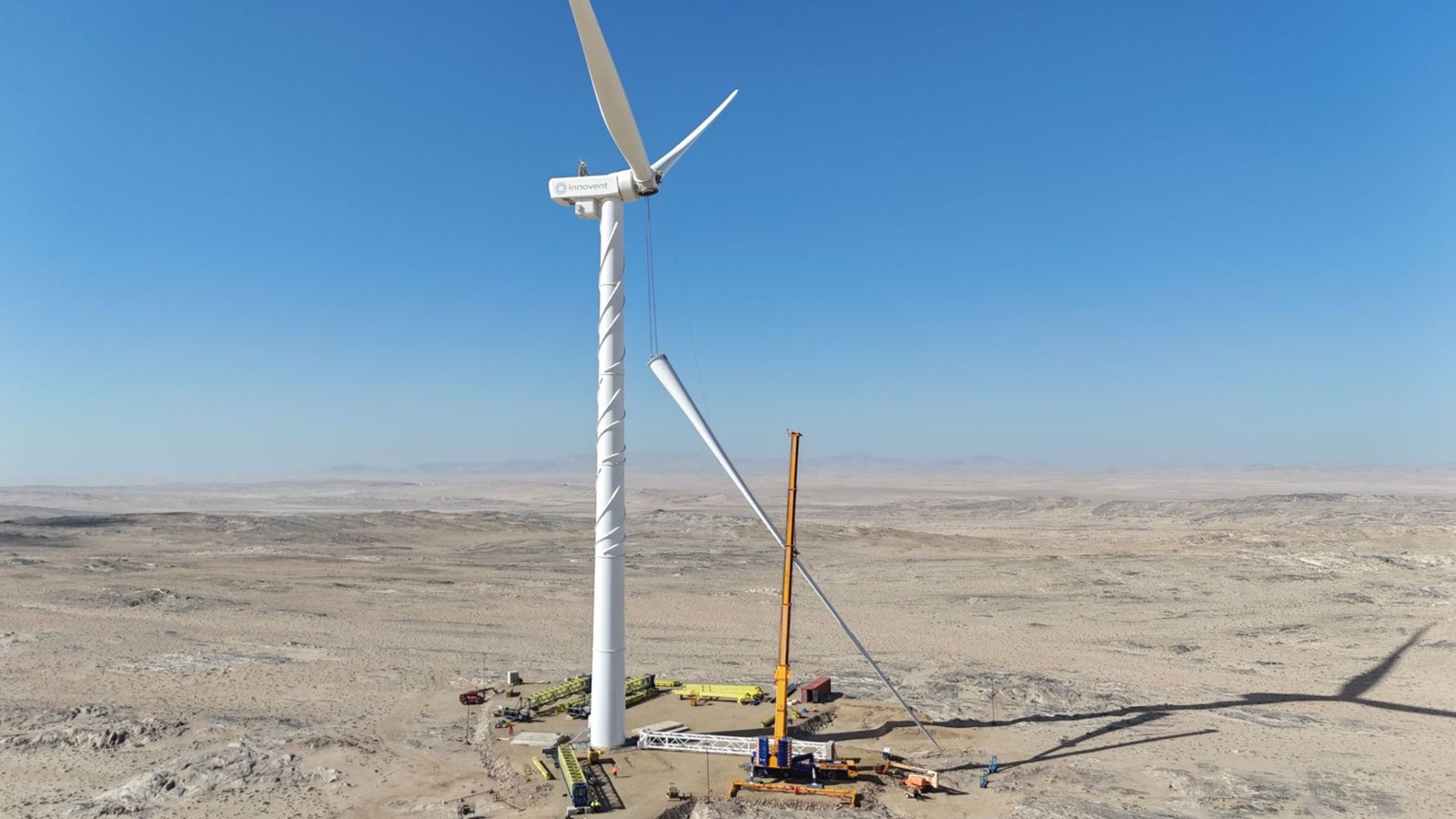
Wind farm in Namibia will have wind turbines assembled without giant cranes and is expected to avoid 200,000 tons of carbon dioxide per year when it becomes operational.

-
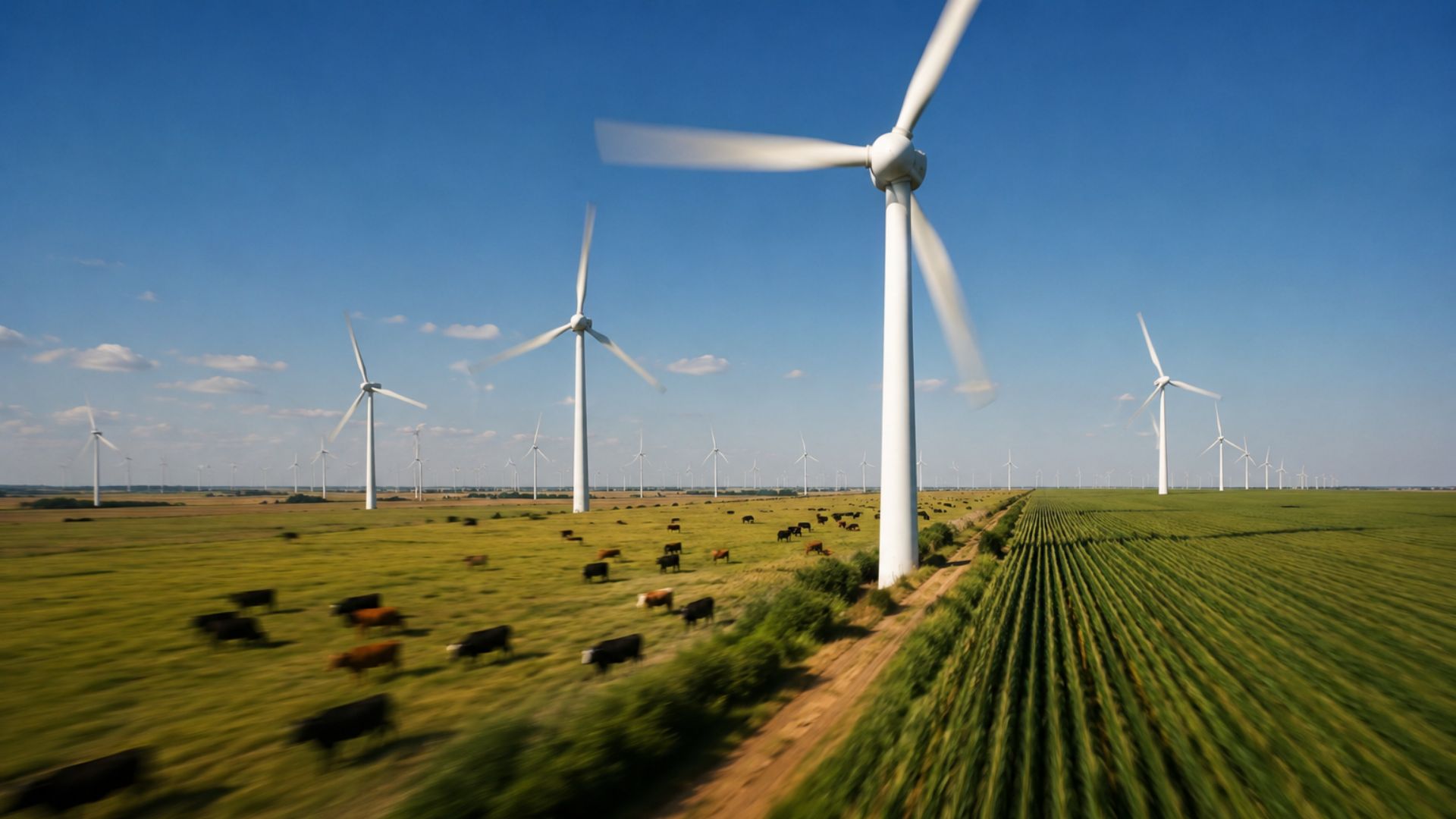
Taller than the Statue of Liberty, thousands of wind turbines are being planted in the middle of U.S. fields, creating two-story farms where corn and soybeans grow below while the wind turns into electricity above.


The Birth of Offshore Wind Energy
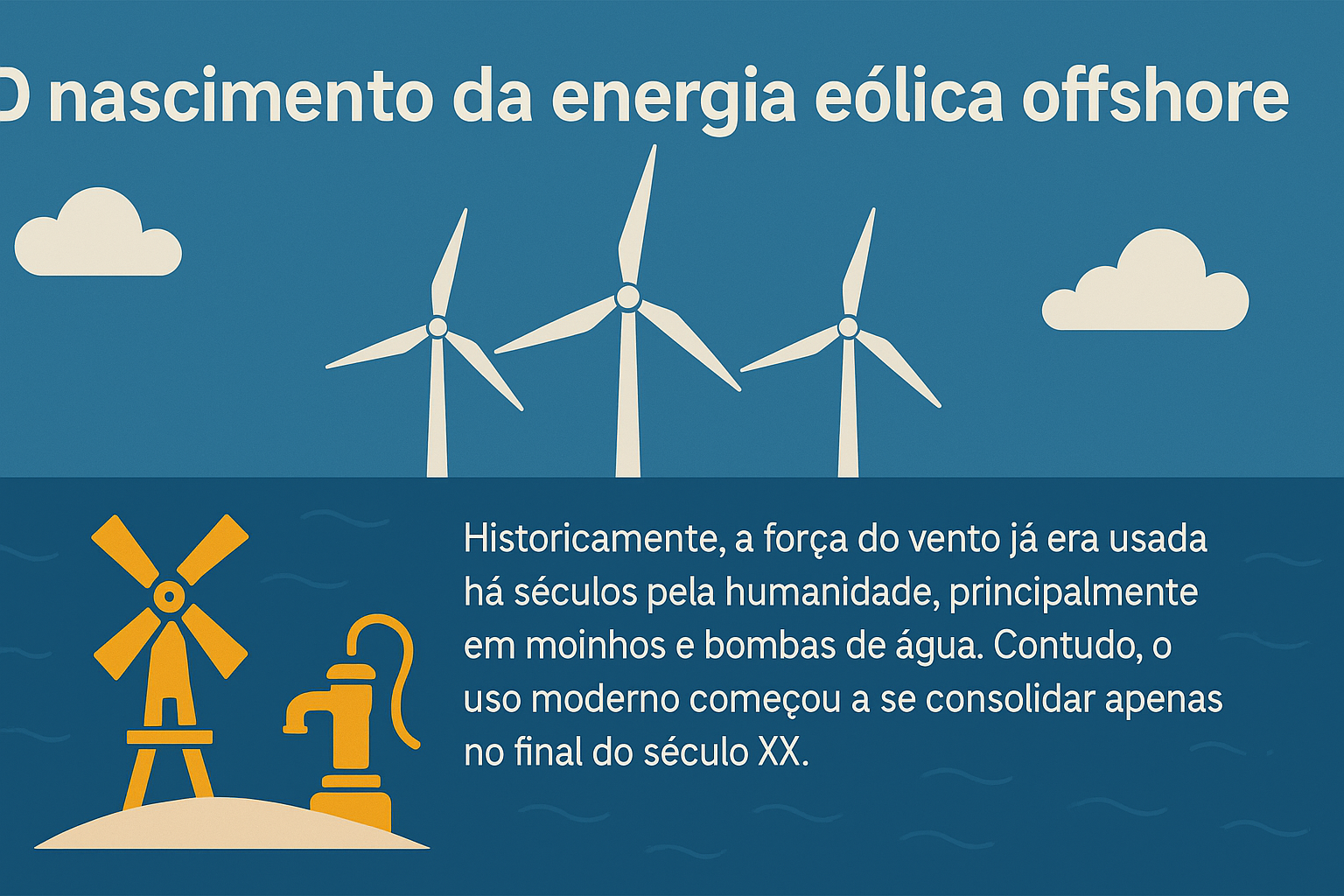
Historically, the power of wind has been used for centuries by humanity, mainly in mills for grinding grains and pumping water.
However, the modern use of wind energy to generate electricity only began to consolidate in the late 20th century.
According to the International Energy Agency (IEA), the world’s first commercial offshore wind farm was inaugurated in 1991 in Denmark.
This milestone paved the way for exploring the potential of the sea for electricity generation to begin to expand.
Initially, attention was focused on onshore wind energy, generated by turbines on land.
However, with the depletion of the best land for installation, researchers and investors began to focus on the maritime environment, where winds are more constant and intense.
In the 2000s, the European Union, according to the European Wind Energy Association (WindEurope), began to lead investments and public policies for the development of offshore wind energy, creating incentives and financing that stimulated the rapid growth of the sector.
Thus, offshore wind farms began to grow in size and capacity, confirming the technical and economic feasibility of the technology.
What Makes Offshore Wind Energy Special?
The turbines installed at sea operate on platforms located in areas with average depth and constant winds.
This combination ensures a large-scale energy generation, with less physical interference, such as terrain and constructions, common on land.
In addition, according to the report from WindEurope, the offshore location minimizes visual and noise impacts for local populations, facilitating project approval.
Another important point is the proximity to large coastal urban centers, which concentrate high energy demand.
Offshore generation can directly meet these regions, reducing losses in the transmission system.
Furthermore, the stability of winds at sea allows operators to predict energy generation more accurately, helping to avoid fluctuations and ensuring greater security in supply.
The Impact on the Energy Market
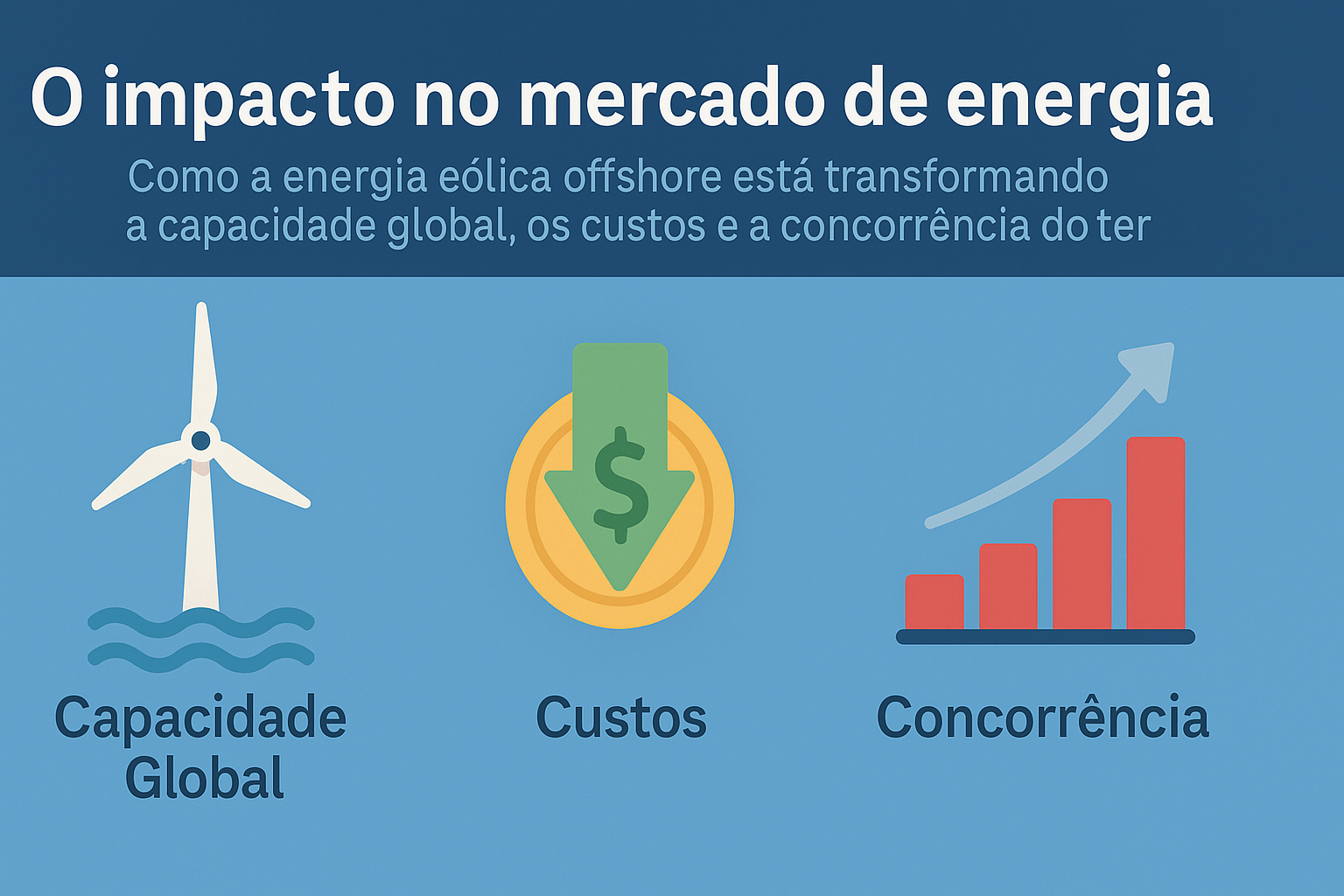
According to the latest report from the IEA, published in 2023, the global installed capacity of offshore wind energy exceeded 60 gigawatts, the result of accelerated growth in the past five years.
Countries like the United Kingdom, Germany, China, and the Netherlands lead this expansion, seeking to replace fossil sources and meet ambitious environmental goals.
The decline in installation and operational costs, as pointed out by the IEA, has made offshore wind energy competitive against conventional sources like coal and natural gas.
Companies compete for concessions in public auctions, while governments create policies to attract investments.
This technological competition among large manufacturers drives the improvement of efficiency and production scale.
Furthermore, the decentralization of generation enables countries to reduce their dependence on imported energy, increasing autonomy in supply.
The Influence on Industry and Economy
According to the Global Wind Energy Council (GWEC), in its 2022 report, the offshore sector generated over 120,000 jobs worldwide, involving various areas of the economy.
The production chain includes shipbuilding, which manufactures platforms and vessels; steelmaking, responsible for the materials of the towers; electronics, which develops monitoring systems; and port logistics, which supports the transport of equipment.
These projects require specialized professionals, such as engineers, divers, and electricians, creating opportunities at various stages, from planning to maintenance.
Cities with advanced port infrastructure attract factories, assembly centers, and maintenance companies, favoring local economic growth.
Moreover, universities and research centers, as reported by GWEC, collaborate on technological innovation and the training of skilled labor, creating a development ecosystem.
Challenges and Innovations
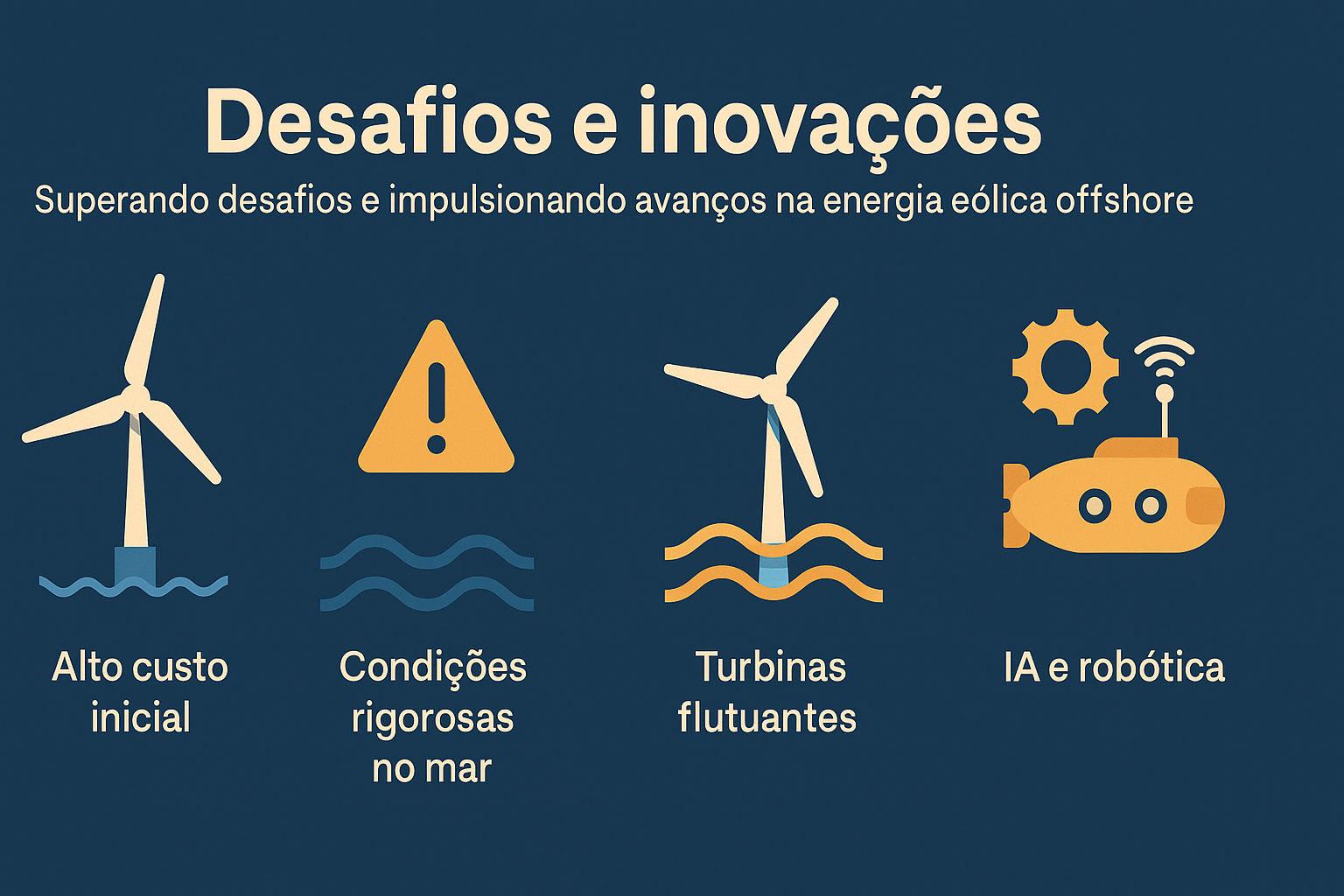
Despite the advancements, offshore wind energy faces significant challenges. The high initial cost and the need for long-term planning require consistent investments.
Additionally, the equipment must withstand the harsh conditions of the sea, including storms, salinity, and strong currents.
The transmission of energy to the coast depends on robust submarine cables, whose installation and maintenance are complex and require environmental care.
To overcome these obstacles, the sector invests in innovations. According to data from the IEA in 2024, floating turbines allow installation in deeper areas, expanding the reach of the technology.
Countries like Japan, Norway, and Portugal are already developing projects with this technology.
Moreover, the use of artificial intelligence and sensors, according to the IEA, has improved real-time monitoring, preventing failures and reducing operational costs.
Underwater robots and drones also facilitate inspections, making maintenance safer and more efficient.
The Role of Brazil in This Scenario
According to the Ministry of Mines and Energy of Brazil, the country’s potential for offshore wind energy could exceed 700 gigawatts, primarily in the Northeast and Southeast regions, thanks to constant winds and favorable weather.
The federal government, through the National Electric Energy Agency (ANEEL), published in 2023 guidelines to regulate and encourage this type of generation, paving the way for investments.
Additionally, Brazil can leverage the experience gained in the offshore oil and gas industry. Platforms, vessels, and professionals from the sector can be utilized for maritime wind energy production.
This synergy can accelerate the energy transition, increasing the use of renewable sources and reducing the emission of polluting gases.
In summary, offshore wind energy represents a promising solution for the future of the global energy matrix. It combines sustainability, innovation, and large-scale economic development.
Investment in this technology is already transforming the market in various countries and is expected to grow even more in the coming decades.
Furthermore, it creates jobs, stimulates the industry, and strengthens scientific research. Investing in offshore wind energy is undoubtedly a smart strategy for both the present and the future.