






 Portuguese
  Spanish
  3 min of reading
  0 comments


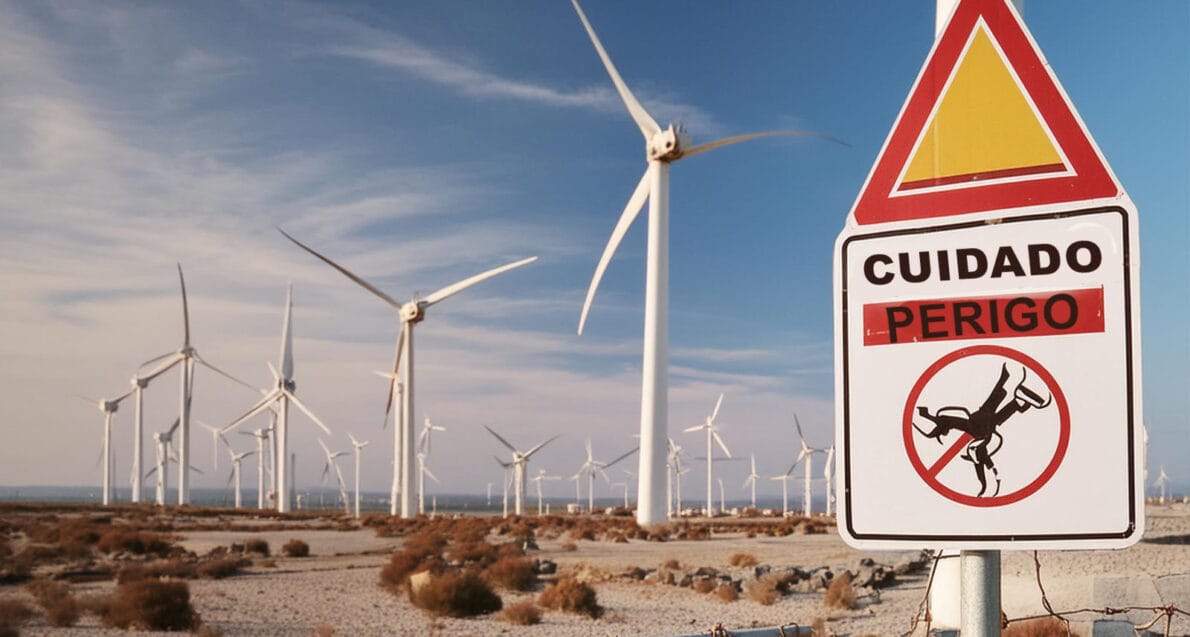
Wind Energy, Frequently Celebrated as a Clean and Sustainable Solution for Electricity Generation, Has a Dark Side That Is Gaining Attention.
Could wind farms, symbols of the fight against climate change, also be villains of the environment and human health? This intriguing question leads us to explore the less discussed impacts of this technology.
Wind Turbine Syndrome
The Side Effect of Sustainability The so-called “Wind Turbine Syndrome” is an emerging issue, associated with continuous exposure to the noise and infrasound generated by turbines.
According to UOL columnist Carlos Madeiro, studies conducted by Oswaldo Cruz Foundation (Fiocruz) and University of Pernambuco (UPE) are investigating the effects of this syndrome in communities near wind farms.
-
Brazilian scientists are simultaneously advancing two research projects on clean hydrogen and driving solutions that could transform the energy matrix, enhance industrial competitiveness, and accelerate large-scale emission reduction targets.

-
Advancement in renewable energy: A R$ 150 million project launched by Petrobras and Finep aims to create state-of-the-art electrolyzers for green hydrogen, strengthening national research and preparing Brazil to compete in a billion-dollar energy market.
-
Illiterate or semi-literate grandmothers were trained to repair solar systems, open rural workshops, and light up homes that still depended on kerosene.
-
The world has bet on green hydrogen as the fuel of the future, but now faces the side effect: producing 1 kilogram requires about 9 liters of ultrapure water, and the largest projects on the planet are precisely in the driest regions of the Earth, where water is already scarce for people.





The main reported symptoms include hearing problems, sleep disturbances, difficulties in concentration and learning, as well as dizziness, nausea, and headaches.
In Caetés, Pernambuco, the hometown of President Luiz Inácio Lula da Silva, according to UPE, 57% of residents expressed a desire to move, with 70% attributing this wish to the effects of the wind farms. There, 60% of the local population reported mental health issues.
Impacts on Wildlife
Pumas and Birds in Collision Course Wind farms do not only affect humans. The local wildlife also suffers significant consequences. Reports from Ecoa magazine highlight that pumas and jaguars in the Boqueirão da Onça Environmental Protection Area, in Bahia, are changing their movement patterns due to the wind farms.
This poses an additional risk to already threatened species. Birds are also frequent victims of the turbines. Many are scared away, but others end up colliding with the blades.
In an interview with the cited columnist, Paula Tavares, a master’s degree holder in geography from the Federal University of Rio Grande do Sul (UFRGS), suggests that technologies such as blades painted black could reduce these deaths by up to 70%. Radars to detect birds and temporarily shut down the turbines are also a viable solution.
Data and Numbers of the Wind Sector in Brazil
Brazil has 1,063 wind farms across 12 states, with an installed capacity of 32 GW, according to data from the Brazilian Wind Energy Association (Abeeólica). Most of these installations are concentrated in the Northeast, representing almost 13% of the total capacity of the National Interconnected System.
Old Projects Face Criticism
Projects approved before 2014 face criticism for not meeting current environmental standards. Abeeólica acknowledges that these installations, such as the one in Sobradinho, may be out of compliance with the guidelines established by the National Environment Council (Conama). However, the entity assures that companies are continuously working to mitigate impacts and provide support to affected communities.
Relative Impacts: Wind Energy vs.
Other Activities Although the environmental impacts of wind farms are undeniable, Sandro Yamamoto, technical director of Abeeólica, states that they are significantly lower compared to other economic activities.
In this regard, he emphasizes that all projects go through rigorous environmental licensing and social assessment processes. “The wind sector has a great preservation effort,” stated Sandro Yamamoto.
Do you believe that these phenomena could hinder the development of wind energy in Brazil? In your opinion, what should be done? Share your thoughts in the comments and participate in this crucial discussion for the future of our planet.







Be the first to react!