





 Portuguese
  English
  Spanish
  4 min of reading
  0 comments


The Deceleration in the Wind and Solar Sectors Has Affected WEG’s Performance, Reflecting Changes in the Pace of Investment in Renewable Energy in Brazil and Worldwide.
The deceleration in the wind and solar sectors has become one of the main challenges for the renewable energy industry. At the center of this scenario, WEG, one of Brazil’s largest electric companies, is facing direct impacts on its results.
In recent years, the world has witnessed a rapid growth of clean sources, driven by decarbonization targets and government incentives. However, the pace of expansion has begun to lose momentum, both in Brazil and in other global markets.
This deceleration, although partially expected, reveals the transition from a moment of euphoria to a phase of greater stability and reassessment of investments.
-
The world could operate on clean electricity by 2050, but a study indicates that this would require up to 20 TW of renewable energy, more than 9 million hectares for solar, and strong cooperation between countries.

-
New catalyst developed by scientists in the USA enhances the performance of water electrolysis without using platinum, reducing operational costs and expanding the potential of green hydrogen as a strategic alternative for industries, heavy transportation, and clean energy generation.
-
China implements basalt fibers tested on the Moon to contain the desert’s advance in 1 million hectares, and the program surprises scientists worldwide.
-
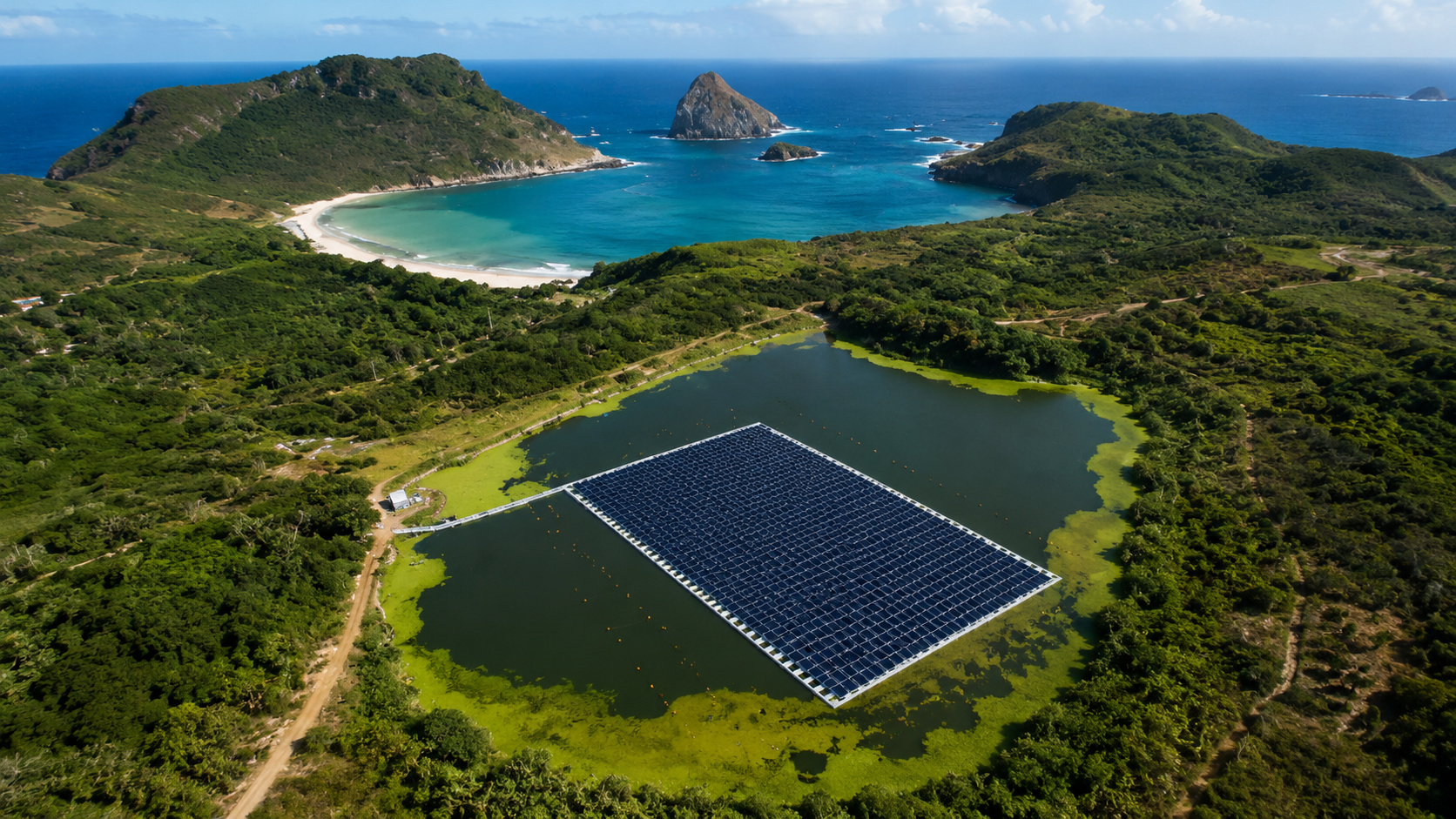
Fernando de Noronha begins unprecedented energy transformation with a R$ 350 million solar plant that promises to replace diesel generation and change the island’s sustainable future by 2027.



Change in Global Scenario and Its Effects
Historically, the wind and solar energy sector has gone through cycles of accelerated growth, followed by adjustment periods. In the 2010s, tax incentives and climate policies drove large-scale projects, creating an environment of continuous expansion.
However, the global scenario has changed. The rise in equipment costs, supply chain challenges, and increasing interest rates have reduced the attractiveness of new ventures.
In the case of WEG, which supplies generators, inverters, and motors for wind and solar parks, the decrease in new projects has directly affected orders. This has caused some revenues from this segment to decline, even with the strengthening of other areas of the company.
Moreover, intense international competition has pressured profit margins, particularly amid the entry of Asian manufacturers with lower prices.
The Importance of WEG in the Energy Sector
Founded in 1961, WEG has established itself as one of the largest manufacturers of electrical equipment in the world. Throughout its history, the company has diversified its operations, expanding into the renewable energy sector.
In the 2000s, the company began to invest consistently in solutions for wind and solar energy. This strategy aligned with the global movement for energy transition and consolidated WEG’s presence in international markets.
However, the deceleration in the wind and solar sectors has posed new challenges for the company. Although it remains profitable and innovative, WEG has had to adjust its expectations and redirect some investments to other segments, such as electric mobility, industrial automation, and energy storage.
As a result, the company aims to balance its portfolio and reduce dependence on sectors subject to strong fluctuations.
Factors Explaining the Deceleration
The deceleration currently observed has multiple causes. First, the rise in international interest rates has increased the cost of capital, making financing long-term projects more difficult, especially in emerging countries.
Secondly, post-pandemic supply chain bottlenecks have impacted the prices of essential components, such as solar panels, turbines, and inverters.
Additionally, public policies in some countries have been revised, reducing tax incentives and altering import tariffs. In Brazil, the regulatory uncertainty regarding the solar microgeneration framework has also generated lower investor confidence.
The combination of these factors has created an environment of greater caution, where companies and governments prefer to consolidate existing projects before initiating new expansions.
Perspectives and Paths for the Future
Despite the current scenario, the outlook for renewable energy remains promising. The global quest for emission reductions and energy security keeps the sector as a strategic priority.
In WEG’s case, the company invests in technological innovation and product diversification to sustain growth in the medium and long term.
Energy storage projects, such as batteries and hybrid systems, are gaining traction as a response to the intermittency of wind and solar sources.
Moreover, the electrification of vehicles and the digitalization of electric grids offer new opportunities. WEG, with its expertise in motors and automation, is well positioned to take advantage of these trends.
In the global context, the deceleration may even represent a necessary pause. It allows the sector to reorganize, improve technologies, and make its processes more efficient. Thus, when the new cycle of expansion begins, the foundation will be more solid and sustainable.
A New Rhythm for the Energy Transition
The energy transition is not a linear process. It advances in stages, following the economic and technological conditions of each country.
Therefore, the current deceleration should be interpreted as a moment of maturation for the sector.
Companies like WEG need to continuously adapt, developing integrated solutions that unite different energy sources and meet increasingly complex demands.
In this sense, the future of the sector will depend on the ability to innovate, reduce costs, and create more resilient business models.
WEG’s trajectory shows that innovation and flexibility are crucial for facing periods of instability.
Although the deceleration brings challenges, it also drives the search for new opportunities and strengthens the role of companies that invest in technology and sustainability.
Thus, the deceleration in the wind and solar sectors should not be seen as a setback, but as a natural phase of adjustments towards a more balanced and efficient energy model.






Be the first to react!