Portuguese
  Spanish



Union of Three Major Companies in the Field Promotes Development of RCVD Robot, Created to Measure Cherenkov Radiation Levels in Nuclear Fuel Tanks.
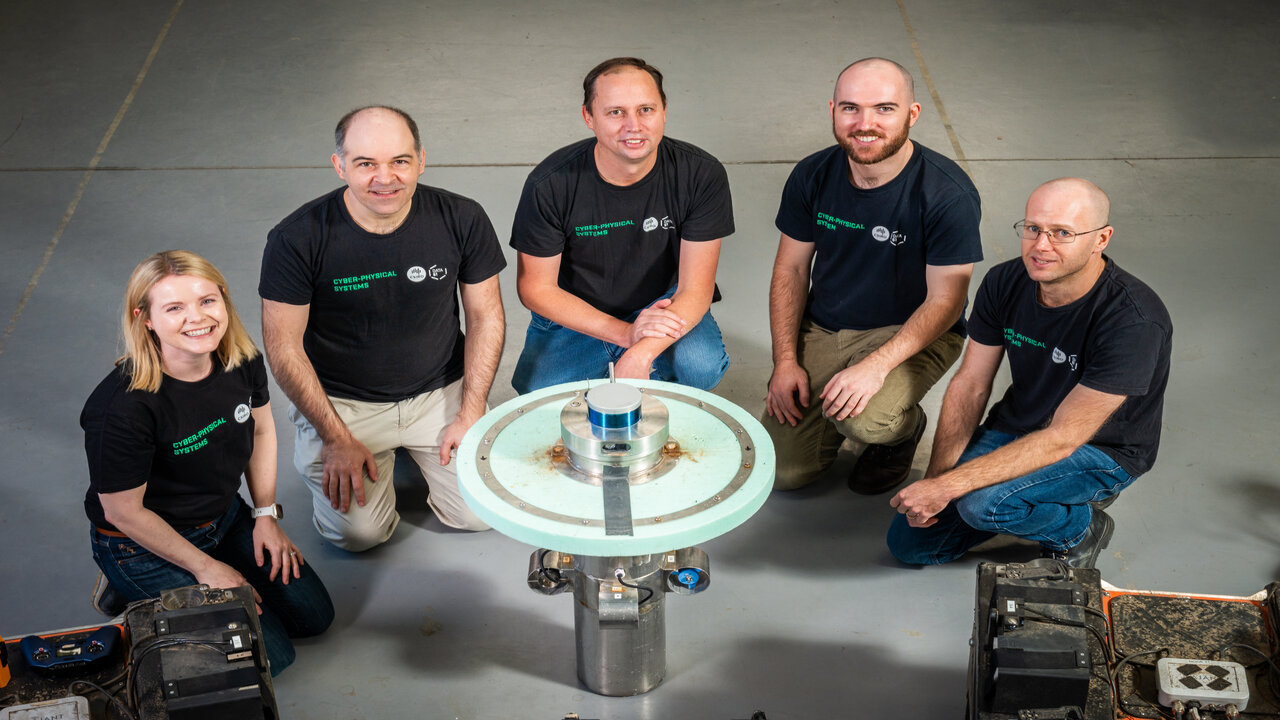
Soon, an autonomous floating robot will play a crucial role in the inspection of nuclear fuel used worldwide. The robot, named Robotized Cherenkov Viewing Device (RCVD), was born from a collaboration between data from the Australian national scientific agency CSIRO (Commonwealth Scientific and Industrial Research Organisation), Hungarian robotics company Datastart, and the International Atomic Energy Agency (IAEA). This project aims to measure radiation levels in tanks containing nuclear fuels.
Cherenkov, Nuclear Fuels, and Production: RCVD Robot Will Provide More Detailed Analyses and Enhance Safety for Workers
The robot, operated using autonomy enabling software developed by Data61 (digital specialist arm) of CSIRO, navigates autonomously through a nuclear fuel storage tank while updating a real-time map with images and data on Cherenkov radiation from the fuel assemblies.
As explained in the IAEA statement, Cherenkov radiation is a form of observable energy appearing as a blue glow produced by electrons and protons.
-
Angra 3 becomes Brazil’s R$ 24 billion dilemma: finishing the 66% complete plant costs almost the same as abandoning it, right in the race for energy in the AI era.

-
Nvidia Secures Billion-Dollar Deal to Supply Up to 170,000 AI Accelerators to a 360 MW Data Center in Indonesia, Aiming to Transform Batam into an Advanced Computing Hub

-
NuScale proposes revised plan for six VOYGR SMR reactors in Poland after ending U.S. project
-
Holtec and EDF Submit Joint Proposal to Install Four SMR-300 Reactors in England with Combined Capacity of 1.3 GW


In this way, moving faster than the speed of light in a specific medium. This phenomenon was named after Russian scientist Pavel Cherenkov, who won the Nobel Prize in Physics in 1958.
The RCVD analyzes the position of each assembly and the unique signature that each one has to detect whether the fuel has been removed or replaced.
The collected information is communicated directly to the team working on the inspection. In this way, the working conditions at nuclear facilities are made safer for employees.
Operational Safety Is an Important Factor
A prototype of the robot successfully completed a test at an operating nuclear power plant in South America.
The RCVD prototype navigated through a used fuel tank and provided inspectors with real-time data that can be used for safeguard verification.
The prototype will continue in the testing phase, but plans are in place for the device to be equipped with computer vision to enhance autonomy in the next phase of development.
“The test demonstrates that autonomous robots will soon assist in measuring and analyzing irradiated nuclear fuel. Providing greater protection to workers. Inspectors currently operate above the reservoir on a suspended platform, sometimes in 40-degree Celsius heat. Using a portable device to identify hundreds of used nuclear fuel rods. Thus, this new technology will remove humans from the path of danger and ensure that the value of safety inspections matches that of nuclear materials,” said Rosie Attwell, the technical program manager at CSIRO.
Meanwhile, IAEA Technology Survey Specialist, Dimitri Finker, stated that the use of an autonomous system will reduce the difficulty of conducting field verifications for the professional overseeing the facility and for the agency.
“It also significantly improves the quality of the data collected. The instrument can be ideally positioned near the fuel, leading to more consistent and accurate measurements,” he stated.
Currently, safety inspectors need to use a small portable optical instrument called the Enhanced Cherenkov Viewing Device (ICVD).
It is suspended above a nuclear fuel pool and examines manually through a lens. The RCVD robot will facilitate and protect employees from the radiation emitted from the storage.