






 Portuguese
  Spanish
 4 min of reading
  0 comments


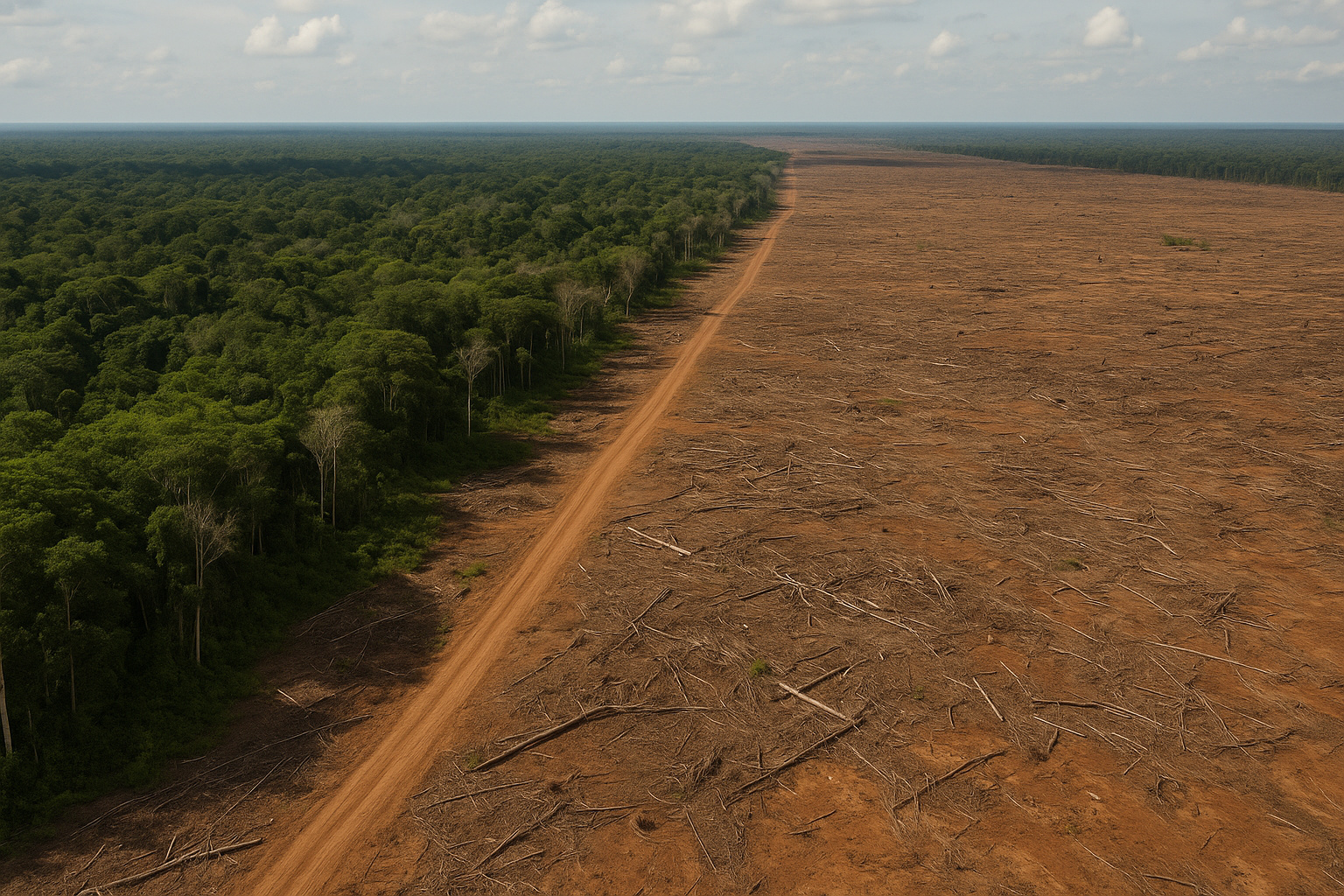
Official Data from Inpe Confirms Third Consecutive Drop and Prevents More Than 700 Million Tons of CO₂ in the Amazon and Cerrado.
A new historic mark in the fight against deforestation was recorded in Brazil, according to data released on October 30, 2025, in Brasília, by the National Institute for Space Research (Inpe).
Between August 2024 and July 2025, the Amazon lost 5,796 km² of forest, representing a reduction of 11.08% compared to the previous period. At the same time, the Cerrado recorded 7,235.27 km² deforested, equivalent to a drop of 11.49%.
These results consolidate the third consecutive year of retraction in the Amazon and the second in the Cerrado. Furthermore, the government of President Luiz Inácio Lula da Silva has achieved a 50% reduction in Amazon deforestation since 2022, a significant milestone in the environmental agenda.
-
Brazilian promises his children to save a river, creates an eco-barrier in his backyard, has already removed more than 40 tons of trash from the water, and even inspires the idea in other states of the country.

-
How a Brazilian company created a system that transforms broken pallets of any brand into new assets, recycles 80 tons of plastic per month, and found a profitable solution to a problem that challenges industries across the country.

-
Invasive bullfrog capable of devouring other amphibians and laying up to 20,000 eggs is found in Florianópolis, raising an alert about the threat to native fauna.
-
It looks like a baby, but it’s an adult: meet the Bornean pygmy elephant, the smallest elephant in the world threatened by habitat loss.



Expressive Environmental Results and Emission Reduction
According to the Ministry of the Environment and Climate Change (MMA), the joint reduction in both biomes prevented the emission of 733.9 million tons of carbon dioxide equivalent (CO₂e) since 2022. This volume is comparable to the total emissions of Spain and France combined during the same period.
This progress, therefore, demonstrates that Brazil is on the right track to achieve zero deforestation by 2030. Moreover, specialists from Inpe highlight that the results are due to the growing use of satellite monitoring technology and the resumption of public policies for environmental protection.
Strengthened Environmental Governance and Ministerial Integration
The federal government promoted a complete restructuring of environmental governance. As part of this change, new Action Plans for the Prevention and Control of Deforestation and Burnings (PPCDs) were created across all biomes.
At the same time, the Permanent Interministerial Commission for Prevention and Control of Deforestation and Burnings (CIPPCD) was reactivated, bringing together 19 ministries under the coordination of the Chief of Staff.
According to Minister Marina Silva, these actions “put Brazil back in global environmental leadership, showing that development and preservation can, indeed, go hand in hand.”
Stricter Enforcement and Operational Advances
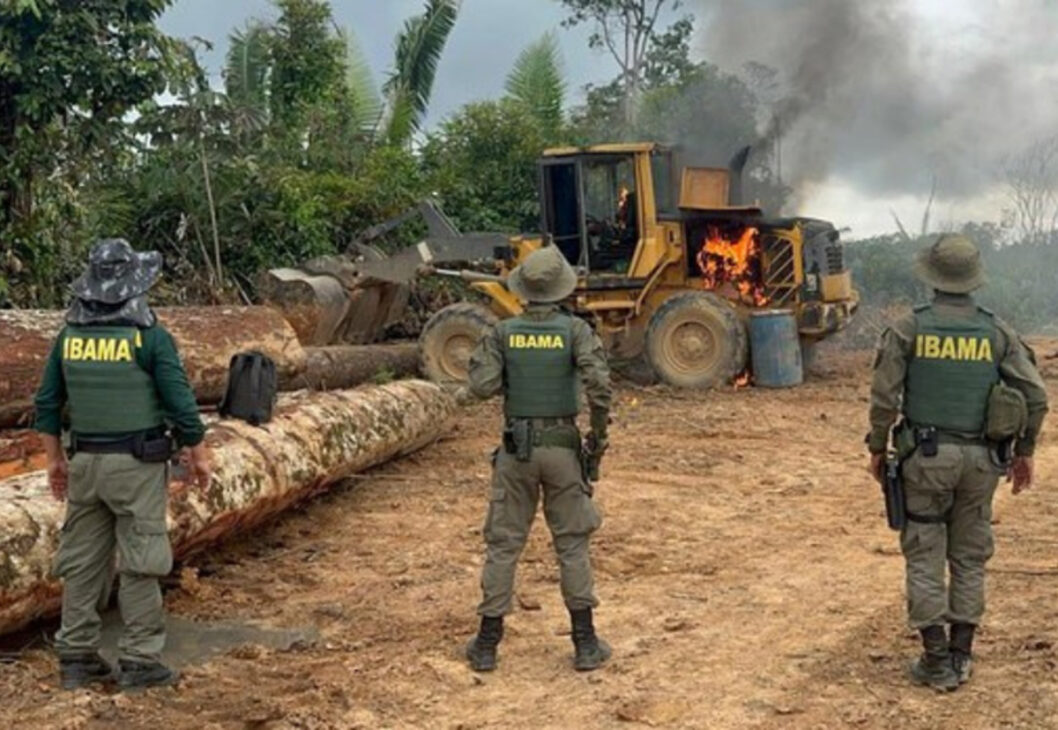
Between 2023 and 2025, Ibama significantly expanded its operations. During this period, there was an increase of 81% in infraction notices in the Amazon, 63% in fines, 51% in embargoes, and 49% in embarged area.
In the Cerrado, the progress was also notable. The number of citations grew 24%, fines 130%, embargoes 38%, and the area under embargo 26%.
Meanwhile, the Chico Mendes Institute for Biodiversity Conservation (ICMBio) intensified field actions. Between August 2024 and July 2025, there were 312 inspections in the Amazon and 91 in the Cerrado, resulting in 1,703 infraction notices and 1,034 embargoes.
Priority Municipalities Register Sharp Decline
In the municipalities of the Union with Municipalities Program (UcM), considered priority by the MMA, deforestation dropped 65.5%. This decline was more intense than the national average.
The states with the greatest reduction were Tocantins (-62.5%), Amapá (-48.15%), Acre (-27.62%), Maranhão (-26.06%), Amazonas (-16.93%), Pará (-12.4%), Rondônia (-33.61%), and Roraima (-37.39%). Only Mato Grosso showed an increase, with 25.06%.
According to André Lima, extraordinary secretary of Deforestation Control, “the decline in priority municipalities is 31% greater than the average in the Amazon. This result proves that the integration among federal entities is working.”
Satellite Monitoring and Technological Advances
The Prodes system, from Inpe, uses satellite images to measure annual deforestation. Additionally, the Deter system sends daily alerts about changes in vegetation cover.
Thanks to these tools, control actions have become faster and more precise. Since 1988, Inpe has conducted annual measurements, allowing tracking the evolution of forest destruction and identifying critical areas.
Main Measures Implemented by the Federal Government
Between 2023 and 2025, various actions strengthened the fight against environmental destruction:
- R$ 3.64 billion invested in the Amazon Fund, with support from eight donor countries;
- R$ 850 million allocated to Ibama, reinforcing enforcement actions;
- R$ 785 million invested in the Union with Municipalities program, benefiting 81 cities in the Legal Amazon;
- R$ 405 million allocated to combating forest fires in the nine Amazon states;
- Implementation of Integrated Fire Management Plans (PMIF), as provided in Law No. 14,944/2024, for preventing burnings.
These initiatives, therefore, place Brazil in the spotlight of the global climate agenda. They also strengthen the commitment to reduce devastation and stimulate sustainable development.
What Does the Future Hold for Brazil?
The numbers show that the country is progressing towards the goal of zero deforestation by 2030, a commitment made under the Paris Agreement.
Still, the challenge is enormous. The government will need to balance economic growth, environmental protection, and social inclusion.
Will Brazil be able to maintain this reduction pace and achieve zero deforestation by 2030 without compromising national development?







Be the first to react!