Portuguese
  Spanish


Volvo Presents In Erlangen, Germany, The World’s First 100% Electric Demolition, Conducted With Battery-Powered Excavators, Trucks, And Loaders, Reducing Noise And Eliminating Local Emissions On Construction Sites.
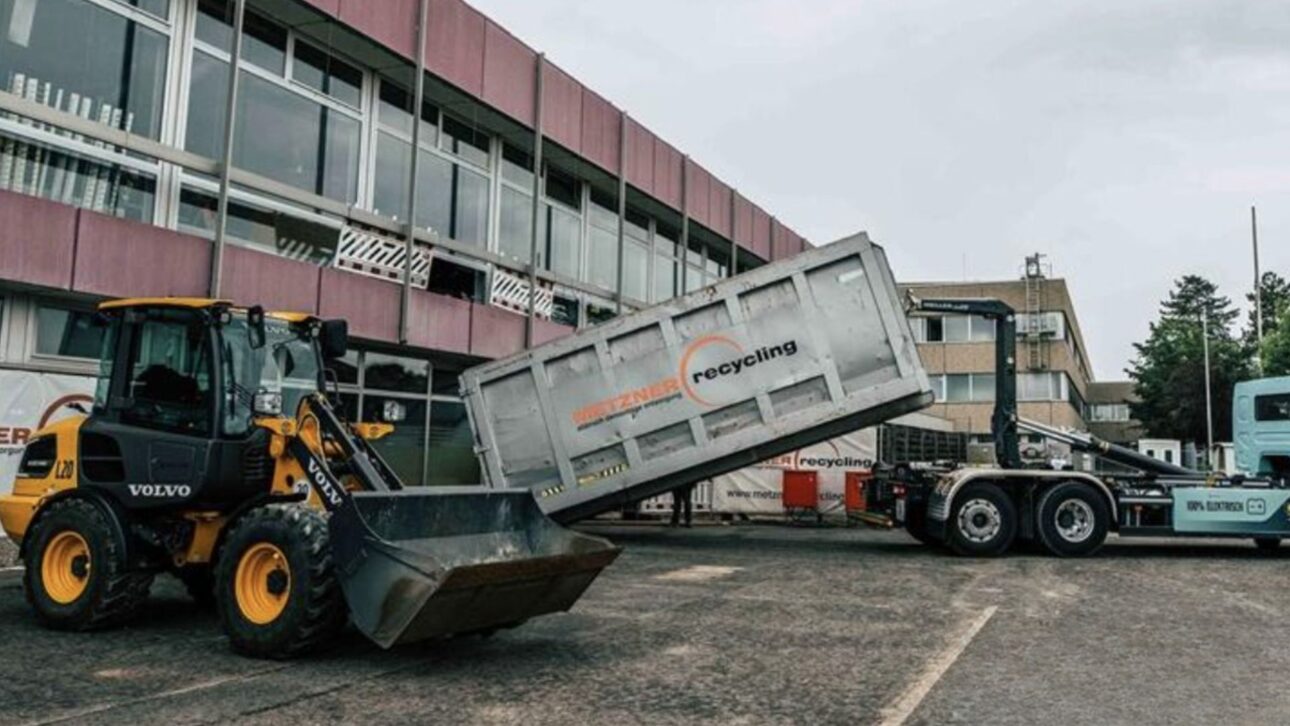
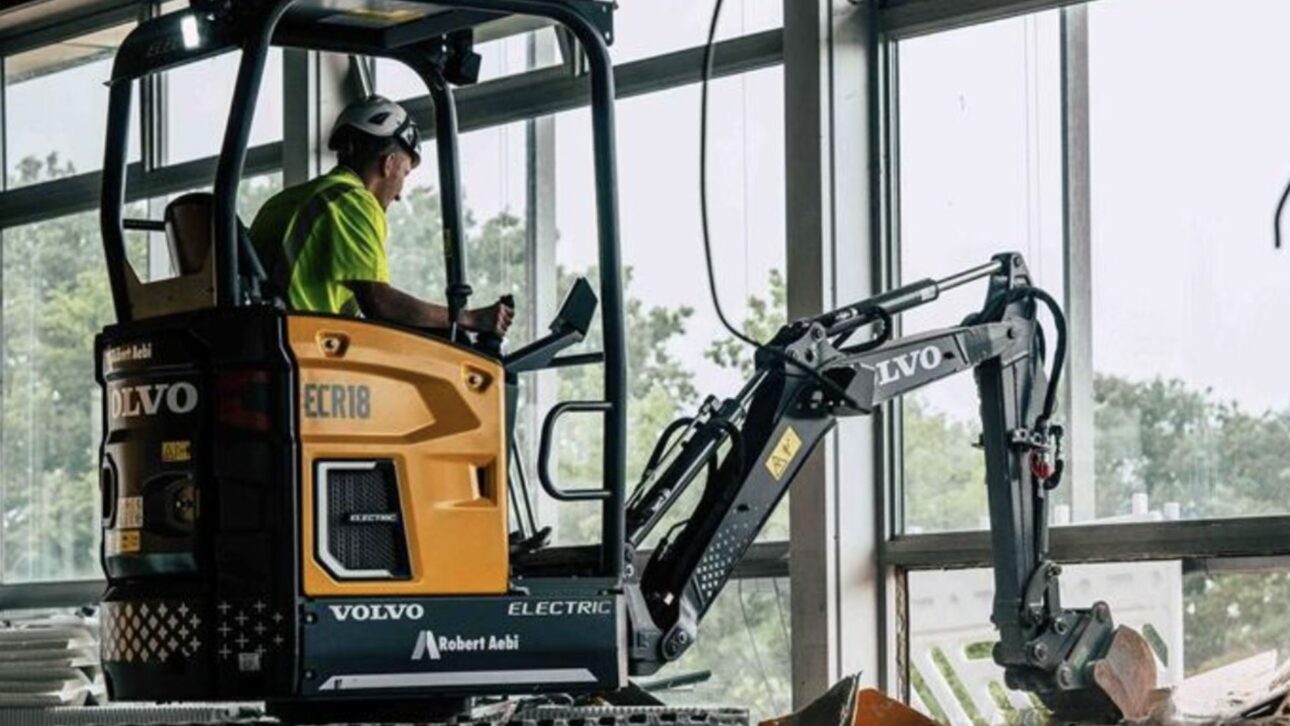
Volvo performed a 100% electric demolition in September 2025 at the former Siemens campus in Erlangen, Germany, in partnership with Siemens and Metzner Recycling.
The work, conducted from start to finish with electric excavators, loaders, and trucks, operated connected to the grid with certified renewable energy and without the use of diesel generators.
The operation delivered practical benefits: noise reduction, elimination of local emissions, and productivity comparable to conventional machines.
-
Brazil to Convert 80 Public Properties into 11,000 Affordable Homes Across 44 Cities to Address Housing Shortage

-
Brazilian Company Develops Wall Panels from Recycled Refrigerator Foam with Comparable Thermal and Acoustic Performance

-
Brazil’s São Paulo Region Unveils Latin America’s Largest Timber Shopping Mall, Built in 7 Months, Capturing Carbon and Preventing 900 Tons of Emissions
-
Danish Island Uses Seaweed for Durable, Centuries-Old Roofing Solution


First Fully Electric Demolition In Germany
Unlike a demonstration event, the intervention involved the demolition of structures, waste management, and transportation using an electric ecosystem.
The power came from a dedicated transformer on site, allowing for simultaneous recharging of equipment and continuous operation of machines connected to the grid.
In addition to outdoor activities, indoor tasks were executed with electric compactors and demolition robots, favoring enclosed environments with reduced ventilation and smoke.
Noise And Emissions: Significant Decrease On Site
With no combustion engines and without cooling fans from the diesel setup, the noise level of electric machines decreases noticeably.
Volvo reports a decrease of about 9 dB in compact models compared to their diesel counterparts.
On a logarithmic scale, 10 dB less sounds like half the perceived volume.
In urban areas with strict noise limits, this level opens the door for construction during more restricted hours and near sensitive neighborhoods, such as schools and hospitals.
Operator Performance And Comfort
The manufacturer claims that electric versions offer similar power and productivity to diesel versions within the same equipment classes.
A practical advantage lies in the instant torque: when engaging the control, maximum force is available immediately, without the waiting for the “RPM climb” typical of combustion engines.
At the operator’s station, the absence of a diesel engine reduces vibration and background noise.
Throughout the shift, this translates into less fatigue and greater comfort—factors that directly influence work quality and safety.
Autonomy And Recharging Planning
The usage window per charge depends on the size and application.
For medium-sized excavators, 7 to 8 hours are cited in typical cycles, covering a workday with breaks.
Since the electric system does not consume energy while idling, much of the battery time translates into effective work.
In routines with scheduled breaks, opportunity recharging—such as during lunch breaks—replenishes a significant portion of charge and keeps operations going throughout the day.
Infrastructure: From 240 V To The Ultra-Fast Charger
At sites with grid access, compact machines can be charged at night using 240 V outlets, similar to those used by light electric vehicles.
For high construction rotations, Volvo offers both static and mobile DC chargers.
With 250 kW solutions, it is possible to recover approximately 20% to 80% of the state of charge in about one hour.
In areas without available grids or where power supply is weak, energy storage units come into play to provide autonomy for the electric fleet.
The 7.5 Ton Powerbank For Remote Construction Sites
To supply energy off the grid, Volvo developed the PU500, a 7.5-ton “powerbank” in a container with up to 540 kWh of capacity and a 240 kW integrated DC charger.
The unit can operate connected to the grid (as a buffer) or in isolated mode, powering machines, trucks, and even tools through various AC and DC outputs.
In typical applications, the unit can charge heavy vehicles and support work fronts where installing fixed infrastructure would be unfeasible or uneconomical.
Costs, Incentives, And The Final Account
The purchase price remains the main barrier.
Electric machines cost more than their diesel equivalents, with premiums varying according to size and application.
Studies and international quotes indicate a range of 40% to 60% markup, going to higher levels in specific cases.
The equation tends to balance out in total cost of ownership due to the combination of cheaper energy per hour worked, fewer maintenance items, and less wear of components associated with the diesel setup.
In the meantime, public policies help reduce the initial difference.
In the United States, a commercial tax credit is in effect that can reach up to US$ 40,000 per vehicle for higher gross weight categories.
In addition to reducing the upfront cost, the incentive accelerates the renewal of urban fleets where noise and emissions are critical constraints.


Operational Impacts On Site
With less noise and zero local emissions, construction becomes viable in previously limited environments due to ventilation, such as tunnels, warehouses, and indoor areas.
Communication among teams improves, as orders and alerts do not compete with the rumble of engines.
Logistics also change: instead of fixed diesel refueling times, daily management starts to consider recharging windows and loading opportunities distributed throughout the shift.
What The Debut Indicates For The Sector
The experience in Erlangen serves as a proof of concept for complex fronts with noise and air quality restrictions.
By demonstrating technical and operational viability, Volvo aims to unlock large-scale adoption in demolition, recycling, and urban construction.
If productivity and TCO numbers are confirmed in more projects, electrification is likely to shift from niche to standard in specific applications—especially where legislation and the environment demand quieter and cleaner machines.
The question now is straightforward: in the daily practice of construction companies, will the combination of lower noise, instant torque, and on-site recharging be enough to accelerate the swap from diesel to electric in the upcoming construction cycles?