






 Portuguese
  Spanish


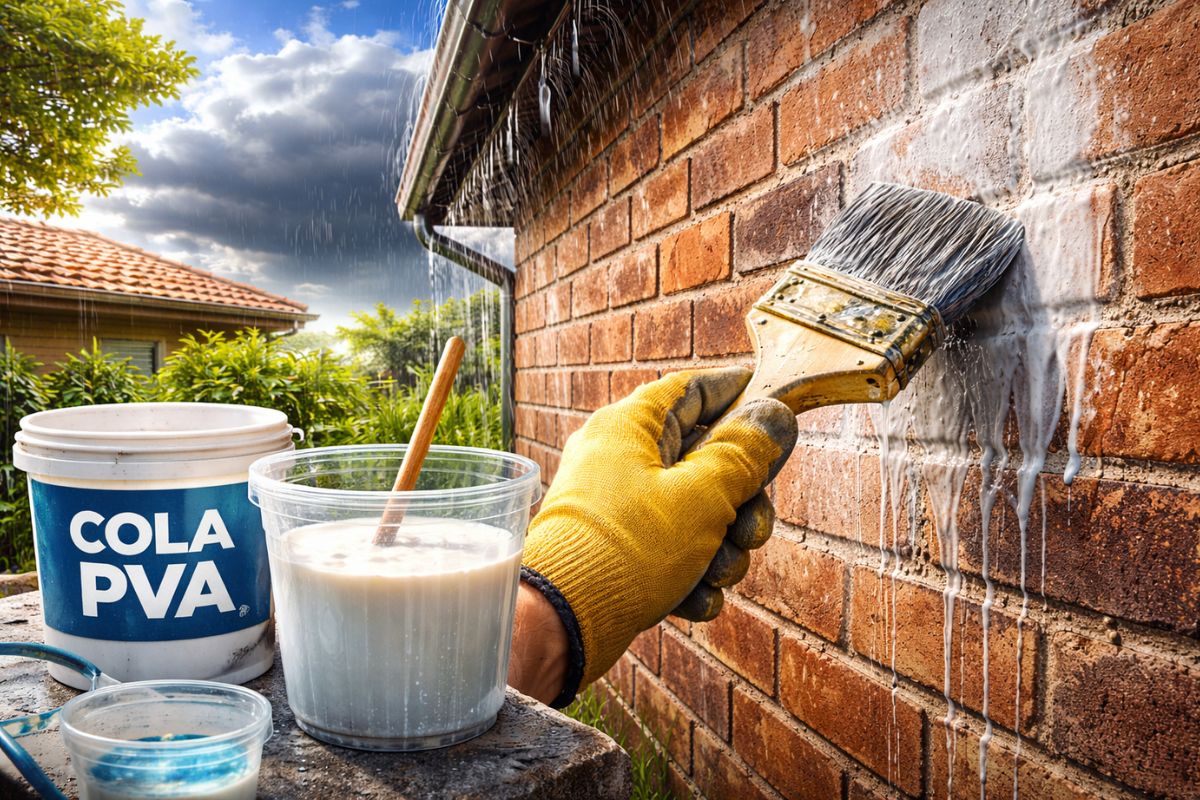

This PVA glue and water sealer strengthens the wall and can reduce light infiltration when applied before the rain and with the base dry.
Infiltration in the wall is often treated too late, when the paint is already bubbling, the plaster begins to give way, and the repair becomes more expensive than it should be. What few people consider is that a simple sealer, made with white PVA glue and water, can reinforce the surface seal and help reduce light infiltrations, especially before the rainy season.
The key is in the correct use. This homemade sealer does not replace professional waterproofing in severe cases, but can work as a preventive reinforcement when the wall is stable and the problem is still superficial. When applied correctly and at the right time, it can gain space in the home maintenance routine.
Why does infiltration appear even when the wall seems sturdy
Many walls appear intact on the outside, but already carry micro-cracks, finishing flaws, worn grout, or compromised sealing points. When rainwater finds these openings, it gradually seeps in, stains the surface, and weakens the coating over time.
-
U.S. City Builds Tiny Home Village on Water Company Land to House 136 Homeless People: Inside the Social Housing Units

-
Woman Turns Shipping Container into Home, Embraces Rural Life to Cut Monthly Expenses to Just Over $330
-
France Revamps 530 Social Housing Units with Large Balconies and Glass Facades Without Demolishing Existing Buildings

-
Facing high rent, couple transforms parents’ garage into a fully functional apartment, creating a complete home at a fraction of the market cost.




The beginning is usually silent. Light stains, localized peeling, and a musty smell already indicate that the wall is absorbing water. The sooner you reinforce the surface seal with an appropriate sealer, the greater the chance of avoiding headaches later, especially when the weather change is near.
What is the sealer with PVA glue and why does it help
The mixture of white PVA glue with water is used in small preventive repairs to reinforce porous surfaces before the final finish. In practice, it acts as a light sealer, which helps reduce surface absorption in areas with controlled wear.
It is important to understand the limit. The homemade sealer helps with light infiltrations and superficial wear, but does not resolve severe infiltration, structural damage, or situations where water enters constantly. The difference between a good result and frustration usually lies here, and many people only realize it too late.
When does this homemade sealer make sense and when does it not
This type of sealer makes more sense when the wall is dry, sturdy, and shows light signs of wear, such as small fine cracks that have already been corrected, high porosity, and localized peeling.
Before applying, it is worth following four precautions that avoid common mistakes:
Use only on a dry and stable base. If there is active moisture, the result loses strength and the finish may worsen.
Recommended for light wear. If the plaster is soft, bulging, or has recurring bubbles, it is not the ideal scenario.
Test first on a small area. Adhesion and base reaction vary, and this test avoids rework.
Consider it as preventive reinforcement. The homemade sealer acts as a complement when the problem is still under control.
And here comes the catch: the right moment is usually before the rain, when the surface is dry and you still have time to respect the drying time.
How to prepare the wall for the sealer to last longer
Preparation is what defines the result. Peeling paint, mold, dust, and weak plaster impair adhesion and significantly reduce the efficiency of the sealer.
The safest way is simple:
Scrape off anything loose, clean the surface well, and check for cracks, gaps, or constant moisture points. If water is continuously entering, sealing only the visible face does not solve the problem. First, the source of the problem needs to be controlled, and only then does the sealer act as a complementary protection.
Step by step for applying more safely
After cleaning and basic corrections, application works best when following an organized sequence. Done with care, the sealer makes the surface more uniform and improves protection against water absorption in areas of moderate exposure.
Some practical steps help:
Correct fine cracks before applying the mixture.
Apply evenly and without excess to avoid creating an irregular film.
Respect the drying time between coats.
Finish with appropriate paint for indoor or outdoor areas, depending on the location.
The most common mistake is trying to “solve quickly” and applying on a damp wall or without preparation. The promise of the homemade sealer depends on this well-done base, and that’s where many people lose the result.
Signs that the homemade solution is not sufficient


If the wall shows frequent bubbles, constant moisture, soft plaster, or stains that return quickly, the problem may be beyond the surface. In these cases, the homemade sealer loses strength because the infiltration may come from structural cracks, waterproofing failures, hidden leaks, or excessive contact with water.
The main point is not to confuse prevention with deep correction. As a reminder, homemade sealant can help for a long time in mild situations. But when the signs are severe, insisting only on this solution delays the proper repair and increases the headache at home.
Where to find a practical demonstration
For those who prefer to see the procedure in action, the original text mentions a video from the Bruna Decor channel with details of the solution.
Seeing the application helps to understand the uniformity, the test in a small area, and the drying time, which are the points that most impact the result.
Have you ever tested homemade sealant with PVA glue and water or do you know someone who did this before the rain?







