






 Portuguese
  Spanish


It is common to find children who can identify dozens of dinosaur species, memorize difficult scientific names, and spend hours imagining what life was like on Earth millions of years ago. Although this interest may seem like just a fun childhood phase, research in psychology and child development shows that this curiosity can bring important benefits for learning and cognitive development.
According to a report published by Super Rádio Tupi, experts explain that the fascination with dinosaurs stimulates skills such as memory, concentration, creativity, and problem-solving. Moreover, this intense interest promotes spontaneous learning, making the process much more enjoyable for the child.
More than just a simple hobby, the passion for prehistoric giants can represent a valuable opportunity to encourage scientific curiosity and develop skills that will accompany the child throughout life.
Why so many children like dinosaurs
Dinosaurs have characteristics that naturally spark children’s curiosity.
-
From Orphan to Leader: Geraldo Now Runs One of Latin America’s Largest Truck Recycling Companies

-
She Wasn’t the Chief Engineer, But She Led Key Decisions for One of New York’s Largest Bridges When Her Husband Fell Ill

-
Japanese Fan’s Emotional Reaction to Brazil Loss Goes Viral, But Behind-the-Scenes Reveal the Truth
-
As Homeownership Becomes Elusive in Brazil, Japan Faces a Silent Crisis with 9 Million Vacant Homes in Aging Villages




They are giant animals, different from any species existing today, and surrounded by mysteries that still challenge science. Furthermore, they lived millions of years ago, disappeared dramatically, and continue to be the subject of discoveries made by paleontologists in different parts of the world.
According to researchers from Indiana University and University of Wisconsin, intense interests in certain subjects are part of child development and usually emerge between the ages of two and six. During this period, many children show great dedication to learning everything about a specific topic, such as dinosaurs, planets, trains, or marine animals.
Moreover, this type of interest favors deepening knowledge and encourages autonomy in the search for information.
What psychology explains about this fascination
In psychology, this behavior is known as intense interest or highly focused interest.
Rather than representing a problem, it often indicates that the child is developing important learning mechanisms.
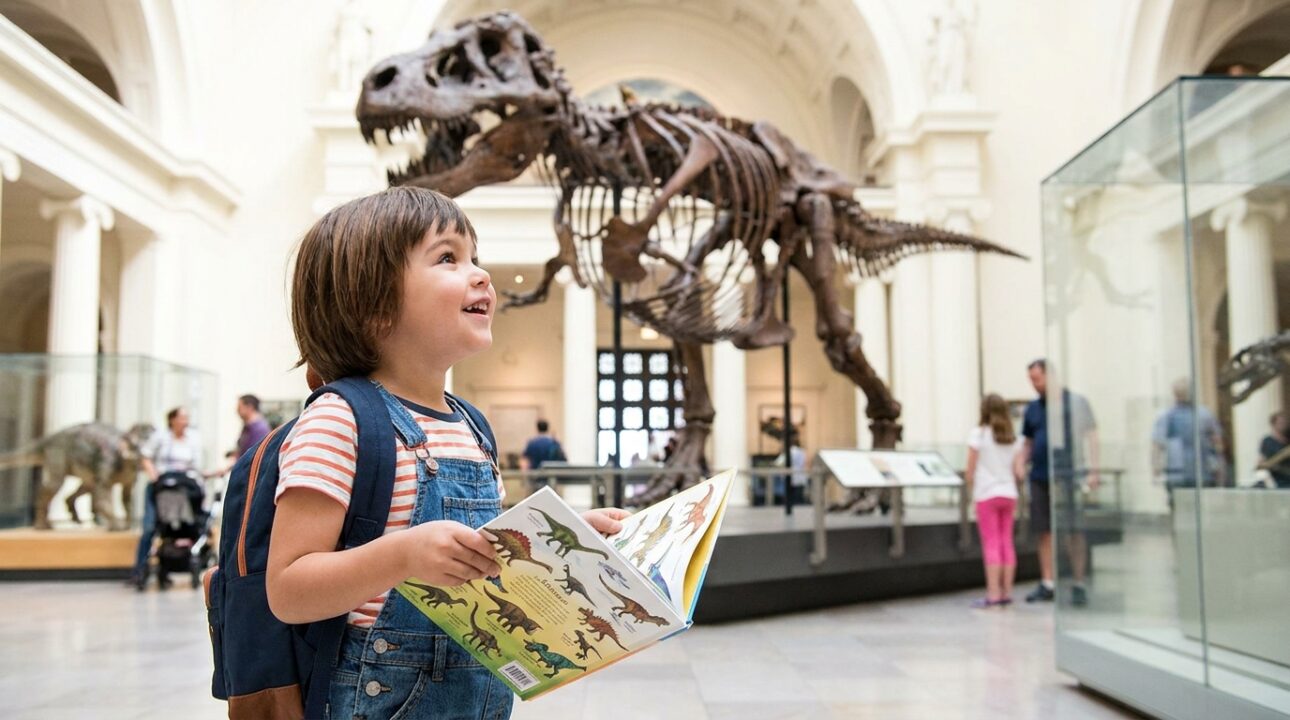
When a child researches dinosaurs, they observe images, ask questions, compare species, organize information, and create relationships between different concepts.
At the same time, they naturally expand their vocabulary, develop memory, and learn to solve questions on their own.
According to experts interviewed by Super Rádio Tupi, this process strengthens intellectual development without the child realizing they are studying.
Memory and learning are constantly stimulated
One of the first benefits appears in memory.
The scientific names of dinosaurs are often long and complex. Even so, many children can easily memorize dozens of them.
This process stimulates the ability to retain information and strengthens important connections in the brain.
Additionally, the child learns to relate each species to its characteristics, geological period, diet, and size.
Consequently, they develop natural strategies for organizing information, a skill that also benefits school performance.
Interest strengthens focus and concentration
Another important benefit involves the ability to concentrate.
While many digital contents offer quick and constant stimuli, the world of dinosaurs encourages longer and more detailed research.
Books, documentaries, museums, and educational games require attention for prolonged periods.
Therefore, experts say that children passionate about this topic tend to develop a greater ability to maintain focus on complex activities.
This skill can also contribute to other areas of learning throughout the school years.
Creativity grows along with imagination
Dinosaurs also strongly stimulate creativity.
By imagining how these animals lived, hunted, coexisted, and disappeared, the child constructs stories, creates hypotheses, and develops their own narratives.
Moreover, toys, drawings, and activities related to the prehistoric period encourage symbolic play, which is fundamental for child development.
According to cognitive development specialists, this type of activity strengthens imagination, language, and problem-solving skills.
Curiosity brings the child closer to science
Another very positive aspect is related to the interest in science.
Many children start by researching dinosaurs and gradually begin to discover other topics related to paleontology, geology, biology, evolution, ecology, and astronomy.
In this way, a single subject sparks interest in various areas of knowledge.
According to researchers, this process naturally expands scientific curiosity and encourages the formulation of questions, an essential characteristic for continuous learning.
Intense interests help in emotional development
Besides cognitive benefits, specific interests also contribute to emotional development.
When a child learns a lot about a topic they like, they feel satisfaction in sharing this knowledge with family, teachers, and friends.
Consequently, it increases their self-confidence and perception of competence.
Furthermore, achieving small goals — like finishing a book about dinosaurs or identifying a new species — strengthens the motivation to keep learning.
Should parents encourage this interest?
Experts say yes.
Although some people consider this fascination just a passing phase, encouraging children’s curiosity can bring very positive results.
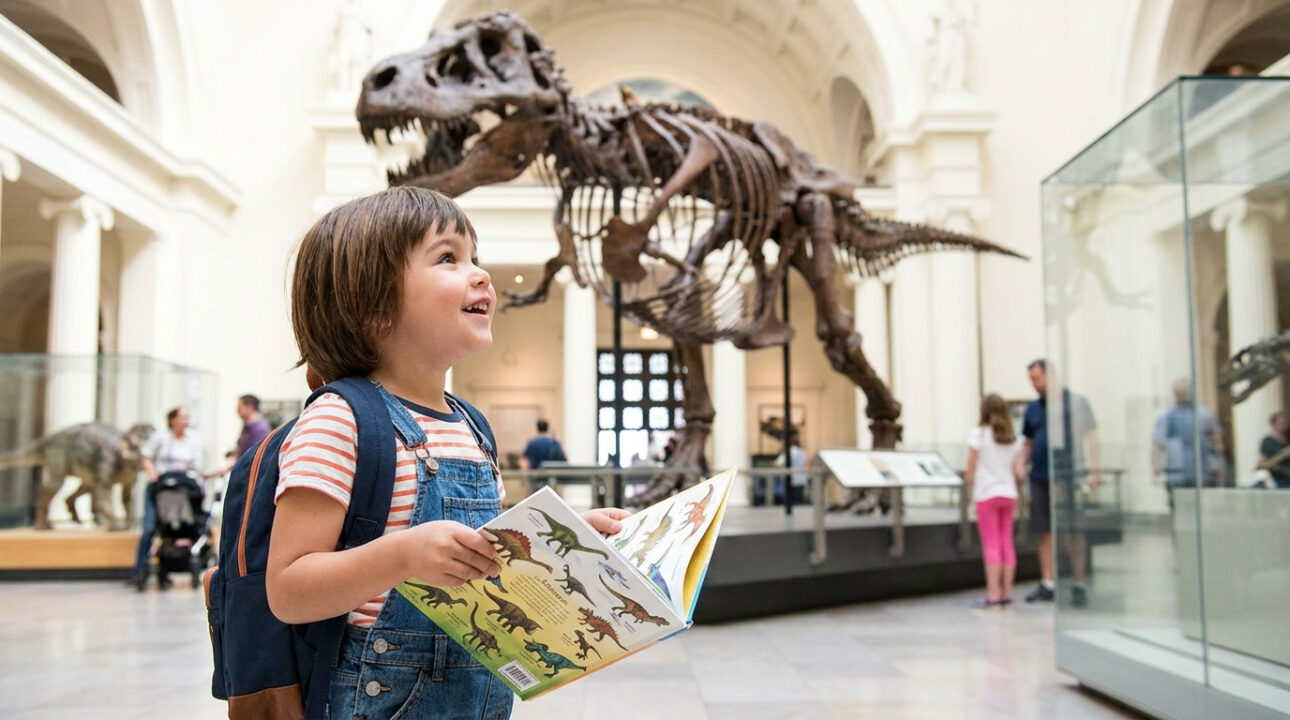
Parents can offer illustrated books, educational games, documentaries, visits to natural history museums, and activities that stimulate imagination.
Additionally, discussing the topic shows interest in the child’s learning and strengthens family bonds.
According to studies, the support of guardians helps transform spontaneous curiosity into a rich learning experience.
Not every child will follow the same passion
Despite the benefits, experts remind us that not all children will remain interested in dinosaurs throughout their childhood.
Research indicates that only a portion maintains this interest after starting school age.
However, this does not mean that the learning has been lost.
The skills developed during this period — such as concentration, organization, memory, and critical thinking — remain and can be applied in different areas of life.
Learning happens when there is curiosity
Various studies show that people learn more easily when they have a genuine interest in the subject.
In childhood, this happens very intensely.
When a child spontaneously chooses to research a topic, they dedicate more time to the activity, seek new information, and learn more meaningfully.
For this reason, educators and psychologists argue that individual interests should be valued whenever possible.
A passion that can leave positive marks
The fascination with dinosaurs goes far beyond play.
Although many children abandon this interest as they grow, the period of intense curiosity contributes to the development of memory, creativity, autonomy, critical thinking, and concentration.
Moreover, this universe brings children closer to science and demonstrates how learning can occur naturally when there is motivation.
More than memorizing difficult names or collecting toys, exploring the world of dinosaurs represents an opportunity to develop important skills that will accompany the child throughout life, reinforcing that curiosity remains one of the most powerful tools for learning.


