






 Portuguese
  Spanish
  3 min of reading
  0 comments


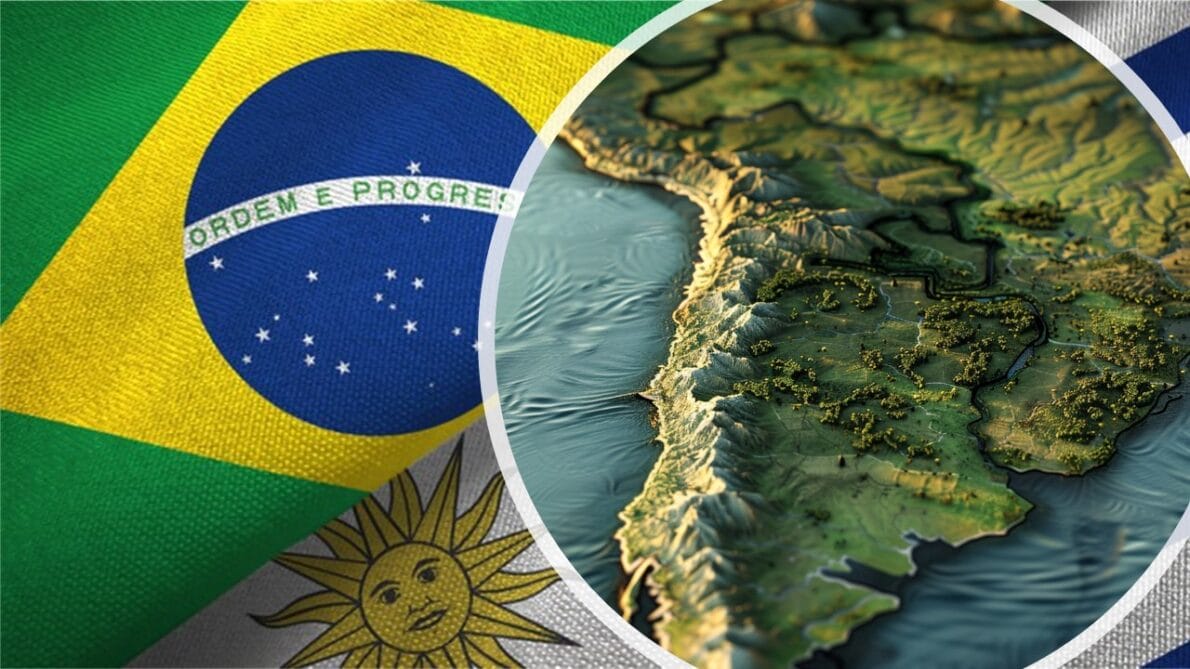
A Detailed Analysis Of The Border Dispute Allegations Between The Two South American Countries Brazil And Uruguay
Recently, several portals and websites such as Globalmilitar and the YouTube channel ‘let’s talk about history’ reported the news that Brazil could lose territories to Uruguay due to a territorial dispute between the two countries. Some of these reports even claimed that Uruguay issued an official statement on the matter. Check below for all the correct information regarding this potential dispute between the countries.
Historical Context Of The Territorial Dispute
It is important to emphasize that territorial disputes are not exclusive to regions such as Europe, the Middle East, or Asia. Latin America has at least ten active territorial disputes, some of which trace back to the independence process of the countries in the region. Among them, five have been taken to the International Court of Justice. Brazil, for example, has been involved in disputes with neighboring countries, including Uruguay.


The territory now known as Uruguay was part of the Brazilian Empire between 1817 and 1828, under the name of Cisplatina. Since then, the borders between Brazil and Uruguay have been defined by the Treaty of 1851. However, in 1930, Uruguay began to question the validity of this treaty, claiming two territories: the settlement of Tomás Albornoz, in Santana do Livramento, and the Brazilian Island, at the mouth of the Quarai River.
-
Israel finds Hezbollah militarized tunnel over 200 meters long under village, with 4 missile launch shafts, 12 chambers, anti-tank missiles, drones, and weapons depots at a depth of 25 meters.

-
Ukraine launches largest drone attack on Moscow since 2022, Russia claims to have intercepted nearly 200 aircraft near the capital, Kapotnya refinery targeted again, and offensive reignites alert about war reaching the Russian energy heart just a few kilometers from the Kremlin.

-
Truck drivers, freight, and fines from 2022 take center stage in politics: Chamber approves MP with amnesty, mandatory tracking by CIOT, million-dollar penalties, and new minimum wage for those who spend more than 24 hours on the road.

-
China off the radar: US plans mega $30 million weapons depot in Australia, out of reach of most Chinese missiles, with full capacity expected by 2028

The Current Situation Of The Territories In Dispute
Tomás Albornoz is a small community of around 100 inhabitants within Brazilian territory, with a Brazilian public school, but other essential services are provided by Uruguay. On Google Maps, this settlement is marked as “contested between Brazil and Uruguay”. The Brazilian Island is currently uninhabited. The Uruguayan government argues that geographical changes since the 1851 treaty would justify a review of the borders.
Despite the allegations, the two countries have never shown real interest in resolving this territorial dispute. Recently, the alleged issuance of a statement by Uruguay about the intention to reclaim these territories brought the topic back to the forefront.
Veracity Of The Allegations And Possible Implications
After an in-depth research, no official information from the Uruguayan or Brazilian government regarding a recent statement was found. Behind the diplomatic scenes, it is possible that Uruguay has expressed interest in revisiting the dispute, especially considering recent tensions with Mercosur.
The possibility of an armed conflict between Brazil and Uruguay or a crisis similar to the Essequibo Crisis is considered remote. The regions in question are isolated and have little strategic or economic importance, which contributes to maintaining a diplomatic and peaceful approach between the countries. However, if oil reserves or other valuable resources were discovered, the scenario could change drastically, attracting greater attention and possibly intensifying the dispute.


Be the first to react!