Portuguese
  Spanish


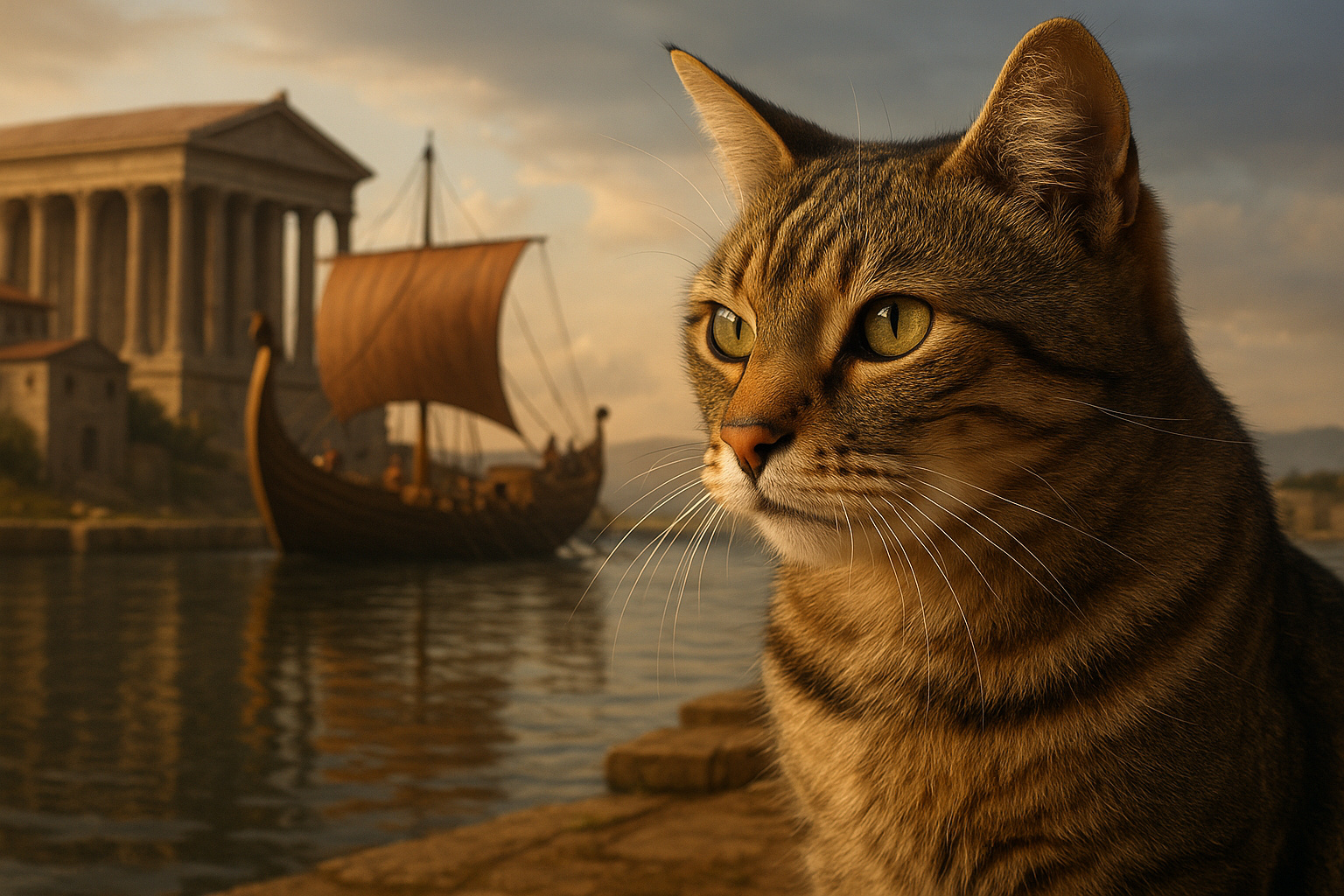

Researchers Identify That The Expansion Of Cats Occurred Through Intensive Trade Routes And Changed The Relationship Between Humans And Felines In Various Mediterranean Societies
The introduction of domestic cats in Europe occurred about 2,000 years ago and marked a decisive point in understanding the domestication of the species. In feline remains found in different regions, scholars verified that the presence of domestic cats intensified during the Roman imperial period. The analysis, conducted by researchers from Rome Tor Vergata University and published in the journal Science on Thursday (27), highlights that the animals were transported through maritime routes controlled by the Roman Empire.
Genetic Context And Advancement Of Research
Scientists analyzed 225 feline bones from 97 archaeological sites in Europe and the Near East. Thus, they produced 70 ancient genomes that confirm that the first cats found in prehistoric Europe were wild. Therefore, the evidence reinforces that the arrival of domestic cats occurred only at the beginning of the Roman era, contradicting the hypothesis of initial domestication 6,000 or 7,000 years ago.
Introductions Of Felines And Population Differentiation
The analyses revealed two introductions of felines coming from North Africa. About 2,200 years ago, wild cats were taken to Sardinia, creating a distinct lineage that does not correspond to the modern domestic cat. However, it was only a second dispersion, occurring about two centuries later, that gave rise to the genetic basis of today’s domestic cats in Europe. According to researchers, these movements occurred because Mediterranean cities expanded their commercial integration.
-
She bought a used motorhome at 23, refused an expensive renovation, dismantled furniture from the old apartment, and created a home on wheels with compact carpentry and repurposed pieces.

-
At 7 years old, boy swaps toy cars for raising bantams, dreams of becoming a veterinarian, and conquers the internet with his routine in the countryside of Santa Catarina; meet Luiz Miguel, the “Piá do Garnizé”

-
New York removed the tracks from over 2,500 subway cars and dumped everything at the bottom of the Atlantic, and what seemed like trash turned into an artificial reef teeming with fish and divers.

-
From matches sold by bicycle at age 5 to a global furniture empire: the lumberjack’s son founded IKEA at 17 in his uncle’s kitchen and transformed a small company into the largest furniture retailer on the planet.



Feline Movement Through The Roman Mediterranean
Studies indicate that cats were transported by sailors, who used them to control rats on ships crossing the Mediterranean with grain shipments from Egypt. Thus, this practice strengthened the species’ dissemination. In addition, feline remains found in camps of the Roman Army prove that the cats accompanied troops, moving to new regions across the continent. The oldest record identified in the study, similar to today’s domestic cats, dates from 50 B.C. to 80 A.D. in Mautern, Austria.
Cats In Egyptian Culture And Symbolic Integration
Researchers highlight that in Egypt, cats held a significant social and religious position. Feline deities and practices of mummification reinforce the value attributed to the species. Thus, the symbolism associated with the cat helped consolidate its presence on ships and later in the communities that welcomed vessels at various Mediterranean ports.
Roman Dispersion And Military Influence
The remains found in areas of Roman military influence show that domestic cats accompanied troop movements. Thus, felines began to integrate into daily activities, supply routines, and protection of provisions. According to researchers, this constant presence enhanced the interaction between humans and cats, consolidating a lasting bond.
Scientific Justifications And Impact On Historical Understanding
Experts assert that the evolution of genetic analyses has allowed the identification of previously unknown patterns. Therefore, the study disproves the idea of a single region responsible for feline domestication. According to Bea De Cupere, the genetic diversity observed shows that various cultures contributed to the formation of the modern domestic cat.
Limits Of The Study And Future Perspectives
Although the data indicate when cats arrived in Europe, researchers emphasize that it is still not possible to determine the exact location of initial domestication. For Claudio Ottoni, the complexity of the topic hinders definitive conclusions regarding the first interactions between humans and felines. Thus, the findings reinforce that further research will be necessary to clarify earlier phases of domestication.