






 Portuguese
  Spanish


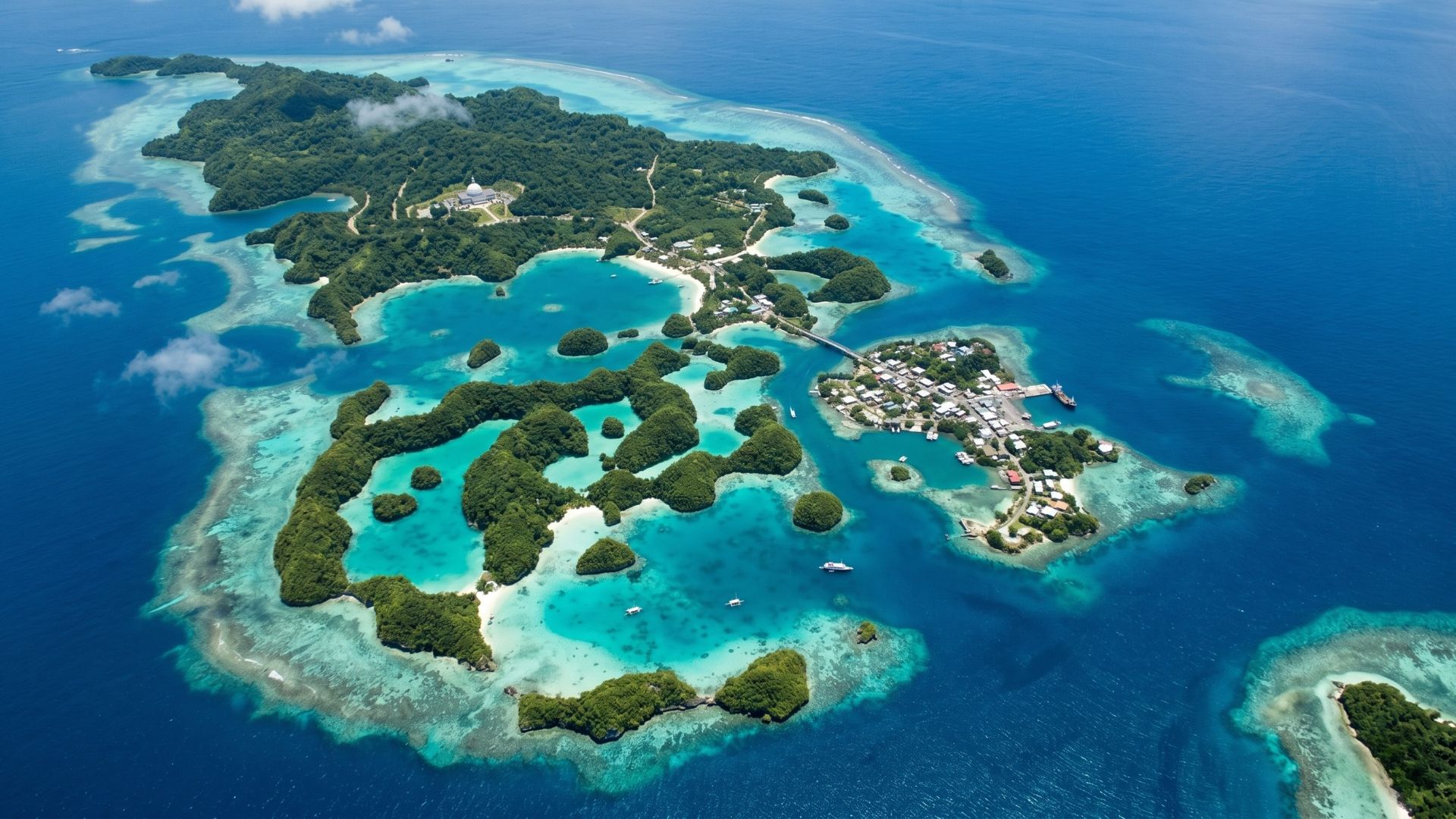
Palau protects 80% of its exclusive economic zone, banned toxic sunscreens for corals, and created a mandatory environmental commitment for tourists.
According to Seven Seas Media, Palau is an archipelago nation with just over 500 islands and about 21,000 inhabitants in the Western Pacific Ocean, in the Micronesia region. In just over a decade, the country has adopted a set of marine conservation policies that no other country has applied on the same scale proportional to its territory.
In 2009, Palau became the first country in the world to create a national shark sanctuary, banning commercial fishing of these species in its waters. In 2015, it established the Palau National Marine Sanctuary, protecting 80% of its Exclusive Economic Zone against commercial fishing, mining, and marine resource extraction.
Then came other unprecedented measures: the Palau Pledge, a mandatory environmental commitment stamped on visitors’ passports; the ban on sunscreens with toxic compounds for reefs; and the conservation fee of $100 per tourist, valid for all future visits to the country.
-
Brazil Extracts 12 Million Cubic Meters of Sand for Largest Beach Expansion Project, 82% Complete Along 8.8 km Coastline

-
Bosch Unveils Revolutionary 2.3 kg Hub Motor for E-Bikes with 45 Nm Torque and 400 Watts Power, Eliminating Resistance Above 25 km/h in Historic Shift for German Manufacturer
-
Brazilian Woman Turns 115, Becomes World’s 6th Oldest Person After International Verification
-
Woman Turns Apartment into Storage with 158 Pairs of Shoes and 140 Pants, Accumulating $47,000 Debt Due to Compulsive Buying



Palau became a global reference in marine conservation and sustainable tourism
Palau did not build its environmental policy solely with educational campaigns. The country created legal rules that directly change the behavior of tourists, companies, fishermen, and economic operators.
The logic is simple: Palau’s economy depends on the health of the reefs, sharks, jellyfish, beaches, and marine biodiversity. If these ecosystems collapse, tourism, local fishing, and the country’s very identity are also affected.


Therefore, Palau adopted a rare strategy. Instead of waiting for degradation to reach the point of closing beaches and reefs, the country decided to limit products, practices, and activities before the damage became irreversible.
Sunscreen was banned because chemical compounds threatened corals and jellyfish
The ban on sunscreens did not arise from a symbolic decision. The trigger was a 2017 report by the Coral Reef Research Foundation, which found high concentrations of oxybenzone and other sunscreen compounds in the waters of Jellyfish Lake.
Jellyfish Lake is a marine lake within one of the islands of Palau, a UNESCO World Heritage Site and one of the most visited tourist destinations in the country. It is home to millions of golden jellyfish that have evolved in isolation for thousands of years.
Finding sunscreen compounds in the water and in the tissues of these jellyfish was a direct warning. Tourism was bringing chemicals into one of Palau’s most delicate and unique ecosystems.
Oxybenzone and octinoxate are linked to coral reef damage
Oxybenzone, present in many conventional sunscreens, is identified by reef research organizations as an environmental pollutant associated with coral damage. Effects cited include DNA alterations, impairment of polyp growth, and increased risk of bleaching.

The problem is greater in areas of intense tourism, where thousands of people enter the water wearing sunscreen. Even small amounts per person can accumulate in lagoons, bays, and reefs with little water renewal.
Studies cited in the base text estimate that between 6,000 and 14,000 tons of sunscreen enter the oceans every year. In Palau, the local concentration in Jellyfish Lake made the environmental risk impossible to ignore.
Palau was the first country to ban reef-toxic sunscreens
In 2018, Palau passed a law prohibiting the manufacture and import of sunscreens with ingredients considered harmful to reefs. On January 1, 2020, it became the first country in the world to ban the sale of these products.

The rule includes oxybenzone, octinoxate, and eight other compounds associated with environmental damage. Retailers who violate the rule can be fined US$ 1,000, and prohibited packages can be confiscated at tourist entry points.
The measure put Palau ahead of larger and wealthier countries. The message was clear: to visit the marine paradise, tourists must respect the conditions that keep this ecosystem alive.
Palau Pledge is a mandatory environmental commitment stamped in the passport
The Palau Pledge was created in 2017 and became a requirement for foreign visitors. Upon entering the country, the tourist receives a commitment written by the children of Palau, asking them to explore carefully, act kindly, and tread lightly.
The text is stamped directly in the passport, alongside the entry stamp. The measure turns conservation into a personal commitment, not just an airport notice or tourist sign.
The promise is linked to the Responsible Tourism Education Act of 2018. This means that rules such as no littering, no collecting marine life, no anchoring on corals, and no using prohibited sunscreen have legal force during the stay.
Children of Palau wrote the commitment to protect future generations
The decision to use children as authors of the Palau Pledge was not accidental. The commitment places the visitor directly responsible to those who will inherit the islands in the future.
The then-president Tommy Remengesau Jr. supported the measure by stating that, with more people visiting the country, Palau could not relinquish responsibility for its islands. The logic is to associate tourism with care, not just consumption.
This format gave symbolic strength to the environmental policy. The tourist does not sign a bureaucratic term: they sign a promise before the children of a country that depends on preservation to continue existing as a destination and as a community.
Marine sanctuary protects 80% of Palau’s waters against commercial fishing
The Palau National Marine Sanctuary, established in 2015 and effective since 2020, protects about 80% of the country’s Exclusive Economic Zone. The area is approximately the size of the state of California.
In this zone, all commercial extraction is prohibited. This includes industrial fishing, mining, and other activities that remove resources from the marine environment on a commercial scale.
The remaining 20% of the waters have been reserved for local fishing managed by the communities. The model separates large-scale integral preservation and sustainable community use to ensure food security for the inhabitants of Palau.
Palau protects sharks, dugongs, manta rays, and endangered species
After the shark sanctuary, Palau expanded protection to other vulnerable species. The list includes dugongs, humphead parrotfish, manta rays, and Napoleon wrasse.
These species have faced significant pressure in neighboring countries, mainly due to overfishing, international trade, and habitat degradation. By protecting them, Palau reinforced the role of its reefs as a biodiversity refuge in the Pacific.
The country’s waters are home to more than 1,300 species of fish and 700 species of coral. This density of marine life is precisely the natural asset that sustains Palau’s global reputation as a diving and conservation destination.
Environmental fee of US$ 100 funds conservation and is valid for future visits
The Pristine Paradise Environmental Fee is the conservation fee charged to foreign visitors upon entry to Palau. The amount is US$ 100.
The difference is that the fee is valid for all future visits, not just for one trip. A tourist who pays upon the first entry can return multiple times without paying the same fee again.
The logic is not to maximize revenue per trip, but to encourage higher quality and lower impact tourism. Palau prefers visitors who know the rules, return to the country, and respect conservation over quick, massive, and predatory tourism.


-

-

-

5 people reacted to this.