Portuguese
  Spanish


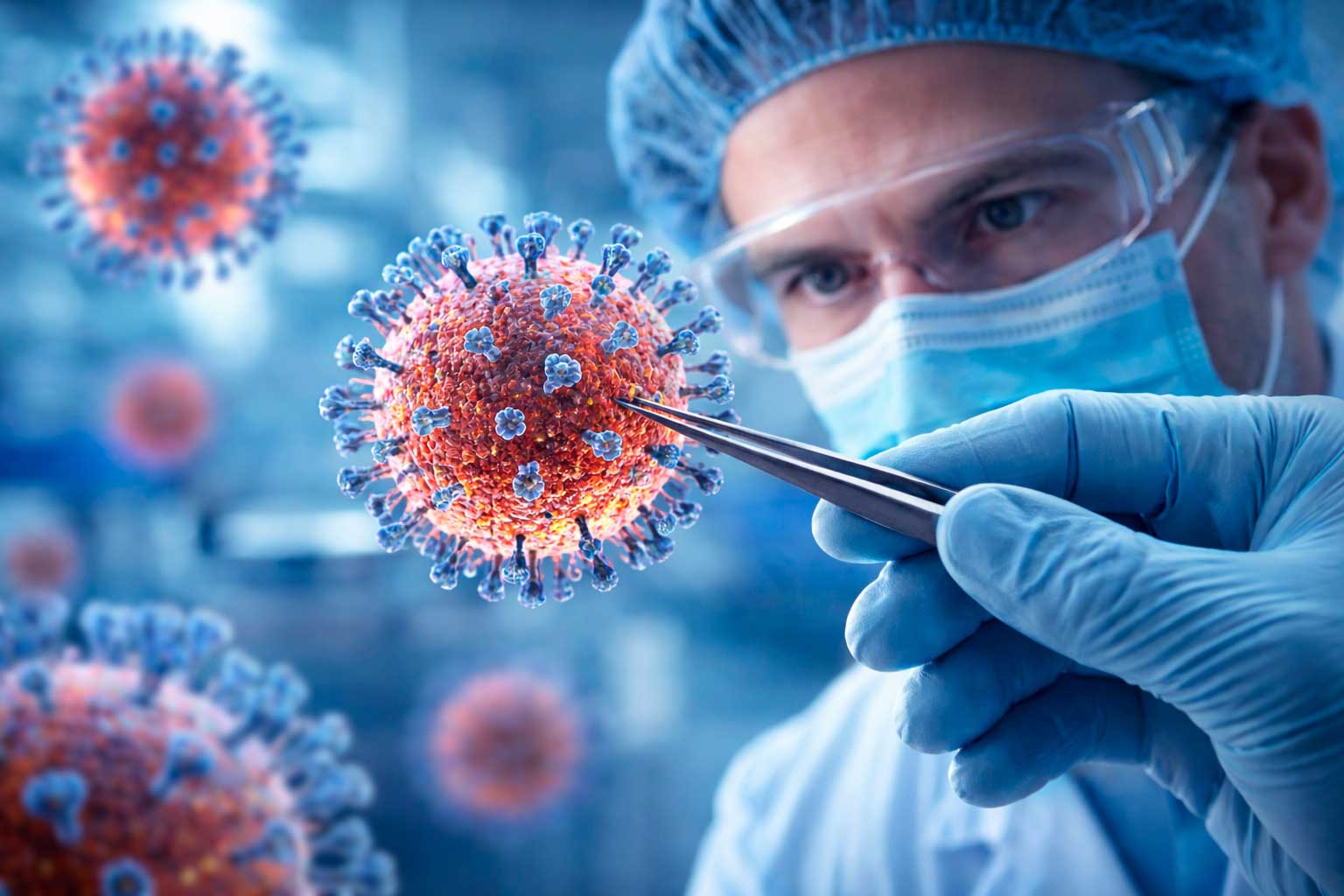

Study identified human antibodies capable of blocking the entry of the Epstein-Barr virus into cells. The result is still pre-clinical, but opens the way for therapies and future vaccines targeted at high-risk groups.
The Epstein-Barr virus, known for its association with infectious mononucleosis, is back in the spotlight after a discovery that could change the course of research against this agent. Scientists have managed to identify human antibodies capable of blocking infection in pre-clinical tests, a step considered important given a virus that has already infected more than 90% of adults and remains in the body for life.
The novelty draws attention because Epstein-Barr is not just a common virus. It is also associated with an increased risk of certain types of cancer, such as some lymphomas, nasopharyngeal cancer, and part of gastric cancer cases, in addition to having a strong relationship with multiple sclerosis in recent studies. Still, it is important not to distort the finding. Contact with the virus does not mean that a person will develop cancer or neurological disease. In most cases, this does not happen.
The advancement was detailed in February 2026 in the journal Cell Reports Medicine, based on work conducted by researchers at the Fred Hutch Cancer Center in the United States. The study shows that science may have found one of the virus’s most vulnerable points, something that has been sought for years because Epstein-Barr has a tremendous ability to bind to immune system cells and escape control.
-
Polar Air Mass to Hit Brazil: Temperatures to Plummet in Nine States, Near Freezing in the South with Frost Risk Until Monday

-
Chinese “dark factories” produce electric cars 24/7 with minimal human intervention, as Zeekr assembles 800 units daily, raising concerns in Brazil.

-
Spectacular Green Aurora Seen from Space Illuminates International Space Station, Captivates French Astronaut

-
In Tasmania, a Beach Features a Natural Stone Mosaic Formed by Earth’s Cracks Millions of Years Ago



In practice, the discovery does not represent an immediate cure or a medication ready for use in hospitals. What it offers is something possibly even more valuable at this stage of research, which is a robust proof that blocking the infection may be viable. This reinforces the perspective of preventive therapies for more vulnerable patients and also helps in designing more effective vaccines.
How the antibodies managed to block the Epstein-Barr virus
The researchers focused their investigation on two viral surface proteins, called gp350 and gp42. The first is involved in the virus’s binding to human cells. The second plays a crucial role in the pathogen’s entry, allowing fusion with the cell and the onset of infection.
Using genetically modified mice to produce human antibodies, the team generated ten neutralizing monoclonal antibodies, two against gp350 and eight against gp42. In tests, one of the antibodies directed at gp42 prevented infection in humanized mice exposed to the virus, while an antibody against gp350 provided partial protection.
This result is relevant because Epstein-Barr has always been a difficult target. Unlike other viruses, it finds efficient ways to attach to B cells, a type of white blood cell essential for the immune system. By accurately identifying where these weak points are, the research increases the chances of developing therapeutic antibodies and also vaccines that teach the body to react before the infection establishes itself.
Why this discovery matters beyond mononucleosis
Many people know Epstein-Barr only because of mononucleosis, but its impact goes far beyond that. The virus belongs to the herpesvirus family, circulates widely around the world, and is primarily transmitted through saliva. After infection, it can remain in a latent state in the body for years.
It is precisely this silent permanence that worries medicine. Although most people never develop serious complications, EBV can participate in a biological chain linked to certain tumors and inflammatory or autoimmune diseases. Furthermore, today there is no approved vaccine or specific treatment capable of eliminating the virus from the body, which helps explain why any real advancement in this area attracts so much attention.
Transplanted patients may be among the biggest beneficiaries
One of the most promising scenarios for this strategy involves people undergoing organ or bone marrow transplants. These patients often use medications that reduce the activity of the immune system, creating a dangerous window for Epstein-Barr to reactivate or circulate uncontrollably.
When this happens, post-transplant lymphoproliferative disease, known by the acronym PTLD, can arise. This is a serious and potentially fatal complication, often associated with Epstein-Barr, especially in contexts of immunosuppression. That is why researchers see monoclonal antibodies as a practical way to try to prevent this escalation before it begins.
The logic is relatively straightforward. Instead of waiting for the virus to gain ground in the weakened body, an infusion of antibodies could act as an immediate barrier, blocking infection or viral reactivation in higher-risk patients. Transplanted children, for example, may be among those who would benefit the most, as some of them have not yet had prior contact with the virus.
Even with the enthusiasm, the authors themselves treat the result with caution. New studies will still be necessary to evaluate safety, ideal dose, duration of effect, and efficacy in humans. In other words, the discovery is solid and promising, but it still needs to overcome the stages that separate a good experiment from a therapy that is truly available.
This advancement, however, changes the tone of the scientific conversation. Instead of merely describing the risk posed by Epstein-Barr, the research shows that there is already a concrete path to interfere with the infection precisely. For a virus that has accompanied humanity for so long and affects practically the entire population, this is already big enough news to mobilize new bets in preventive treatment, immunotherapy, and vaccines.
Do you think that research against such common viruses should receive more priority, even when most people never develop serious complications? And, in the case of transplant patients, should preventive therapies of this kind become a top priority in healthcare? Leave your comment and say whether this advancement could mark a real turning point or if we are still too far from this protection coming out of the laboratory.