Portuguese
  Spanish


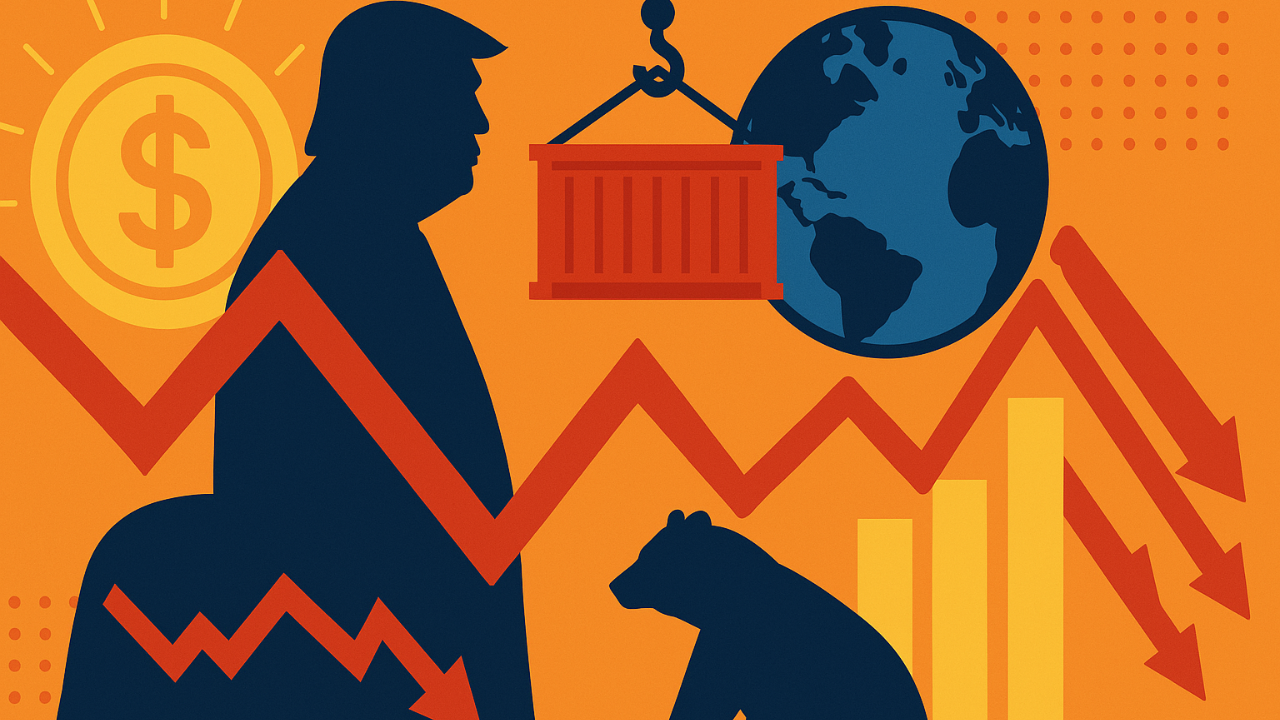

Dollar Falls After New Trump Tariffs, While Ibovespa Follows the Decline of Global Markets. Understand the Impacts on the Economy!
The financial market opened under strong turbulence this Thursday (3), with the dollar opening sharply lower against the real, while Ibovespa also recorded significant losses. The reaction comes a day after U.S. President Donald Trump officially announced a package of tariffs on imports, impacting economies around the globe.
Dollar Drops More Than 1.5% Amid Fears About Tariff Impacts
Around 9 AM, the dollar was down more than 1.50%, trading at R$ 5.61. The devaluation occurred not only against the real but also against other global currencies.
The DXY index, which measures the performance of the U.S. dollar against a basket of international currencies, was down about 2%, reaching its lowest quotation since September of last year.
-
Major Appliance Manufacturer Closes Factory in Argentina, Shifts Production to Brazil, and Restructures in Latin America with Mexico Closure, Investing Up to $165 Million

-
China to Revive $3.6 Billion Mega-Dam Project in Myanmar, Stalled Since 2011, Promising 6 GW Capacity and Completion in Eight Years

-
Foreign Company Wins Auction for Brazil’s First Immersed Tunnel, a $1.3 Billion Project with $14 Million Contract Under Federal Investigation

-
China’s Century Megaproject Wows the World: Massive Water Transfer Network Moves Water from Wet South to Arid North, with Ambitious Plans in the Tibetan Plateau Involving Giant Tunnels at Altitudes up to 4,000 Meters



The sharp decline in the dollar reflects investor fears about the impacts of the new tariff policy from the United States.
The concern is that the increase in tariffs will trigger a cascading effect on the cost of inputs and final products, pressuring U.S. inflation and jeopardizing the country’s economic growth.
Ibovespa Trades Lower, Following International Pessimism
As the dollar declines, Ibovespa also records a day of losses, reflecting global risk aversion.
Stock markets worldwide are reacting negatively to the impact of the tariffs imposed by Trump, directly affecting the Brazilian stock exchange.
The main index of B3 was operating in the red during the early hours of trading, reflecting investors’ cautious movement.
The day before, the Ibovespa had closed slightly up by 0.03%, at 131,190 points. For the week, the index shows a decline of 0.54%, while for the month, it presents a slight advance of 0.71%. Year-to-date, the balance remains positive, with a gain of 9.07%.
Impacts of Trump’s Tariffs on Brazil and the World
The tariff package announced by the U.S. president stipulates that tariffs imposed on products imported by the United States will be equivalent to at least half of the tariffs applied by those countries on American products.
Brazil was one of the countries that received a milder rate of 10% on all imports.
Nevertheless, the measure has not been well-received by the markets, as it implies an increase in input costs for U.S. industries, which could generate additional inflation and reduce consumption.
For exporting countries, the impact could be a decline in demand for products and a currency devaluation, as already observed in the case of the dollar.
Europe and regions of Asia and the Middle East were the most affected by the new package, with tariffs exceeding 40% in some cases.
The immediate effect was a widespread decline in major global stock indices, given the fear that such measures could harm international trade and slow down the post-pandemic economic recovery.
Uncertain Scenario and Investors’ Attention
The coming days will be decisive in understanding the developments of this new tariff policy and its impact on the global economy.
The market will remain attentive to upcoming statements from Trump and key global leaders, as well as to the movements of central banks around the world.
Meanwhile, investors maintain a cautious stance, seeking safer assets amid instability.
In Brazil, attention is also directed towards internal developments in monetary and fiscal policy, which may influence the behavior of the dollar and the stock market in the coming weeks.