






 Portuguese
  Spanish


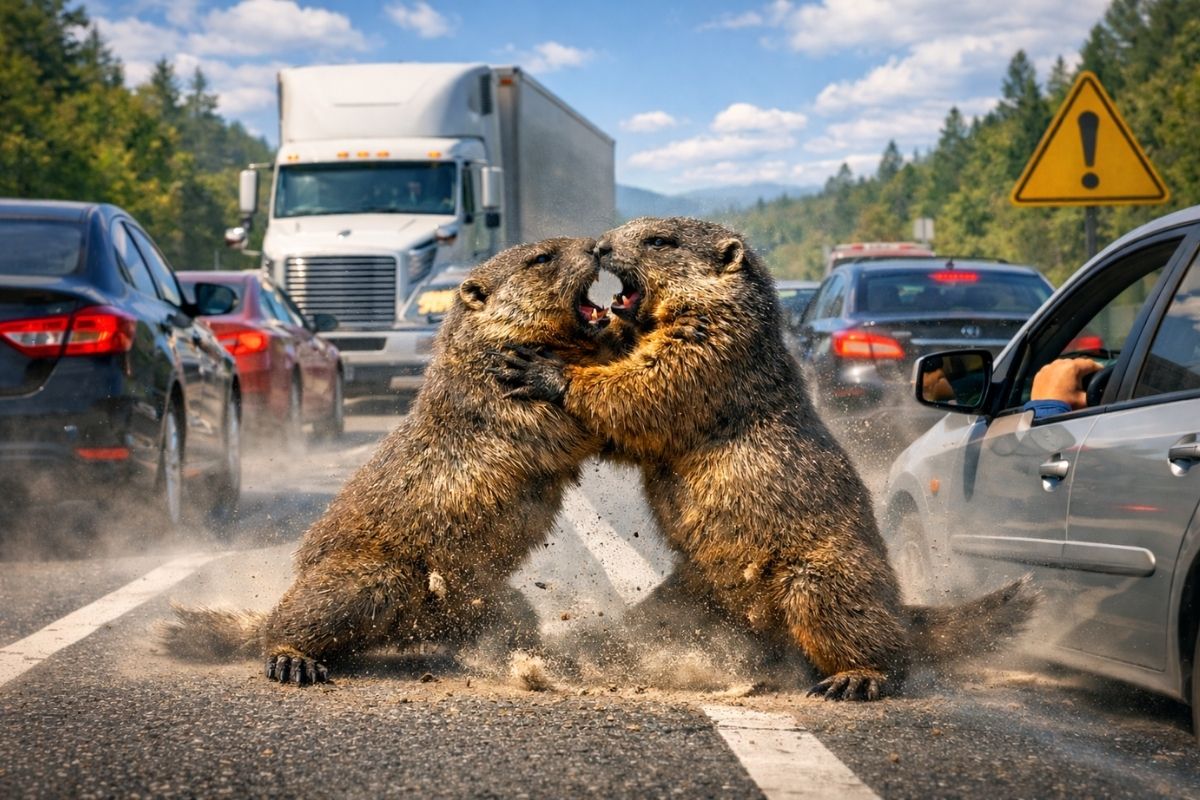


The Video Of Woodchucks Fighting In The Middle Of The Road And Making A Line Of Cars Stop Became A Joke On Social Media, But Also Exposes A Real Risk: Small Animals Can Choke Traffic, Cause Dangerous Maneuvers And Increase The Chances Of Chain Collisions, Mainly On Highways.
When woodchucks fight in the middle of the road, the scene looks like it’s come out of a cartoon. Two small animals, right in the middle of the lane, roll on the asphalt in a territorial dispute as drivers slow down and accumulate behind them, moving at a crawl, with no one daring to advance. The video went viral as funny traffic content, but clearly shows how a tiny detail in the road is enough to stop an entire highway and create a critical risk point in a matter of seconds.
At the same time, the footage of woodchucks fighting in the middle of the road helps remind something many people forget while driving.
Wild animals on highways are not just a curious inconvenience, but a real risk factor for road safety, capable of triggering sudden brakes, improvised detours, rear-end collisions, and even multiple accidents.
-
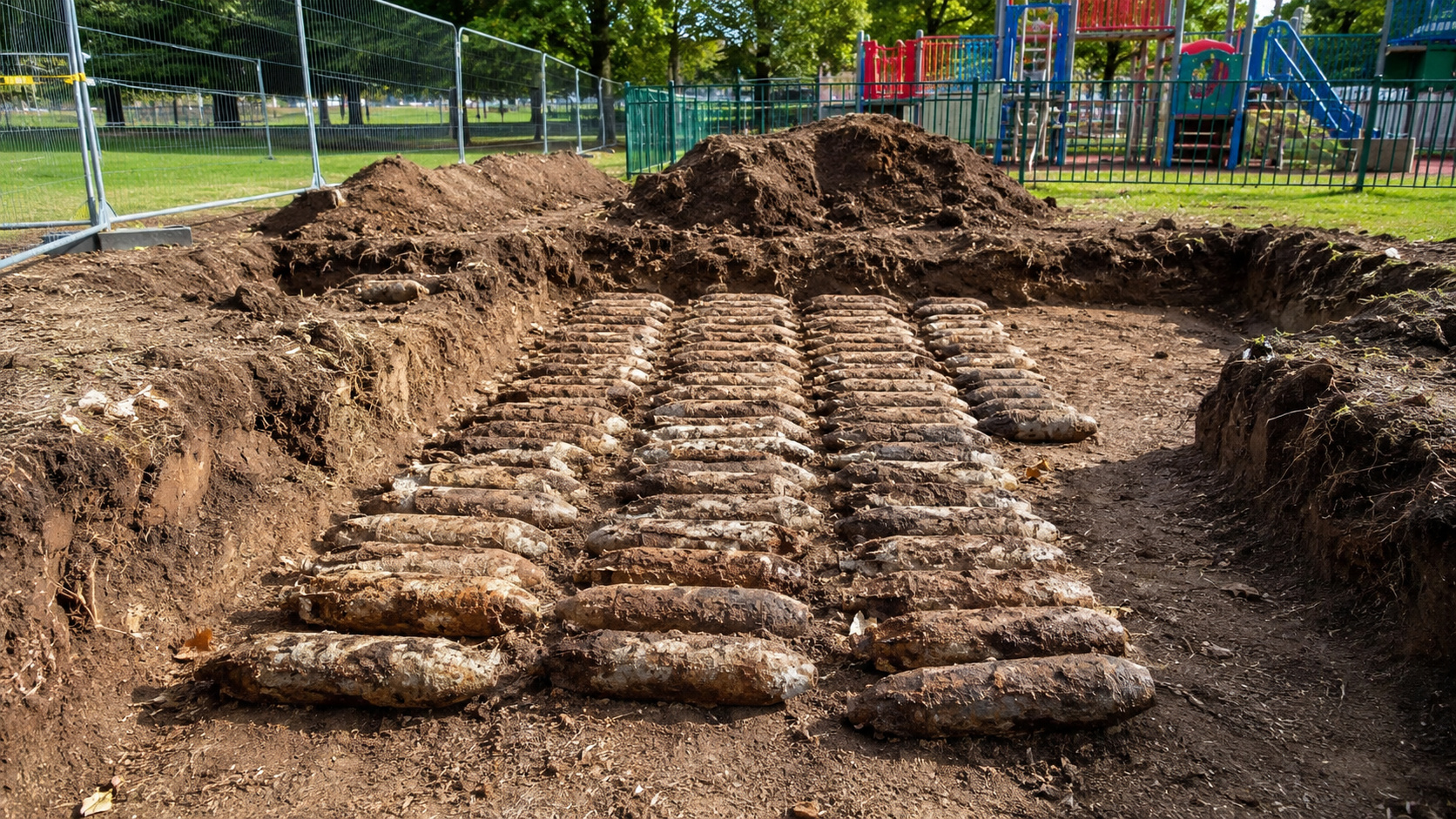
Workers renovating a playground in northern England uncover 176 World War II bombs buried underground; training artifacts still contained explosives.

-
Brazilian Architect Transforms Waste into Sustainable Homes with Solar Power and Rainwater Systems for 40 Years

-
Security Guard Becomes Doctor at Louisiana Hospital Where He Once Worked, Studied Chemistry Between Shifts

-
Woman Rescued from Luxury Complex in Brazil Worked Without Pay for 55 Years, May Be Entitled to Over $300,000



When Woodchucks Fight In The Middle Of The Road And Traffic Simply Freezes
In the video, the traffic stopped by woodchucks stands out for two main reasons. First, for the unusual scene of woodchucks fighting in the middle of the road right in the center of the lane. Second, for the drivers’ reaction, who accept the interruption and remain crawling behind the fight, without trying to advance over the animals.
The cars approach at a reduced speed, line up and form a complete queue, watching the territorial dispute of the woodchucks. At first glance, the mood is one of curiosity and even amusement.
But the same situation, on a higher-speed road, with heavy trucks or lower visibility, could end in a rear-end collision or loss of vehicle control in just a few meters.
The episode highlights that two small animals can block the flow of an entire highway, and that driver behavior in front of woodchucks fighting in the middle of the road is as important as the presence of the animals themselves.
How Wild Animals Affect Traffic Safety
The incident with woodchucks fighting in the middle of the road is just a snapshot of a larger problem. On highways, the presence of wild animals directly interferes with traffic dynamics.
Stopped traffic, sudden braking and risky maneuvers are typical responses when a driver encounters an animal on the road.
Woodchucks, dogs, capybaras, and other animals cross lanes in search of food, water, or shelter, without any awareness of the danger represented by vehicles.
When they remain on the road, as in the video where woodchucks are fighting in the middle of the road and don’t leave the center lane, drivers are forced to drastically reduce their speed or even come to a complete stop.
On high-speed roads, this increases the risk of rear-end collisions, chain accidents, and situations where a poorly calculated detour results in leaving the road.
This kind of occurrence makes it clear that animals on the road are not just a scenic detail, but a variable that needs to be on the radar of those driving on highways, especially on routes near forested areas and fields.
How Drivers Should Act When Finding Animals On The Road
When traffic comes to a stop because woodchucks are fighting in the middle of the road or for any other animal on the road, the priority must always be to protect human and animal lives.
The impulsive reaction to swerve abruptly, throw the car onto the shoulder without checking mirrors, or try to pass between the animals can turn a controllable situation into a serious collision.
The recommended behavior starts with gradually reducing speed upon spotting the animal or realizing there’s stopped traffic ahead.
Maintaining a safe distance from the vehicle in front is essential to have braking space without crashing into the back of another car. In case of a complete stop, using hazard lights helps alert those behind about an unexpected obstacle on the road.
Another important guideline is to never try to capture, remove, or chase the animal by oneself. The removal of animals from the road should be done by specialized teams, highway concessionaires, or responsible agencies, which have the training and proper equipment.
The driver’s role is to signal, reduce speed, stop safely if necessary, and wait for a safe solution, avoiding turning the scene into something even more dangerous.
Why So Many Animals Appear On Highways
The scene where woodchucks are fighting in the middle of the road and stopping all traffic is also a reflection of a larger context.
The constant presence of wildlife on the roads is linked to environmental factors, infrastructure, and human behavior.
Highways that cut through forested areas, open fields, or rural regions pass directly through natural habitats and wildlife movement routes.
In these zones, it’s expected that animals will approach the road at some point, whether to cross from one side to the other, or to explore the area.
The lack of adequate fencing and wildlife crossings, like tunnels or specific overpasses for animals, increases the risk of scenes like woodchucks fighting in the middle of the road because the crossing ends up happening directly on the asphalt.
Instead of safe routes beneath or above the highway, the animals’ path goes through the same space used by cars, trucks, and buses.
Human behavior also plays a role. Food scraps, litter thrown on the shoulder, and cargo residue can attract animals to the roadside.
A simple discarded food bag from a vehicle can become an invitation for animals to approach the road and be exposed to the risk of being run over.
In certain periods of the year, breeding and migration cycles also increase the circulation of animals between different areas, making encounters between wildlife and vehicles more frequent.
Videos Of Woodchucks Fighting In The Middle Of The Road Help Or Hinder?
The video in which woodchucks are fighting in the middle of the road and completely stopping traffic went viral for being rare, curious, and seemingly funny.
But at the same time, this type of footage opens a space for important discussions about road safety, infrastructure planning, and coexistence between highways and wildlife.
On the positive side, videos like this can serve as a warning for drivers who have never stopped to think about the impact of a small animal on traffic dynamics.
They concretely show that a comedic situation can turn into an accident if conditions are a bit different, such as rain, fog, or excessive speed.
On the other hand, there is a serious risk associated with the act of filming. In many places, recording with a cell phone while driving is prohibited by law and extremely dangerous.
Traffic authorities emphasize that any recording should only be made by passengers or with the vehicle completely stopped in a safe location, out of the travel lane. The pursuit of a viral video cannot become the trigger for an accident that puts even more lives at risk.
In the end, the scene where woodchucks are fighting in the middle of the road is funny at first glance, but it also serves as a mirror of a real problem: the lack of integration between traffic, infrastructure, and wildlife.
Animals on the road will continue to appear, and the way drivers, concessionaires, and authorities deal with this determines whether the story ends in a curious video or a tragic headline.
And you, imagining yourself in a situation like the one with woodchucks fighting in the middle of the road, do you believe you would act like the drivers in the video and wait for the animals to leave on their own, or do you think there is a lack of structural measures on highways to avoid this type of risk?


