Portuguese
  Spanish


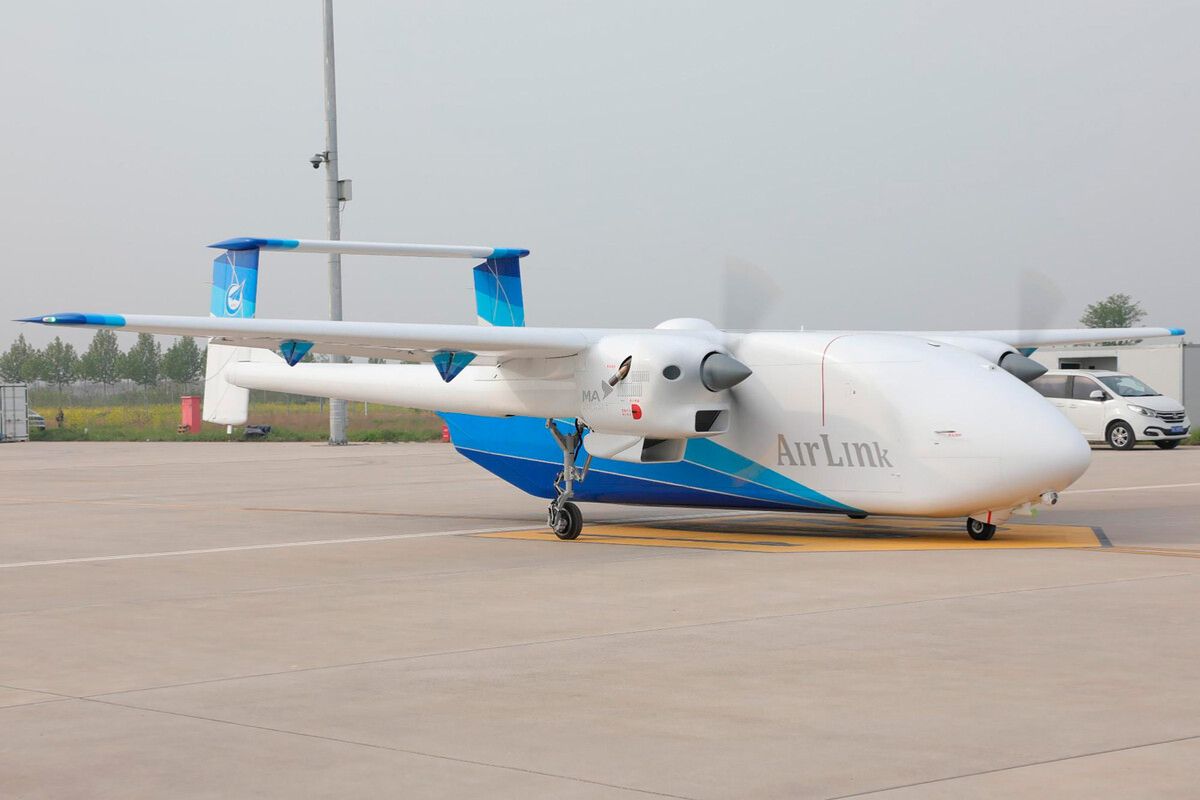

The flying truck made its first test flight on April 15, lasting 22 minutes, and signals China’s direction in the so-called low-altitude economy for unmanned cargo transport
China has taken a significant step towards unmanned cargo transport by testing the HH-200 flying truck under real conditions. The inaugural flight took place on April 15, lasted 22 minutes, and reportedly, the aircraft maintained a stable trajectory and had onboard systems functioning correctly.
There is no ready logistics network to put this flying truck into operation tomorrow. But the test already shows the ambition of the project: to create an unmanned cargo system that is large enough to carry real weight and simple enough to work with real-world logistics.
First flight of the HH-200 flying truck and what it proves
After the development phase, the program came to life with the test in Pucheng, in Shaanxi province. The description of the flight is important because it does not sell a “miracle”: it was an assessment under real conditions, short, focusing on stability and basic functioning.
-
She bought a used motorhome at 23, refused an expensive renovation, dismantled furniture from the old apartment, and created a home on wheels with compact carpentry and repurposed pieces.

-
At 7 years old, boy swaps toy cars for raising bantams, dreams of becoming a veterinarian, and conquers the internet with his routine in the countryside of Santa Catarina; meet Luiz Miguel, the “Piá do Garnizé”

-
New York removed the tracks from over 2,500 subway cars and dumped everything at the bottom of the Atlantic, and what seemed like trash turned into an artificial reef teeming with fish and divers.

-
From matches sold by bicycle at age 5 to a global furniture empire: the lumberjack’s son founded IKEA at 17 in his uncle’s kitchen and transformed a small company into the largest furniture retailer on the planet.



For a flying truck, the important start is this: take off, maintain stability, respond to systems, and return without surprises. The rest comes later, in layers.
What the HH-200 can carry and how far it goes
The HH-200 flying truck was presented as a system with a square-section fuselage, high wings, two engines, and two tails. The cited dimensions are 12.2 meters in length, 16.8 meters in wingspan, and 3.7 meters in height.
In terms of logistics, the numbers stand out: a maximum payload capacity of 1.5 tons and a maximum range of 2,360 kilometers, with a maximum cruising speed of 310 km/h. This is a package that does not seem designed for a “pretty demonstration,” but rather for route and cargo.
The most “down-to-earth” detail: loading and unloading in five minutes
An interesting part of the project is less about the flight and more about the operation. The text states that the system was designed according to civil aviation standards and can fly intelligently and autonomously from start to finish, with obstacle avoidance based on artificial intelligence.
But the logistical point is another: the straight fuselage and rear configuration are said to have been designed to facilitate loading, allowing it to work with pallets, cargo platforms, and conventional forklifts.
The promise is practical: two operators managing to complete loading or unloading in five minutes, without needing to reinvent the entire ground infrastructure.
Where this flying truck plans to operate
The HH-200 has not been described as an aircraft for “perfect conditions.” The proposal includes environmental adaptation for missions on short runways, high-altitude airports, extreme temperatures, and adverse weather.
Among the cited examples are cargo routes in coastal and border areas, land logistics routes between specific points, and operations between islands in Southeast Asia.
And, further on, possibilities such as emergency rescue, remote sensing, and agricultural and forestry tasks. It is a flying truck with the look of a multi-purpose tool, not just freight.
From tests to market: why it’s still early to claim “revolution”
The milestone is relevant, but the text itself makes the distinction that many people ignore: initial technical success is not operational maturity. The next step is to accumulate more flight tests before entering service.
Even so, there is a sign of traction: the project has reportedly received 20 orders and is in cooperation with several companies. Now is the phase where the flying truck needs to repeat performance, prove reliability, and show costs and routines compatible with real logistics.
If this flying truck starts appearing on real routes, do you think it will make more sense to connect isolated points and difficult regions, or do you imagine it becoming part of common deliveries, like a “cargo air line” in everyday life?