






 Portuguese
  Spanish


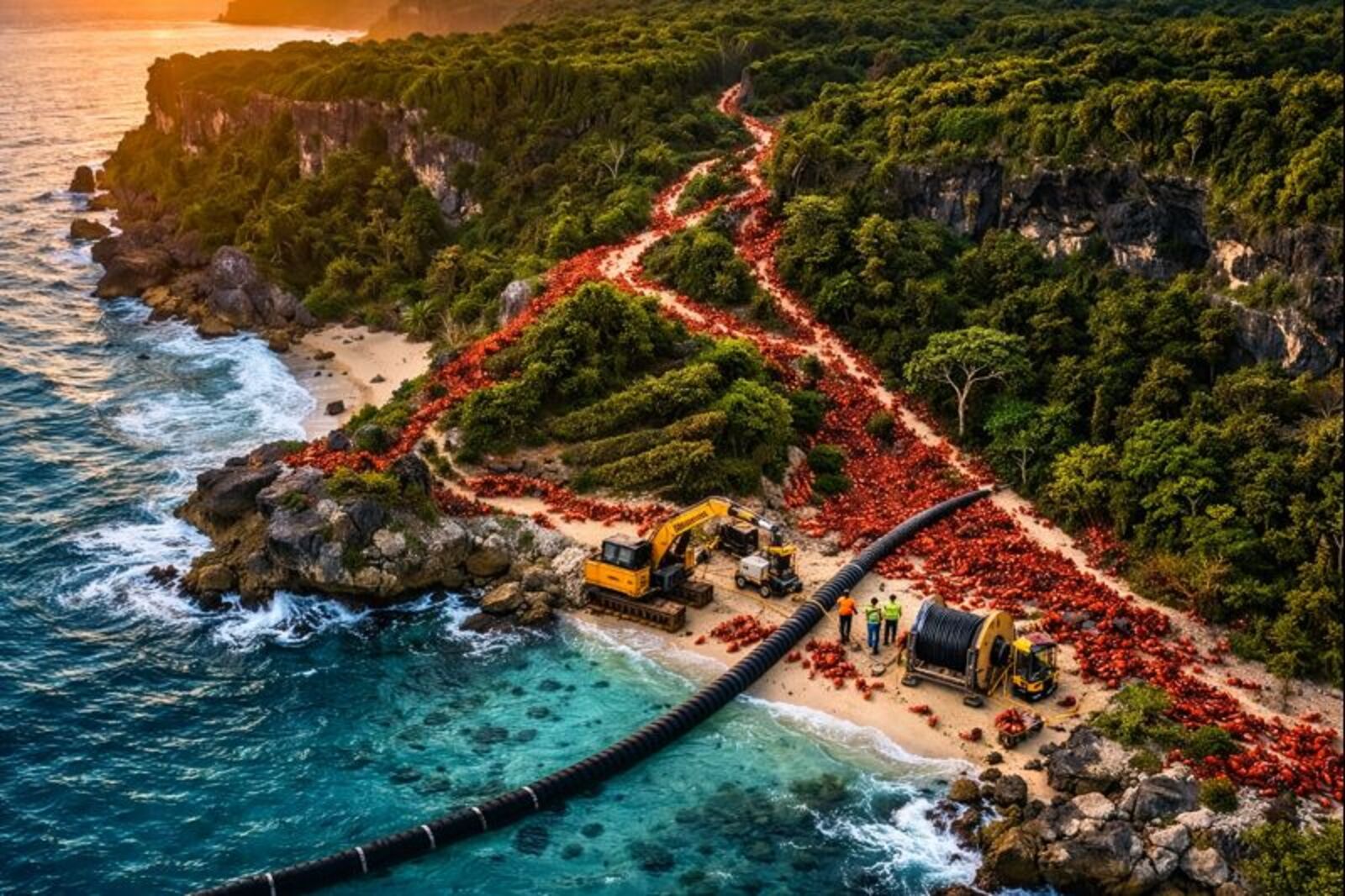

Google submarine cable between Australia and Singapore will have works adapted to the migration of 120 million red crabs on Christmas Island
The Bosun submarine cable, planned by Google to connect Darwin, Christmas Island, and Singapore, will have construction adjusted to the annual migration of 120 million red crabs on the Australian island, a phenomenon that affects works, teams, equipment, and the schedule of the new digital route.
New data corridor
The project will create a data corridor between northern Australia and Southeast Asia. The Bosun system will leave Darwin, pass through Christmas Island, and continue to Singapore.
A separate cable will connect Melbourne and Perth to Christmas Island and then to the same distribution center. The structure enhances digital connections between Australia and Asia.
-
Polar Air Mass to Hit Brazil: Temperatures to Plummet in Nine States, Near Freezing in the South with Frost Risk Until Monday

-
Chinese “dark factories” produce electric cars 24/7 with minimal human intervention, as Zeekr assembles 800 units daily, raising concerns in Brazil.

-
Spectacular Green Aurora Seen from Space Illuminates International Space Station, Captivates French Astronaut

-
In Tasmania, a Beach Features a Natural Stone Mosaic Formed by Earth’s Cracks Millions of Years Ago



Christmas Island is located 1,500 kilometers west of mainland Australia and 350 kilometers south of Jakarta. This position shortens the route between Australia and Singapore.
This reduces the need for signal repeaters and latency. The submarine cable will also be integrated into Google’s Tabua system, which spans the United States, Australia, and Fiji.
The combined network creates alternative routes in cases of failures or geopolitical disturbances. Michelle Rowland stated that the cables will expand and strengthen the resilience of Australia’s digital connectivity.
Vocus, NextDC, and SubCo have been announced as partners. Vocus reported that the combined networks will form a 42,500-kilometer fiber optic system connecting the United States to Asia via Australia.
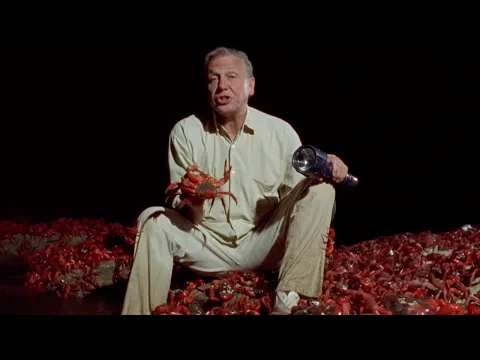

Migration redefines the work
On Christmas Island, the schedule for the submarine cable depends on a natural cycle. With the first rain of the rainy season, usually in October or November, adult red crabs leave the forest and head to the sea.
This movement defines excavation windows, cable landing, team displacement, and the use of heavy equipment. Nothing progresses until the crossing is completed.
Males lead the march. Females follow later, forming a mass of scarlet shells that crosses roads, rocks, and beaches.
Spawning occurs with the high tide before dawn, during the waning phase of the moon. If the rains arrive early, the animals move more slowly. If they arrive late, the crossing accelerates.
If the window closes, some of the crabs do not migrate and wait until the following month. This ecological calendar has begun to guide engineering and logistics decisions.
Plan to Reduce Impacts
Google and Australian authorities are developing a mitigation strategy on three fronts. The first involves scheduling land works outside peak migration periods.
Excavation and soil movement will occur during phases of lower activity. The second front includes crab crossings, temporary fences, and trained observers.
These measures follow structures already used on the island’s roads, including crab bridges that allow crossing above traffic.
The third front adjusts anchoring points and installation depths. The goal is to avoid damage to reefs and minimize disturbance to coastal habitat.
Brian Quigley stated that the Bosun cable will connect Darwin to Christmas Island, while the second cable will connect Melbourne to Perth and then Christmas Island to Singapore.
Reproduction Increases Environmental Sensitivity
After reaching the sea, crabs enter the water to replenish lost moisture. Males take refuge in lower terraces and dig burrows.
Females arrive later, mate inside or near these burrows, and produce up to 100,000 eggs each. They stay underground for about two weeks before returning to the coast.
In some areas, the density reaches 100 individuals per square meter of beach. When the tide rises before dawn, females enter the water and release their eggs.
Larvae hatch upon touching seawater. Most do not return. Fish, manta rays, and whale sharks consume a large portion of them.
In most years, few or no hatchlings emerge from the ocean. Once or twice a decade, a large brood survives in sufficient numbers to sustain the island’s population.
Google Submarine Cable: Strategic Weight
The investment in the submarine cable occurs as Australia modernizes its defense infrastructure in the northern region.
Australian and American military forces are improving airfields, and the rotating force of American Marines will be reinforced by Japanese troops.
Christmas Island is in the same corridor of the Indian Ocean as the Cocos Islands, where Australia is expanding a runway for maritime surveillance operations.
Additional pathways for cables reduce exposure to digital disruptions and single points of bottleneck.
Google reports supporting over 100,000 kilometers of submarine cables worldwide. The Australia Connect initiative adds two new systems to this infrastructure.
SubCo stated that the shared infrastructure between Sydney, Melbourne, Adelaide, and Perth will accelerate project execution and reduce environmental impact.
The SMAP cable, with 5,000 kilometers and expected to enter service in 2026, will also be integrated into the new anchoring infrastructure.
Google has not disclosed the capacity of the cables nor the timelines for the implementation of the Bosun system. The project is still in the planning phase and initial coordination of construction.
With information from Daily Galaxy.


