






 Portuguese
  Spanish




Understand how much each Starlink satellite costs, SpaceX’s launch expenses, and why satellite internet monthly fees have specific values in the country.
SpaceX, led by Elon Musk, has consolidated an unprecedented orbital infrastructure to connect remote regions, but maintaining this network requires a colossal financial investment. In April 2026, industry data indicates that the manufacturing of each individual Starlink network satellite costs approximately US$250,000 (about R$1.25 million).
When added to the launch cost — estimated at US$300,000 (R$1.5 million) per unit due to the use of reusable rockets — the total investment to place just one device in orbit ranges between R$2.5 million and R$3 million.
Despite appearing high, these values are considered low for the space industry, thanks to mass production that allows the company to operate as a true spacecraft factory.
-
2,000-Year-Old Gold Rings Found with Human Bones in Thailand Reveal Rare Burial and Feature Ancient Indian Inscription

-
Lenovo Unveils Legion Y700 Tablet with RGB Backlighting, 5G, and SIM Card Support

-
World’s First Nuclear Hydrogen Unit Begins Operation: Copper-Chlorine Technology with Initial Capacity of 150 Liters per Hour, Aiming for 3,000 Liters per Hour
-
Mechanics Retrofit Old Fiat Uno with BYD Electric Motor for Silent, Low-Voltage Operation Reaching Nearly 60 km/h in Home Test



Starlink Satellites: The Billion-Dollar Scale and Network Maintenance
The project’s major financial challenge is not the unit price, but the quantity needed to cover the globe. With thousands of devices already positioned, Starlink requires investments exceeding tens of billions of Brazilian Reais. Furthermore, the operation faces a constant renewal cycle, as the lifespan of these devices is short.
Unlike traditional systems, the network requires frequent replacement for the following reasons:
- Limited lifespan: Each device lasts between four and six years before needing replacement.
- Coverage maintenance: Weekly launches are necessary to avoid “gaps” in the global signal.
- Technological expansion: New hardware versions are sent to increase speed and reduce latency.
- Global partnerships: Agreements with operators allow the connection to reach mobile phones directly, requiring an always-updated network.
How much does Starlink cost in Brazil in 2026?
Since its arrival in the country in 2022, the company has expanded its user base to over 1 million by early 2026, focusing especially on rural areas and isolated communities. To sustain the space operation, monthly fees are structured to dilute launch and maintenance costs among millions of subscribers worldwide.
Currently, the main plans available in the Brazilian market are:
- Residential Max: Costs R$235 per month, offering high-speed internet for fixed addresses.
- Residential 100 Mbps: An entry-level option launched in March 2026 for R$179 monthly.
- Travel 50 GB: Aimed at those needing basic mobility, with a monthly cost of R$315.
- Travel Unlimited: No data restrictions and usage on the go nationally and internationally, for R$576 monthly.
Why does the service still have this price?
Many consumers wonder how much it costs to maintain the system and why the price is not closer to urban fiber optics. The answer lies in the fact that the customer pays not only for data traffic but also for the maintenance of a fleet of thousands of satellites that are in constant motion and degradation.
Each monthly payment helps finance the next Falcon 9 rocket launches, ensuring the infrastructure remains active. Therefore, Starlink’s price reflects the balance between accessibility and the high logistical cost of operating in space.
While conventional internet relies on buried cables, SpaceX manages a dynamic constellation that requires uninterrupted monitoring and recurring replacements. By paying for the service, the Brazilian user finances one of the most complex engineering feats of today.
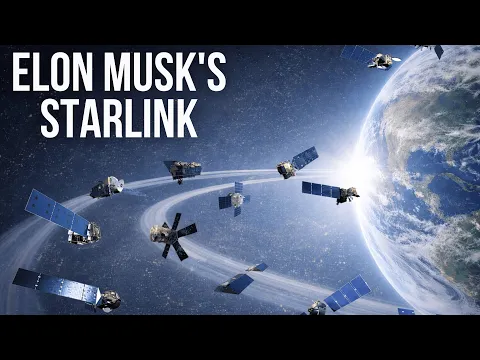

The future of satellite connectivity
Despite the high cost, SpaceX’s vertical integration — controlling everything from satellite manufacturing to the rocket that transports it — allows the company to dictate market rules.
The trend for the coming years, with the arrival of the V3 generation in 2026, is for speeds to increase up to 1 Gb/s, maintaining the need for scale to reduce prices. Thus, understanding the cost of each piece of this network helps to comprehend why Elon Musk bets so heavily on scale.
The ultimate goal is to create a global infrastructure so robust that maintenance costs are widely diluted, making internet from space a common reality in remote areas. Starlink, therefore, is not just a product, but a constantly evolving space network.
Source: CanalTech


