Portuguese
  Spanish


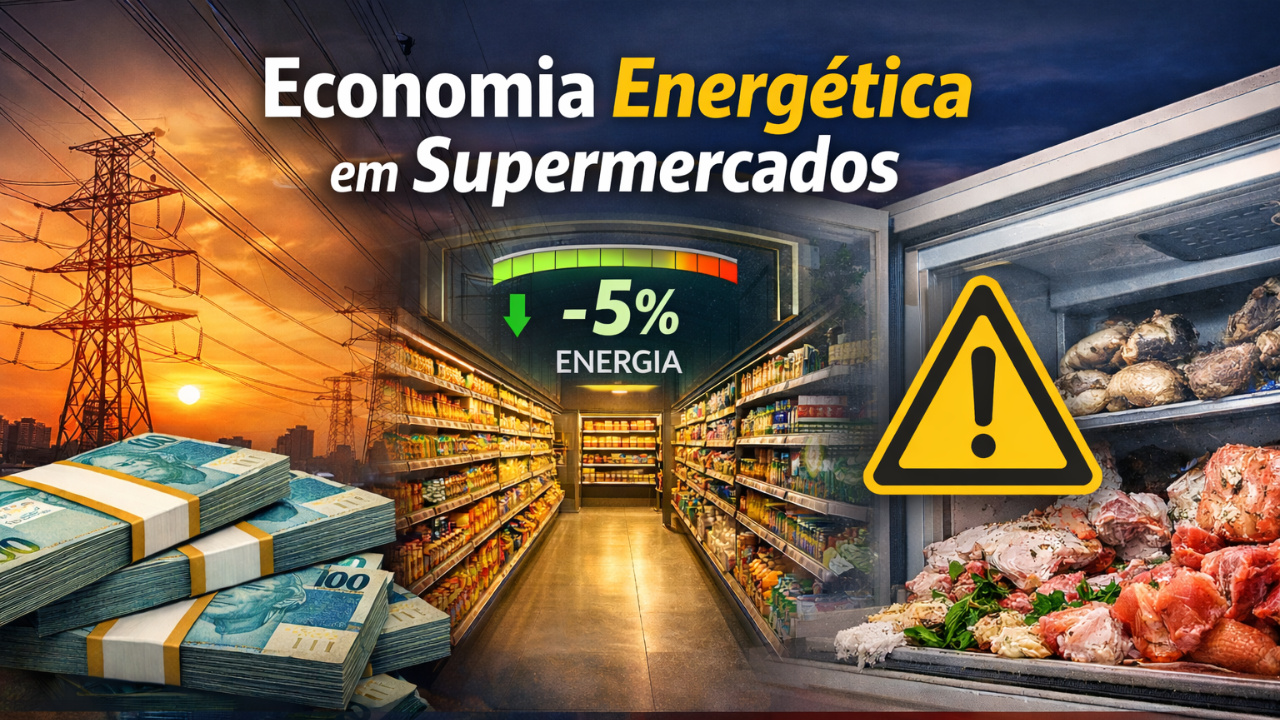

A 5% Reduction in Energy Consumption Could Generate Million-Dollar Savings for Supermarkets in Minas Gerais, However Operational Risks Require Attention.
The possible change in the operation of supermarkets on Sundays could generate energy savings of up to R$ 50 million per year in Minas Gerais, according to a study by NEO Estech.
The estimate considers the closure of stores amid the national discussion about reducing working hours, as outlined in the ongoing PEC 148/2015.
The survey indicates an average reduction of 5% in energy consumption, but warns of operational risks and potential losses with equipment and perishable goods.
-
Brazil to Issue “Panda Bonds” in China, Aiming to Raise Up to 5 Billion Yuan at Lower Interest Rates Than Dollar Debt
-
NATO Faces Internal Tensions as U.S. Pushes for Increased Defense Spending, Targeting 5% of GDP by 2035, with Warnings for Countries Near 2% Level

-
Brazil to Introduce B16 Diesel with Increased Soybean Oil Content for Trucks by 2026
-
Brazil’s July Bolsa Família Payments May Include Extra $150 and $50 for Families with Children, Pregnant Women, and Updated CadÚnico Registration


The study analyzed 1,246 Minas Gerais units that are part of the 500 largest chains in the country.
If these stores stop operating on Sundays, the annual savings could reach R$ 14 million just for this group.
When the calculation includes regional and independent supermarkets, the amount could exceed R$ 50 million.
The proposal arises amid the national debate on the end of the 6×1 schedule and the reduction of the weekly working hours.
Thus, closing on Sundays appears as an alternative for operational adjustment and cost reduction, especially in electricity consumption.
How Energy Savings Were Calculated
To arrive at the figures, NEO Estech conducted a technical simulation considering an average reduction of 5% in annual energy consumption.
The calculation used sector averages of consumption per square meter and the average energy tariff practiced in the market.
According to the company, this is a conservative projection.
This is because factors such as store model, operational standards, and energy efficiency level can alter results.
In other words, modern supermarkets with efficient equipment tend to have a different impact on energy consumption compared to older units.
National Scenario Expands Impact of Energy Savings
The impact is not limited to Minas Gerais. In the national scenario, the possible Sunday closure of the 10,179 stores belonging to the 500 largest chains could generate annual savings of up to R$ 114 million.
In this context, each unit could save about R$ 11,000 per year.
Although the individual amount may seem modest, the cumulative effect reinforces the importance of energy savings in the retail sector.
On the other hand, experts warn that reducing energy consumption is not the only factor to be considered in the decision.
Operational Risk Could Compromise Gains
Despite the positive outlook on the electricity bill, the study draws attention to operational risk.
Closing on Sundays could create a gap of up to 34 hours without direct human inspection in essential systems, such as refrigeration and cold storage.
The CEO of NEO Estech, Sami Diba, states that failures during this period tend to be noticed only when the stores reopen.
“Between Saturday night and Monday morning, there are about 34 hours without direct human inspection of the equipment. If any failure occurs, the entire savings could turn into costs,” he says.
In other words, a simple temperature fluctuation could lead to significant losses.
Energy Consumption Versus Losses in Perishable Goods
Small technical failures can compromise perishable food without immediate alert.
When the problem is identified, the loss may already be consolidated.
Additionally, air conditioning and refrigeration systems require constant monitoring.
Without efficient remote monitoring, operational risk increases significantly.
“Without adequate monitoring and rapid response protocols, the savings achieved from reducing energy consumption could be annulled by more severe losses,” Diba states.
Therefore, energy savings need to be accompanied by investments in technology and preventive control.
Sanitary and Reputational Impact for Supermarkets
Another sensitive point involves brand reputation.
In a competitive market like supermarkets, credibility is a valuable asset.
Thus, any operational failure can result not only in immediate financial loss but also in damage to the company’s image.
In Minas Gerais, where the sector has a strong regional presence and great reach, the impact could be even more significant.
Energy Savings in Minas Gerais: Opportunity or Challenge?
The estimated energy savings in Minas Gerais represent a concrete opportunity for cost reduction.
With potential exceeding R$ 50 million per year, the figure stands out in a sector with increasingly tighter margins.
However, operational risk needs to be considered strategically.
The absence of inspection for up to 34 hours demands solutions like remote monitoring, smart sensors, and rapid response protocols.
Thus, the debate on closing supermarkets on Sundays involves more than just energy consumption.
It is a decision that balances savings, operational safety, and consumer trust.
As PEC 148/2015 continues to progress, the sector closely monitors developments.
After all, the promise of energy savings is significant, but it will only be advantageous if accompanied by efficient planning and risk management.
Read more at: Closing Supermarkets on Sundays Could Generate Savings in MG