Portuguese
  Spanish


Discover How the Blend of Biogas and Natural Gas Can Expand the Supply of Clean Fuels and Boost Sustainability in Brazil.
In recent years, the world has undergone a significant transformation in the energy sector.
Consequently, the rise in awareness about the need to reduce greenhouse gas emissions and the search for more sustainable energy sources have led governments, businesses, and consumers to rethink how they produce and consume energy.
In this way, the blend of biogas and natural gas emerges as a strategic solution. Capable of expanding the supply of cleaner fuels and contributing to a more sustainable energy future.
-
Corn ethanol attracts R$ 23 billion in 21 new plants and prepares for a nearly 50% jump in Brazilian production by 2027, even with high interest rates.

-
Ceará brings together 7 giants and R$ 66 billion to transform Pecém into the largest green hydrogen hub in Brazil, with final decisions expected by the end of 2026.
-
H2A to Invest $570 Million in 22 Biomethane Plants in Brazil, Converting Agricultural Waste into 700 Tons of Renewable Fuel Daily

-
Brazil to Introduce B16 Diesel with Increased Soybean Oil Content for Trucks by 2026

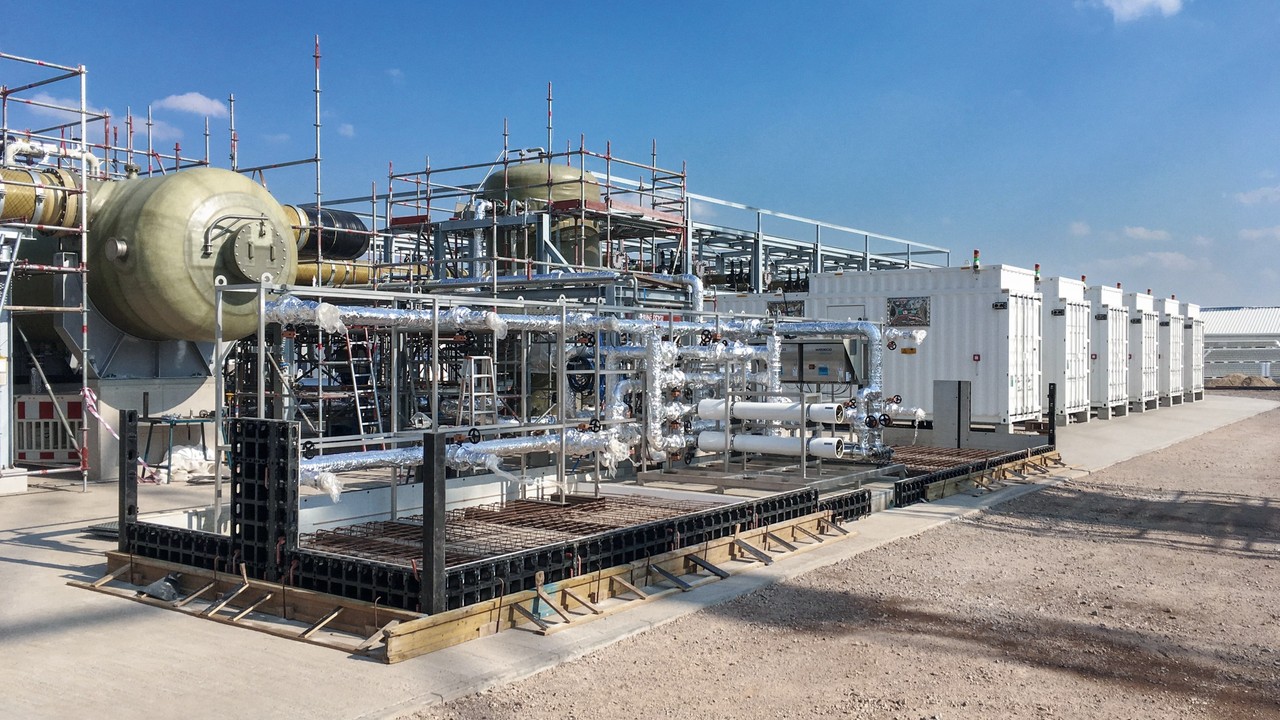

Furthermore, Edge, a company controlled by Cosan and established in 2024, has stood out in this movement.
The company’s commercial director, Guilherme Mattos, stated that natural gas and biogas can be combined similarly to what occurs with diesel and biodiesel or gasoline and ethanol.
This analogy helps to understand how to integrate renewable fuels into traditional energy matrices gradually and efficiently, ensuring a energy transition without compromising logistics and supply.
Historically, Brazil has built an innovation trajectory in the energy sector.
Since the implementation of Proálcool in the 1970s, which encouraged the production of ethanol from sugarcane, to more recent programs promoting renewable energy generation, the country demonstrates that it is possible to reconcile economic growth and sustainability.
In this regard, the blend of biogas and natural gas is presented as the natural evolution of renewable fuel use, bringing environmental benefits and development opportunities for the transport sector and the energy industry.
Biogas and Natural Gas: A Strategic Combination for Sustainability
Biogas, obtained from the decomposition of organic waste, represents a clean alternative to conventional natural gas, which relies on fossil fuels.
Therefore, when combined with natural gas, it increases fuel availability and allows the sector to advance toward emission reduction targets.
Mattos highlights that, although there is still a lack of infrastructure outside major urban centers, Edge invests to make supply more accessible, especially for regions in the interior of Brazil.
Thus, this investment ensures that the expansion of renewable fuel usage also reaches areas outside the major cities.
Moreover, the seminar “Green Logistics to Boost a More Competitive Country”, promoted by Abdib and Moveinfra, emphasized the importance of developing practical solutions for one of the main bottlenecks in national logistics: the lack of adequate structures for clean fuels in cargo transportation, especially in agribusiness.
Therefore, Edge adopted LNGL (Liquefied Natural Gas) as a facilitated mobility strategy, allowing fuel to reach regions without gas pipelines, functioning as a transitional solution.
This approach shows how to unite technological innovation, logistical planning, and sustainability in a single project.
Furthermore, Mattos emphasized that creating a liquid market for the environmental attribute of biogas within the carbon credit chain will facilitate the expansion of its use.
Thus, this type of initiative integrates the concept of low-carbon economy into business practice, creating economic incentives for companies and producers adopting renewable fuels.
In this way, the blend of biogas and natural gas becomes not only an environmental alternative but also a viable economic strategy.
Strategic Investments and Edge Infrastructure
Strategic projects from Edge, such as the regasification terminal in Santos (SP) and the biogas plant in Paulínia (SP), exemplify the company’s commitment to building infrastructure capable of supporting the energy transition.
Therefore, investing in terminals and industrial plants ensures that the supply of renewable fuels meets the growing demand, both in the transportation sector and in the energy industry.
Thus, the experience gained from previous projects reinforces that infrastructure and technology development constitutes one of the pillars to consolidate the blend of biogas and natural gas in the Brazilian market.
Additionally, the potential of biogas goes beyond transportation.
Its integration with natural gas also impacts residential and industrial sectors, promoting the replacement of more polluting fossil sources and strengthening the country’s energy security.
Historically, countries that invested in energy diversification, like Germany and Denmark, significantly reduced their dependence on fossil fuels and created robust markets for renewable energy.
In this sense, Brazil, with its experience in biodiesel and its relatively clean energy matrix, is strategically positioned to lead this transition.
Another important point involves the social impact of the biogas expansion.
For example, the creation of jobs in production plants, transport infrastructure, and distribution networks contributes to regional development, especially in smaller and inland cities, which often receive less energy investment.
Therefore, by betting on the blend of biogas and natural gas, companies like Edge promote environmental sustainability and stimulate the local economy, strengthening the national logistics chain.
Moreover, the local production of biogas reduces the dependence on natural gas imports, generating greater energy autonomy for Brazil.
This becomes strategic in times of international price volatility for fossil fuels, offering a more stable and predictable alternative for industries and transportation.
Perspectives for the Future of the Energy Sector
The long-term outlook indicates that the combination of biogas and natural gas may define the future of the energy sector.
Consequently, with the increasing pressure to reduce emissions and meet climate targets, hybrid and integrated solutions are gaining more value.
Additionally, the ability to generate carbon credits and integrate biogas into sustainable financial markets creates a positive cycle of investment, innovation, and environmental impact.
Therefore, in summary, the blend of biogas and natural gas represents a decisive step in the evolution of the Brazilian energy sector.
It combines technological innovation, environmental sustainability, and economic viability, while simultaneously promoting regional development and strengthening the national infrastructure.
Thus, companies like Edge, with strategic investments and a forward-looking vision, demonstrate that it is possible to build a cleaner, more efficient, and competitive energy model capable of meeting the growing demand for renewable fuels.
Finally, as the country advances in building a more diversified and sustainable energy matrix, the integration of biogas and natural gas emerges as a solid and promising alternative.
Moreover, Brazil’s historical trajectory in energy innovation, coupled with infrastructure development and the creation of carbon credit markets, shows that the transition to clean fuels is not only necessary but also viable.
In this way, Edge, by advocating and implementing this strategy, reinforces the importance of practical, efficient, and environmentally responsible solutions for the future of the Brazilian energy sector.