Portuguese
  Spanish


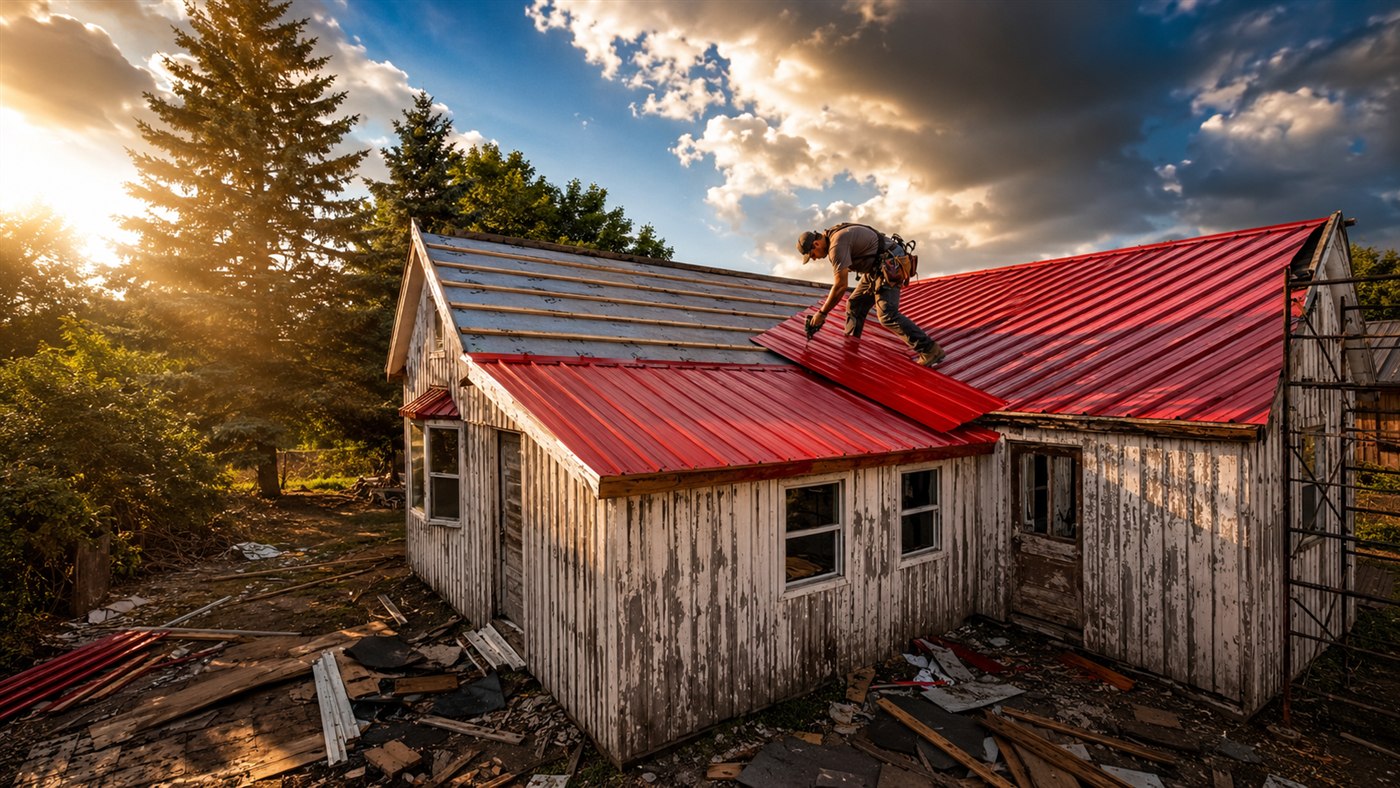

Tia Weston’s record shows the demolition of the chimney, the discovery that the tiles underneath were good, the repair of the rotten wood over the bathroom, and the tarp that solved the leak in the first heavy rain
Restoring an abandoned house starts from the top, and the roof tells the whole story of abandonment. According to the channel Tia Weston, in an episode published in July 2026, the task at hand was to replace the entire covering with a red steel sheet roof, a 2-day project that stopped a leak that had been running through the structure for decades.
The good news came when opening the covering. Upon removing the old steel sheets, the owner discovered that the tiles underneath were in good condition, in a single layer, with the attic wood intact, which allowed the new roof to be installed over the tiles without tearing everything off, as Tia Weston records. The exception was the area over the bathroom, where the wood had rotted and needed to be redone before any new sheet could be placed.
First step: demolish the chimney that was no longer needed
Before the roof, an obstacle had to be removed. According to Tia Weston, the concrete block chimney no longer served any purpose in the house and was demolished with a sledgehammer and a crowbar, block by block, until it was below the roofline.
-
Man Builds Entire House by Hand from Abandoned Pallets Found in Brazilian Forest, Complete with Round Door and Matching Doghouse

-
California Diverts 65% of Construction Waste from Landfills, Repurposing Millions of Tons into Road Base, New Asphalt, and Wood Chips
-
Japan Constructs World’s Deepest Sea Wall in the Pacific, Sinking Massive Concrete Structures for Three Decades

-
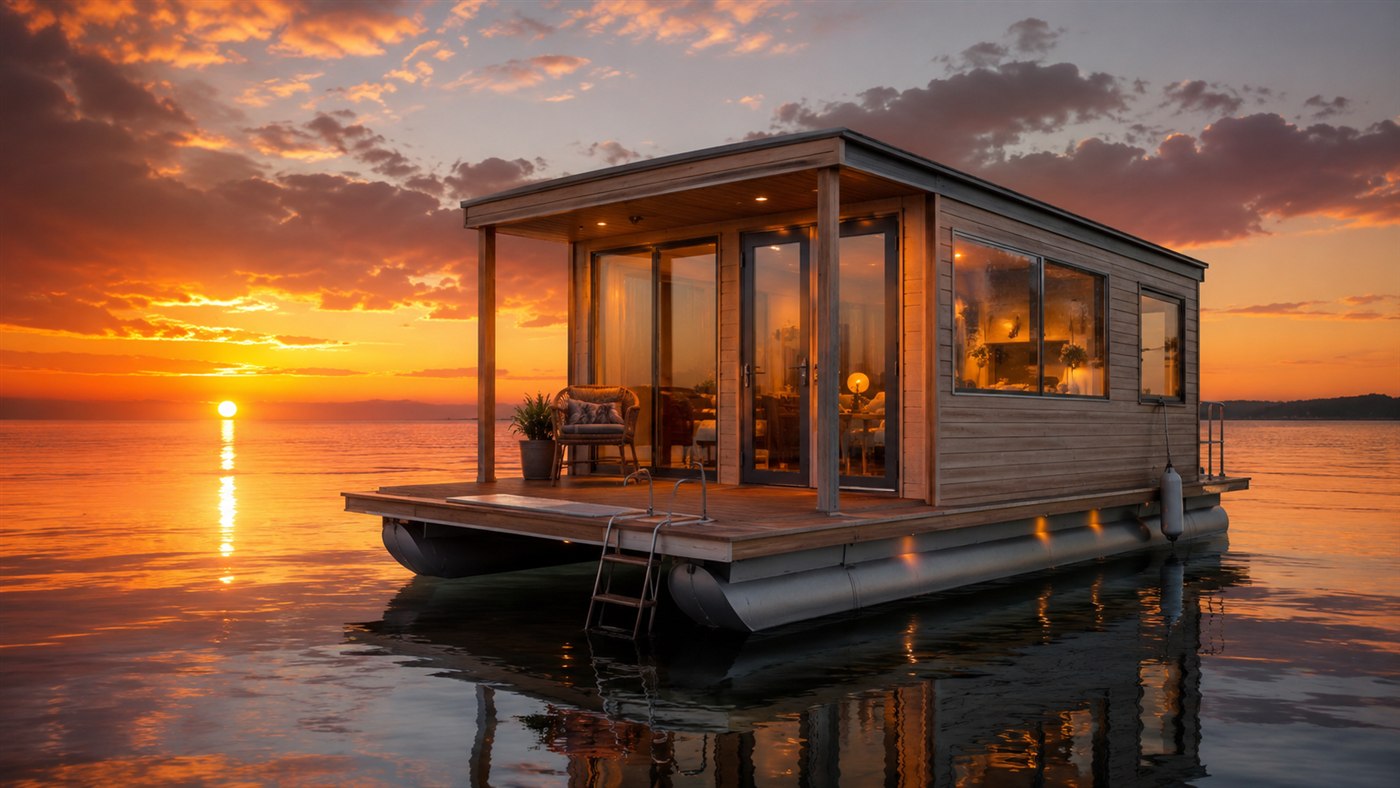
Pair Transforms Sunken Pontoon Bought for $4,000 on Facebook into 8,800-Pound Solar-Powered Tiny Home on Water


The height logistics required adaptation. A hook attached to the ladder, supported at the top of the roof, made it easier to climb the steep incline, a tool the owner says was missing in the previous renovation, of the so-called “1 dollar house”, as Tia Weston recounts. With the chimney out of the way, the team began removing the ridge and steel sheets around the entire house, starting with the smaller pieces.
The discovery under the steel: good tiles, smaller project
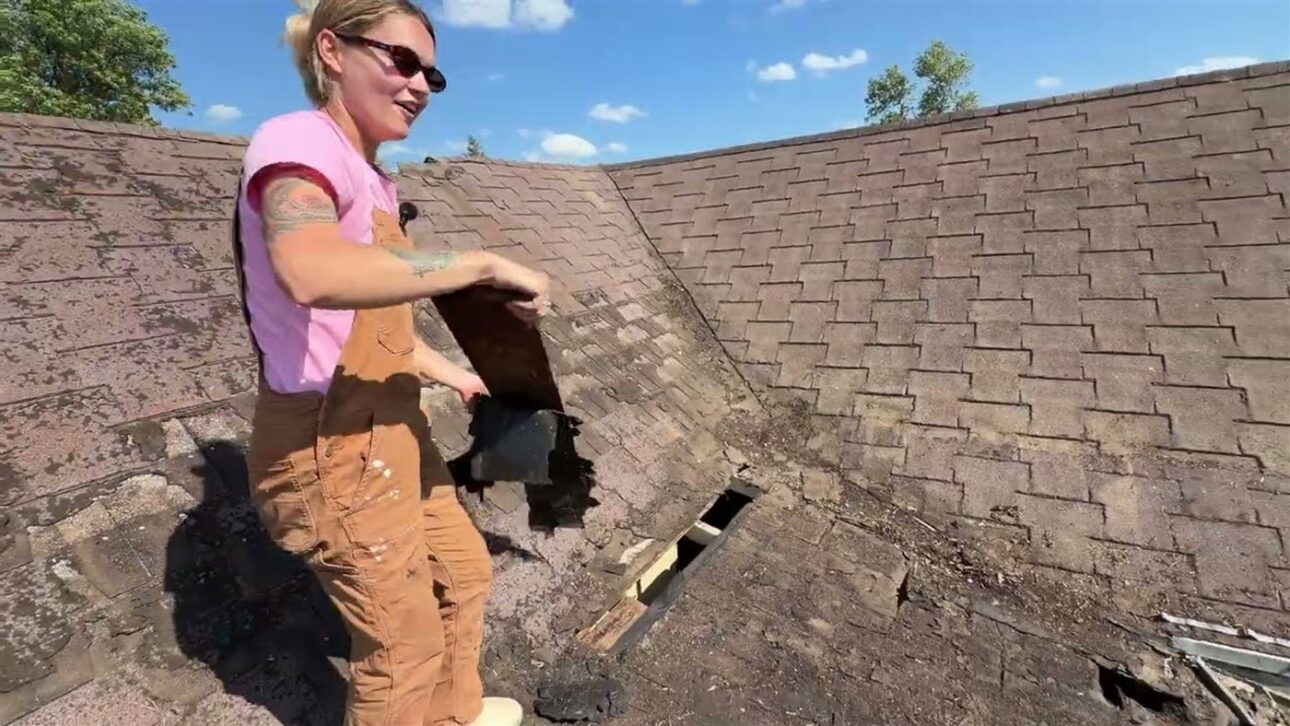
With each open side, a good surprise. According to the Tia Weston channel on YouTube, the tiles appeared much less damaged than expected, despite the damage from the trees that fell on the house, and the inspection through the attic confirmed that the structural wood was sound.
This changed the size of the project. Since there was only one layer of tiles, with nothing underneath, and the wood was good, the new steel covering could go directly on top, eliminating the need for a complete demolition of the old roof, as Tia Weston explains. The old sheets came off in large whole sheets, which sped up the work but required extra care with the strong wind and the electrical wiring passing near the edge.
The rotten wood over the bathroom and the decades-long leak
The critical point of the house had a name and address. According to Tia Weston, the area over the bathroom was the worst of all: an old gutter directed water under the sheets, and the liquid ran for decades inside the structure, rotting the wood until it became dangerous to step on.
The repair was a reconstruction. The team removed the tiles only in this region, tore out the soaked wood, including the tongue-and-groove flooring, and replaced board by board with new wood, in addition to removing cast iron ventilation ducts too heavy for the sledgehammer and cut with a saw, as Tia Weston details. Even old knob-and-tube wiring appeared, the button and tube electrical system that reveals the age of the construction.
The layers of underlayment that hold the water
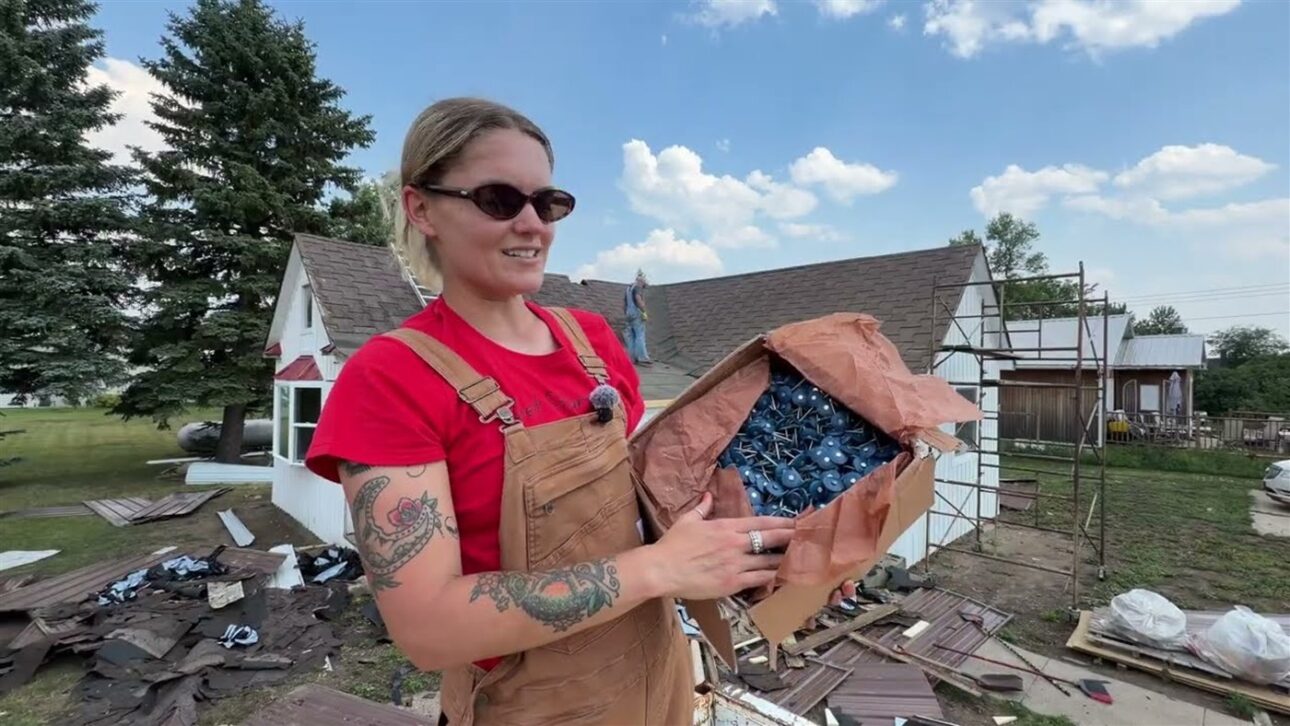
With the wood redone, came the rain protection. According to Tia Weston, over the repaired area a reinforced waterproofing underlayment was applied, also extended through the gutter, and then the regular underlayment over the entire roof, creating several layers of protection before the steel sheet.
The fastening followed the manufacturer’s recommendation. The underlayment is secured with plastic cap nails at all marked points, and the manufacturer guarantees that, applied this way, it prevents leaks for at least a year until the final covering, as Tia Weston shows. It’s the stage that transforms an exposed roof into a watertight surface long enough to install the entire red sheet without haste.
The real test: it rained heavily and didn’t leak
No roof renovation is proven in the sun, only in the storm. According to Aunt Weston, on the night following the stage of the blanket, it rained heavily, and the inspection from the inside found no sign of leakage anywhere in the house. In 2 days of work, the abandoned house went from a roof that leaked water inside for decades to a watertight cover, tested and approved right in the first heavy rain.
The result closed the account of abandonment. The same infiltration that ruined the wood for decades was stopped as soon as the rotten structure was replaced and the blanket covered the roof, with no new drop entering, as Aunt Weston celebrates. The red sheet was yet to be finished on two sides, waiting for material, but the house’s worst enemy, water running inside, was already defeated.
What the renovation teaches those who recover old houses in Brazil


The scene speaks to a common practice in the country. In Brazil, thousands of old houses and abandoned properties are recovered every year by self-builders, and the roof is usually the first line of battle because it is through it that water enters, rotting ceilings, woodwork, and walls.
The technical lesson is universal. Before replacing the cover, it is worth inspecting the woodwork from the attic, identifying where the infiltration comes from, redoing only the compromised wood, and using waterproofing blanket under the tile or sheet, exactly the sequence of the video, a script that serves for any roof renovation. Recovering an abandoned house is not just about aesthetics: it’s about stopping the water first, because a dry house can be fixed, a wet house only gets worse.
The video shows the demolition of the chimney, the removal of the sheets, the repair of the wood over the bathroom, the application of the blankets, and the inspection after the rain.
The renovation of the abandoned house proves that a good roof is not the most beautiful, it is the one that does not let water in. Tell us in the comments: would you install a steel sheet over the old tile or remove everything?