






 Portuguese
  Spanish


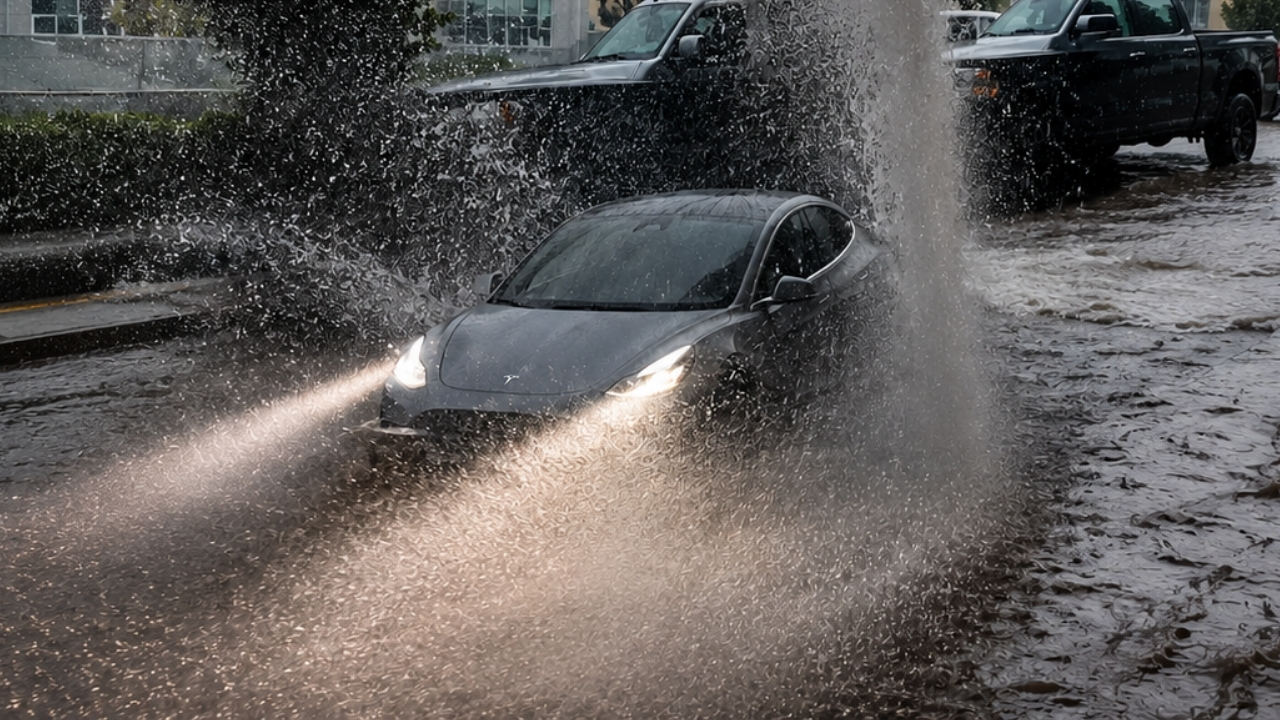

Electric and hybrid cars should avoid floods, according to guidelines gathered by Motor Show on January 31, 2026. Manuals from brands like BYD, GWM, JAC, GAC, Leapmotor, Geely, and Volvo mention water limits, low speed, battery risk, technical inspection, and possible warranty loss after severe flooding.
The electric and hybrid cars have returned to the center of an important alert for drivers facing flooded streets. In a column published by Motor Show on January 31, 2026, journalist Douglas Mendonça gathered guidelines from manufacturers and manuals on what can happen when these vehicles go through floods.
The main recommendation from the brands is straightforward: avoid crossing whenever possible. When passing through a flooded area is unavoidable, the cited limits vary according to the manufacturer, but in most cases, they range between 20 and 30 centimeters in depth, with speed reduced to something between 5 and 10 km/h.
Brands treat flooding as a risk situation, not as a resistance test
The Motor Show report indicates that there is a common point among the manufacturers’ guidelines: flooded streets should not be seen as a normal route for electric or hybrid cars. Even with electrical isolation systems developed to protect batteries and components against moisture, the manuals make it clear that this protection has limits.
-
Toyota Shifts from Hybrid Cars to Electric Air Taxis with Joby’s 6-Rotor Aircraft, Capable of 322 km/h, Aiming for Mass Production to Electrify Urban Skies

-
Ferrari Unveils Limited Edition 12Cilindri Manuale: 6.5-Liter V12, 830 HP, 0-100 km/h in 2.9 Seconds, Top Speed Over 340 km/h, Only 1,499 Units Available

-
Discover the 2021 Fiat Cronos 1.3: Affordable Maintenance, Reliable Mechanics, and Fuel Efficiency of Up to 15.6 km/l
-
Cummins Unveils Hydrogen-Powered X15H Engine with Over 800 km Range and 15-Minute Refueling, Challenging Electric Truck Dominance


The problem is not just in wetting the car for a few seconds, but in the depth of the water, the time of exposure, and the point reached by the flood. When the water reaches the floor, the area where the batteries of electrified vehicles are usually located, the technical risk increases and the recommendation becomes specialized inspection.
Water limit can vary between 20, 25, and 30 centimeters
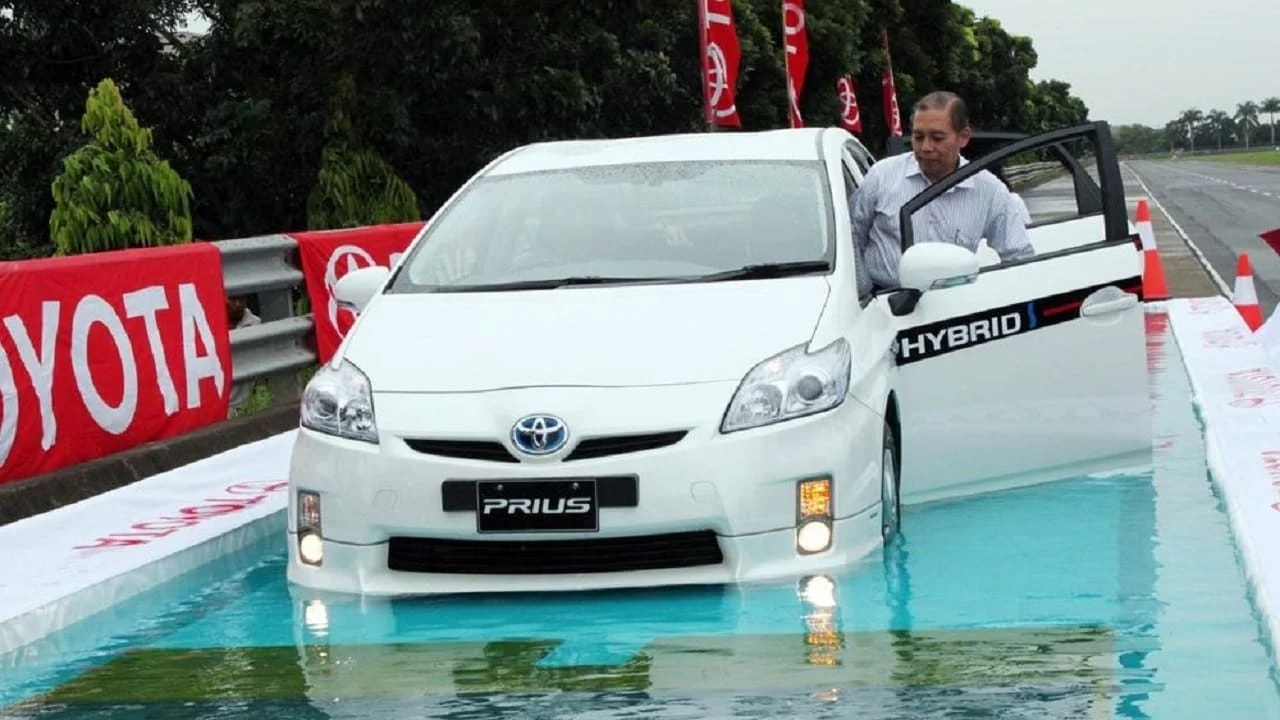
Among the brands mentioned, the limits are not identical. JAC advises against crossing areas with more than 20 centimeters of depth. GAC and Geely also work with a reference of 20 centimeters or halfway up the wheels, while Volvo cites a limit of 25 centimeters. In general guidelines gathered by the publication, the most common variation appears between 25 and 30 centimeters.
These numbers are relevant because they show that the safety margin may be smaller than many drivers imagine. An apparently low water sheet can reach sensitive points depending on the height of the vehicle, the formation of waves, and the speed of entry into the flooded area.
Recommended speed is almost that of a person walking
Another recurring point in the guidelines is speed. In case of unavoidable crossing, manufacturers indicate very slow driving, generally between 5 and 10 km/h. BYD, for example, recommends that speed should not exceed 10 km/h when passing through a flooded area cannot be avoided.
Geely also cites a limit of 10 km/h in flooded areas, provided the depth does not exceed the recommended level. The logic is to reduce wave formation, prevent water from entering critical points, and decrease the chance of losing control of the vehicle. Even so, the main recommendation remains not to enter the flood.
Water on the floor can compromise the battery and require inspection
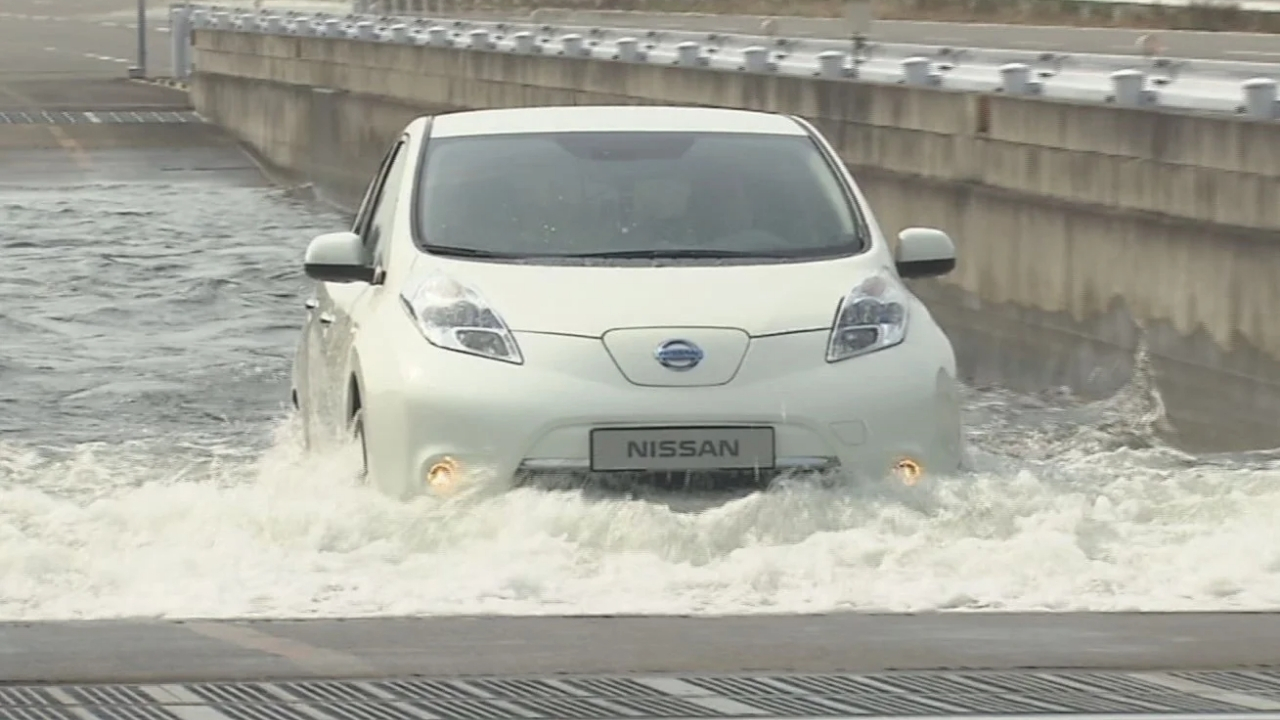
In electric cars, the battery is usually installed in the lower part of the body. Therefore, the floor becomes an area of special attention in floods. Motor Show explains that if the battery compartment remains exposed to water for more than an hour, battery contamination may occur, risking the system’s operation.
BYD advises that if water reaches the floor, the vehicle should be inspected at a dealership. GAC recommends that if the vehicle is accidentally exposed to a flood above the indicated limit, it should not be started and should be taken to an authorized service center for a complete check.
Hybrids also face risk in the combustion engine
Although the alert involves electric cars, hybrids also appear as a sensitive point in the brands’ guidelines. This is because, in addition to the electrified systems, these vehicles have a combustion engine, which can intake water through the intake during an improper crossing.
GWM, JAC, Leapmotor, and Volvo cite the risk of engine damage in hybrid vehicles. The most serious problem mentioned is hydraulic lock, a situation where water intake can render the engine unusable. In other words, in a hybrid, the flood can affect both the electrical part and the traditional mechanical assembly.
Air conditioning off appears as guidance in some brands
BYD recommends turning off the air conditioning before entering a flooded area, if the crossing is unavoidable. Geely also advises that the air conditioning should not be turned on in these conditions, especially given the risk of water reaching the floor and the battery compartment.
This recommendation shows that the concern is not limited to the car’s movement through water. Auxiliary systems also come under the manufacturers’ radar when the vehicle faces floods, reinforcing that the crossing should be treated as an exception, not as a safe practice.
Warranty may be affected if use exceeds the recommended limit
Besides the technical risk, there is the financial impact. GWM states that if it is found that the vehicle crossed areas above the recommended limit, any damages may be characterized as misuse, resulting in a loss of warranty. Geely also mentions the possibility of warranty loss due to misuse in case of crossing outside the indicated conditions.
Volvo, in turn, states that it may disclaim warranty responsibility if it is found that the vehicle traveled through areas affected by flooding above the recommended limit. In practice, the driver may leave a flooded street with an expensive problem and without manufacturer coverage.
Not all contact with water causes immediate failure, but time changes the risk
The report differentiates brief contact with water from prolonged immersion. An electrical component or a control unit may not fail immediately after simple contact with moisture. However, if the immersion is complete and lasts more than an hour, the water can reach connections and compromise the system.
This point is important because the damage does not always appear instantly. A car that seems to function after the flood may still require technical evaluation, especially if it was stationary in a flooded area or if the water reached the floor.
Cited manufacturers reinforce main recommendation: do not enter flooded areas
BYD, GWM, JAC, GAC, Leapmotor, Geely, and Volvo have differences in specific limits, but converge on the essential: avoid flooded areas. When crossing is unavoidable, the manuals restrict depth, speed, and usage conditions.
For those driving electric or hybrid cars, the safest advice is simple: in the face of a flood, do not assume the vehicle is protected just because it is modern. Electrification has brought new systems, but it has not turned passenger cars into vehicles prepared for floods.
Alert to drivers grows along with the electrified fleet
With the increasing presence of hybrid and electric vehicles in the Brazilian market, doubts about floods tend to become more common. The Motor Show report shows that the issue involves not only fear of electric shock but also damage to batteries, modules, engines, air conditioning, warranty, and driving safety.
The central point is that electric and hybrid cars have protection against moisture, but are not made to face floods without limit. In case of flooding, the decision to proceed can be much more costly than waiting, seeking another route, or calling for assistance after accidental exposure.
And you, do you think electric and hybrid car drivers receive enough information about floods at the time of purchase, or is this warning still not widely communicated by brands? Leave your opinion in the comments.


