






 Portuguese
  Spanish


21-Year-Old University Student’s School Project at Princeton Showed Step-by-Step How to Build an Atomic Bomb — All Using Only Books and Publicly Available Data at the Time.
In the year 1977, during the tense times of the Cold War, a university student in the United States caught the attention of the FBI and CIA by submitting an academic paper that went far beyond the boundaries of the classroom. John Aristotle Phillips, then 21 years old and a physics student at the prestigious Princeton University, presented a functional nuclear bomb project using exclusively public information. The incident gained international attention and sparked debates that remain relevant today, especially around scientific ethics and national security.
The unusual proposal by Phillips for his final assignment was titled “How to Build Your Own Atomic Bomb.” While many might consider the topic provocative or even absurd, it was taken seriously. Using sources accessible to any citizen — including scientific books, declassified archives, and even correspondence with companies like DuPont — Phillips constructed a technical plan theoretically viable for creating a bomb similar to the one dropped on Nagasaki during World War II.
John Aristotle Phillips’ Project Had 40 Pages Detailing Nuclear Bomb Construction and Alarmed American Authorities
The document submitted by Phillips consisted of a 40-page report that described step-by-step how to build a nuclear bomb. Although the project was entirely theoretical, experts consulted at the time stated that, with the addition of plutonium — the only absent element — the artifact would be functional.
-
Former Atacadão Employee Turns Online Cake-Baking Lessons into a Confectionery Brand with Factory, Store, Delivery, and Nearly $400,000 in Revenue

-
Brazilian Startup Sells Nearly 9 Million Surprise Bags of Near-Expiry Food, Prevents Thousands of Tons of Waste, Aiming for $42 Million Revenue by 2026
-
China Develops Custom 140-Ton Electric Mining Truck with 770 kWh Swappable Battery, Deploys 290 Units in Xinjiang’s Largest Zinc Mine

-
Meta to Launch Arena, a New Prediction App Targeting 3.56 Billion Users, Competing with Polymarket and Kalshi





What impressed authorities and academics the most was the fact that all the knowledge gathered by Phillips was available in public sources, demonstrating how easily sensitive information could be used for dangerous purposes.

Contrary to what one might imagine, Phillips was not an exceptional student. He had mediocre performance in physics, but he committed intensely to research, exploring libraries, scientific publications, and even commonly accessible technical information.
His goal was to prove that the knowledge required to build a functional nuclear bomb was already, in parts, available to anyone with enough curiosity — and this was conclusively proven.
FBI and CIA Intervened After Foreign Agents Showed Interest in the Functional Nuclear Bomb Project Developed by Phillips
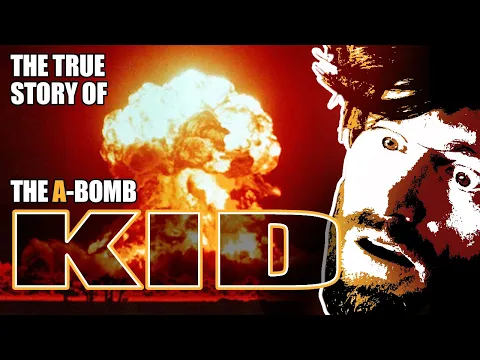
The situation escalated when the press reported on the case, nicknaming the young man “the A-Bomb Kid.” The public outcry was so intense that foreign agents reportedly attempted to obtain copies of the project, which prompted the FBI and CIA to act swiftly. Federal authorities confiscated all documents and materials used, including a harmless physical model that Phillips had built in his dorm room.
From then on, the content was considered confidential. Although the project did not involve actual nuclear materials, the case raised serious concerns about the proliferation of nuclear knowledge and the possibility that individuals or malicious groups could replicate the feat with dangerous intentions. For many, Phillips’s attitude was irresponsible; for others, it was a necessary warning.
Student Abandoned Science and Became an Anti-Nuclear Activist in the United States
Despite the controversy, the episode profoundly marked John Aristotle Phillips’s life. He gave up plans to pursue a career in physics and became an active militant against nuclear weapons. He published a book about his experience and even ran for the United States Congress, though he was unsuccessful electorally. Nevertheless, his name remains recorded in history as the protagonist of one of the most emblematic cases at the intersection of science, politics, and security.
The story of Phillips is often revisited in congresses, academic debates, and even works of fiction. His work is considered a classic example of how scientific curiosity can transcend ethical and political boundaries, especially when it involves mass destruction technologies. The episode also contributed to the tightening of policies on controlling technical information in the United States and other nuclear powers.
Case Remains a Reference Today in Debates About Scientific Ethics and Nuclear Information Security
More than four decades later, the John Phillips case remains relevant, especially in times of hyperconnectivity and widespread data circulation. Today, access to technical and scientific knowledge is just a few clicks away for anyone with an internet connection. And
Non-proliferation nuclear experts often cite the Phillips case as evidence that the barrier between curiosity and real threat can be very thin. At the same time, his work exposed a vulnerability in the system for protecting sensitive information, demonstrating that censorship is not the only way to mitigate risks — but that ethical education and international vigilance are also crucial.




