






 Portuguese
  Spanish




Woman Builds Her Own Wooden Underground House In Just 32 Days, Lives Off The Grid And Creates A Self-Sufficient Refuge Hidden In Nature.
The project begins in a raw and direct manner: the choice of the exact spot on the land and the manual excavation of the soil. Without machines, backhoes, or external support, the woman uses only simple tools to open the space that would house the underground house. The images show the gradual progression of the hole, with walls carefully carved to ensure stability and natural drainage, something essential in buried constructions. The rectangular shape of the opening already anticipates the internal organization of the shelter, demonstrating that nothing there is improvised.
Structure Of The Underground House Uses Wood Logs And Traditional Techniques

With the excavation completed, the structural stage begins. Wood logs are cut, stripped, and positioned vertically along the walls of the hole, functioning as retaining pillars. Above them, horizontal beams form a solid frame capable of supporting the weight of the earth that will later cover the roof.

The technique harkens back to ancestral methods of underground construction used for centuries in different regions of the world, especially in forested areas where wood is abundant and resilient when properly treated.
-
U.S. City Builds Tiny Home Village on Water Company Land to House 136 Homeless People: Inside the Social Housing Units

-
Woman Turns Shipping Container into Home, Embraces Rural Life to Cut Monthly Expenses to Just Over $330
-
France Revamps 530 Social Housing Units with Large Balconies and Glass Facades Without Demolishing Existing Buildings

-
Facing high rent, couple transforms parents’ garage into a fully functional apartment, creating a complete home at a fraction of the market cost.




Internal Wood Walls Create Natural Thermal Insulation
As the structure progresses, the internal walls begin to take shape with wooden boards fitted one by one. The finishing reveals an aesthetic care that goes beyond functionality.
The combination of woods with different shades creates a cozy look, while the soil itself around acts as natural thermal insulation, maintaining the internal temperature stable even with external climatic variations.

This is one of the great differentiators of underground houses: thermal comfort without electricity consumption.
Reinforced Roof And Soil Cover Make The House Invisible In The Landscape
The upper closure is one of the most critical stages of the project. Over the beam structure, the builder installs boards, a waterproof protection layer, and then returns the soil removed during excavation.

The result is a roof that is completely integrated into the environment, practically invisible when seen from afar. The vegetation is placed back on top, making the house disappear into the landscape, creating a hidden, silent, and protected refuge.
Life Off The Grid With Simple And Functional Solutions
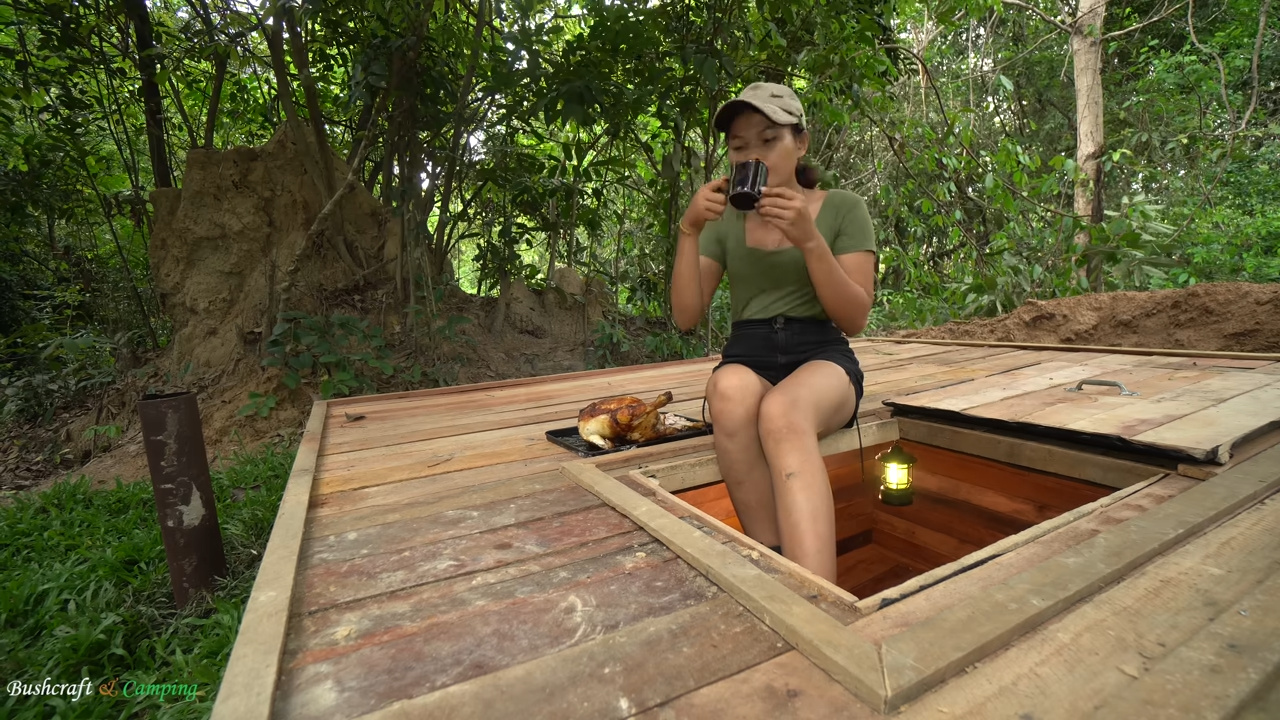
Even without connection to the power grid, the internal space is functional. Lighting is provided by lanterns and low-consumption lights, while the smart use of natural ventilation ensures air circulation.
The images show everyday moments in the shelter, such as simple meals, resting, and organizing the internal space. Everything is designed for the essential, without excesses, reinforcing the concept of a self-sufficient and sustainable life.
Sustainable Construction Shows A Real Off-Grid Housing Alternative
The project draws attention not only for its speed — just 32 days — but for its viability. The underground house uses local materials, reduces environmental impact, dispenses with concrete, and practically eliminates the need for artificial climate control.

At a time when the cost of traditional housing is rising and the search for off-grid solutions is increasing, this type of construction emerges as a real alternative, especially in rural and forested areas.
A Hidden Refuge That Unites Technique, Resilience And Simplicity
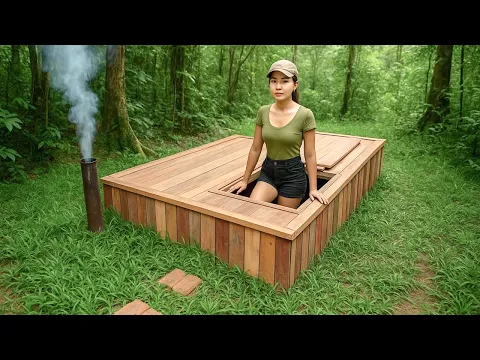

More than a buried cabin, the construction represents a life choice. Each stage of the process reveals physical resilience, practical knowledge, and a direct relationship with the natural environment.
In the end, what emerges is not just a house, but a silent, self-sufficient shelter integrated with nature, capable of functioning far from civilization without sacrificing essential comfort.









Y cuando llueva ?
Como hace para que el gas radón qué se desprende de la tierra no le afecte?
Esses vídeos já foram desmentidos faz tempo.