Portuguese
  Spanish


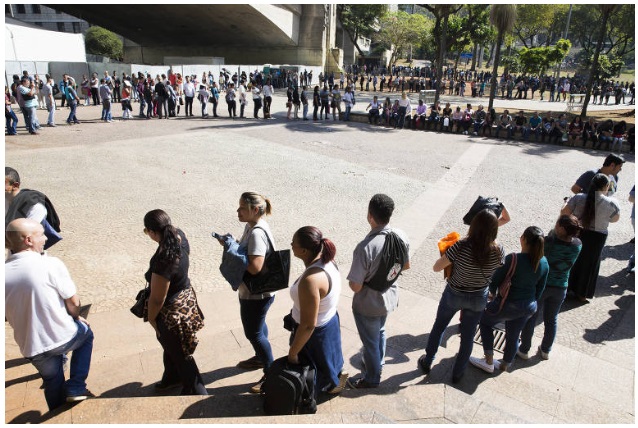

Government Economic Team Also Wants Incentives for Training 4.4 Million Unemployed and Self-Employed Workers.
The release of up to R$ 65 billion for companies to combat unemployment is being studied by the government. This money would come from the release of so-called appeal deposits, amounts that companies need to set aside with the Labor Court to appeal labor lawsuits. Learn About the 9 State-Owned Companies That Will Be Privatized by the government.
Appeal deposits are a mechanism for companies and workers who file appeals in the Labor Court to cover the costs of the process in case of loss. The idea under consideration is to allow this flexibility for the pool of resources prior to the labor reform.
-
Lenovo Unveils Legion Y700 Tablet with RGB Backlighting, 5G, and SIM Card Support
-
Lenovo Unveils Legion Y700 Tablet with RGB Backlighting, 5G, and SIM Card Support
-
Northern Brazilian City Prepares Task Force to Mitigate El Niño Impacts with Stockpiled Fish, Drone Monitoring, Firefighting, and Water Supply Reinforcement in Remote Areas

-
Brazil to Issue “Panda Bonds” in China, Aiming to Raise Up to 5 Billion Yuan at Lower Interest Rates Than Dollar Debt

The measure would be a way to give an extra boost to the productive sector while the government cannot implement its plan to ensure a “shock of employment” through the reduction of payroll taxes. The Minister of Economy, Paulo Guedes, supports the elimination of the contribution on salaries — currently at 20% — to reduce costs for employers.
The tax would be replaced by a tax similar to the CPMF, but this plan depends on the approval of Congress, which has already shown resistance to the idea. According to the minister, the government wants “lower taxes” to promote the creation of new jobs.”
At the moment, technicians from the Ministry of Economy are studying ways to qualify 4.4 million people within four years. The Emprega+ program is expected to cost around R$ 8 billion. The idea is for workers to have access to “vouchers” to participate in training courses.
Resources are expected to come from part of the transfers from the S System. Today, the government already has qualification mechanisms, but the members of the ministry believe they are not very effective. Pronatec, for example, is one of the programs that should be reformed, according to a source.
The design is still being developed. In addition to a program open to everyone, the team is also considering a measure to address long-term unemployment. Currently, according to the most recent data from IBGE, Brazil has 12.7 million unemployed people. Of this total, 3.3 million have been looking for a job for two years or more.
The effort to improve qualification programs would be complemented by other measures, such as a reform of Sine, the official job vacancy search system of the government.
The measures have been sent to the Minister of Economy, Paulo Guedes, and are still under review. The idea is to present all of them in one package.
Reducing unemployment is a campaign promise of President Jair Bolsonaro, but, in light of the slow recovery of the economy, the data still does not show a reaction from the labor market. In July, the unemployment rate fell to 11.8%.