






 Portuguese
  Spanish




With Government Approval, Toyota, Fiat, Volkswagen, and GM Block Exemption for BYD. Full Tax on Electric Vehicles in CKD Will Be Charged as Early as 2027, a Year and a Half Ahead of Schedule
The battle for space in the Brazilian electric vehicle market has just entered a new chapter — with a direct impact on BYD’s plans. The federal government has decided to advance the full collection of the import tax (35%) on hybrid and electric cars assembled in Brazil under the CKD and SKD systems to January 2027. The decision was officially announced this Wednesday (30), during an extraordinary meeting of the Executive Management Committee (Gecex) of the Chamber of Foreign Trade (Camex), and represents a strategic defeat for the Chinese automaker, which had been seeking tax incentives to maintain its competitive advantage.
Under the new rule, CKD (completely disassembled) and SKD (semi-disassembled) kits will lose the benefit of reduced rates, which currently range between 16% and 18%, and will now pay the same tax applied to fully imported ready vehicles. The measure, which was initially set to be applied only in mid-2028, has been advanced by a year and a half, complicating BYD’s plans and benefiting, at least partially, manufacturers like Volkswagen, GM, Toyota, and Stellantis — who publicly opposed the Chinese proposal.
In an official statement, Camex justified the decision as part of an effort to “align tariff policy with expected investments in the national automotive sector.” At the same time, the government opened a temporary exception: during the next six months, an import quota will be exempt from all taxes for vehicles in CKD and SKD kits, limited to US$ 463 million (about R$ 2.6 billion).
-
China to Revive $3.6 Billion Mega-Dam Project in Myanmar, Stalled Since 2011, Promising 6 GW Capacity and Completion in Eight Years

-
Foreign Company Wins Auction for Brazil’s First Immersed Tunnel, a $1.3 Billion Project with $14 Million Contract Under Federal Investigation

-
China’s Century Megaproject Wows the World: Massive Water Transfer Network Moves Water from Wet South to Arid North, with Ambitious Plans in the Tibetan Plateau Involving Giant Tunnels at Altitudes up to 4,000 Meters
-
Petrobras Launches Bold $12 Billion Plan to Build 42 Vessels and Create Over 5,000 Jobs



The Clash Between BYD and the Old Guard of the Industry
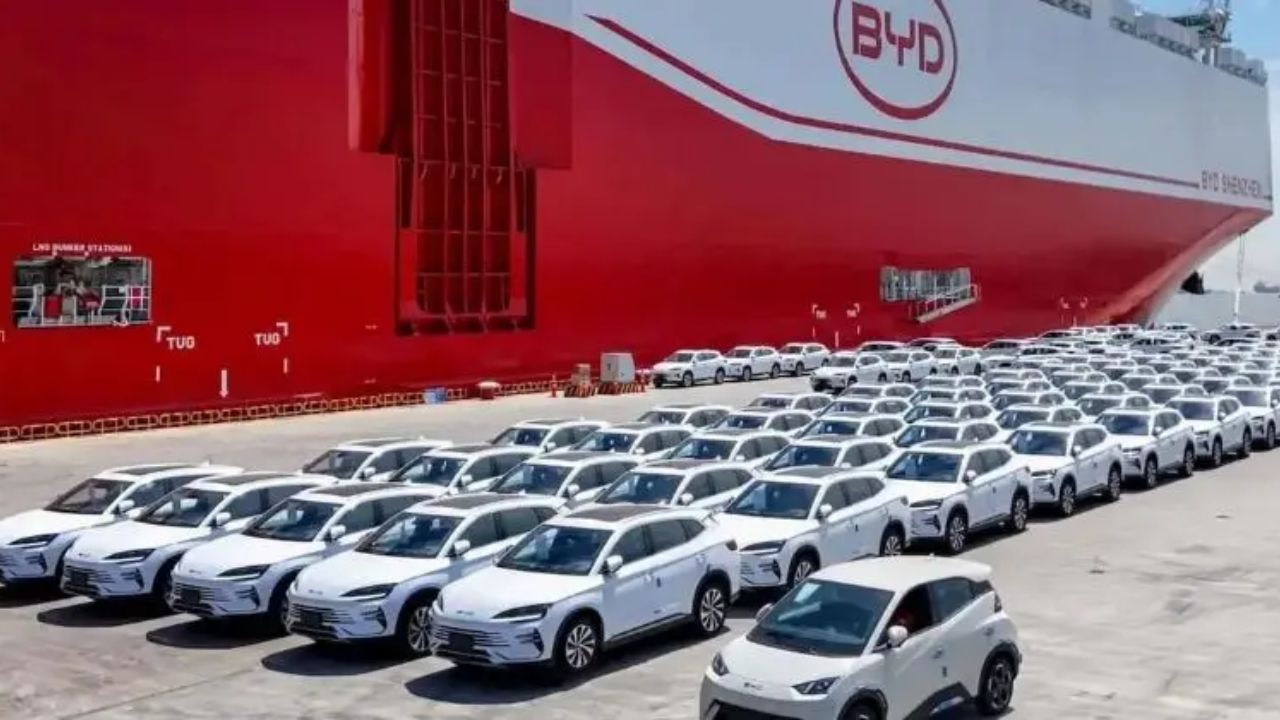
Behind the scenes, the scenario is one of direct confrontation. In February, BYD had requested the government to significantly reduce import tariffs for both assembly regimes: from 18% to 5% for SKD and from 20% to 10% for CKD. The company’s argument was clear: to ensure viability to continue assembling electric vehicles in the country at competitive prices.
The response came in the form of pressure. Traditional automakers sent an open letter to President Lula harshly criticizing the request from the Chinese rival. The group, made up of GM, Toyota, Stellantis, and Volkswagen, argued that the reduction would jeopardize jobs, investments already made in Brazil, and weaken the national production chain. The National Association of Motor Vehicle Manufacturers (Anfavea) classified the proposal as a “setback” and stated that the measure could consolidate a production model with little nationalization.
On the other side, BYD reacted firmly. In a statement, it said that it is being attacked by “obsolete” brands that cannot keep up with its technological and sustainable proposal. The automaker claimed that its vehicles, even with high taxes, are cheaper and more advanced than those of the competition — thanks to production centralization in China and support from the Chinese government’s subsidies.
What’s at Stake With the End of the Tax Advantage
The change in the tax calendar completely alters the strategy of those who bet on local assembly through disassembled kits. Until now, electric and hybrid cars assembled in Brazil from CKD and SKD had a significant tax advantage over fully ready models imported from abroad, precisely because they generated, albeit minimally, jobs and stimulated the national logistics chain.
However, the government has a strong argument to defend the new tariff model. According to Vice President Geraldo Alckmin, “this measure encourages the establishment of complete factories in Brazil, as has already happened with GWM in Iracemápolis and BYD itself in Camaçari.” For the government, merely superficial assembly of kits does not guarantee real nationalization: it does not involve engine production, use of Brazilian steel, or purchase of local inputs such as tires and rubber.
The decision, therefore, aims to pressure automakers — including BYD itself — to make deeper commitments to local industrialization, going beyond mere assembly of vehicles.
Two Opposing Visions for the Future
The dispute reflects two models of industry insertion in Brazil. On one side, companies like Stellantis and GM advocate for national production with a high degree of nationalization as a way to preserve jobs and technology within the country. On the other, automakers like BYD argue that their technological proposal, although based on imports, delivers to consumers a more modern and accessible car.
In practice, all automakers — including those that criticized BYD — import essential components for their electrified models. Even Toyota, the only one producing complete hybrids in the country, still relies on parts from Japan. BMW manufactures the X5 PHEV in Santa Catarina, but also with components from abroad. And the very rivals who signed the letter against BYD have been investing in importing electric cars from China.
The declared war is far from over. For now, the government has chosen to toughen its stance, defending the industry established in Brazil and forcing foreign automakers to invest more than just simple assembly lines. What comes in the next chapters will depend not only on BYD’s reaction but also on the country’s capacity to offer a competitive production environment for the car of the future.




Mais uma vez o governo ganancioso, pesado, ineficaz e lambao da **** do 9 dedos, não pensa nunca em baixar impostos, mas sim em aumentar a carga tributária. Que governo lixo temos nesse país!
Acabei de comprar um BYD KING GS. TOP, TOP. Fiz **** drive em vários. Carro maravilhoso. Não existe montadora nacional. Todas são exploradoras internacionais. Só que a BYD entrega muito mais. Ficaram para trás, se vira. Foram chorar ao governo. Democracia, lei da oferta e da procura? Não. Querem continuar fazendo carroça CARA para brasileiro.
Perfeito, o governo tem que defender a indústria nacional, que gera milhares de empregos direitos e indiretos. Parabéns ao governo.
Puxa saco das elites ,essas montadoras aki,fora byd e gwm.. tds querem eh lascar a nós consumidores com produtos furrecas com híbridos piores q.carroças viu e preços exorbitantes como sempre..fica aí seu abobslhado puxando se seu abobalhado puxando saco..abcs
Indústria nacional, importando os principais componentes?? Lamentável, temos que baixar os impostos para produzir aqui e não taxar mais . Isso só acontece em um país de terceiro mundo com o **** e sua companheirada no poder! Brasil rumo ao atraso tecnológico e financeiro. Esse peso não carrego, a culpa é dos ****!