Portuguese
  Spanish


In The New Agrotech Hub Of Brazil, Autonomous Drones And Artificial Intelligence Set The Harvest Pace.
In the heart of Brazil, amidst vast soybean and corn fields, a silent revolution is taking place. Rio Verde, in Goiás, is attracting R$ 1 billion in investments to become the main agrotech hub in the country. Far from being a spontaneous movement, its growth is a calculated evolution built on a solid foundation in agribusiness. Here, autonomous drones and artificial intelligence set the pace for an increasingly technological harvest.
How The Agroindustrial Power Boosted Innovation
The technological innovation in Rio Verde did not come out of nowhere. It was built on a mature agroindustrial complex of global relevance. The city is already a powerhouse in traditional agribusiness, which creates a strong and well-funded demand for technological solutions.
The municipality is the second-largest grain producer in Brazil. Its annual production of soy reaches 1.8 million tons, and corn reaches 2.5 million tons. Furthermore, Rio Verde is the largest producer of animal protein in the country, with a daily slaughter of 420,000 birds and 6,500 pigs.
-
Shell Discovers Intact Early 19th-Century Wooden Shipwreck in the Gulf of Mexico at Over 1,300 Meters Deep

-
Brazilian Entrepreneur Turns Door-to-Door Jewelry Sales into a Family Business Empire with Over 70 Stores

-
$75 Million Bridge in Brazil Opens to Connect Cities, Create Jobs, and Cut Travel Time from 30 to 2 Minutes; Spanning 1.24 km, It’s Among the Country’s Largest and Ends Decades of Ferry Queues.
-
Brazilian Farmer Builds 8-Ton Tractor from Army Truck Engine, Plants Over 100 Hectares of Soybeans




This productive force is amplified by world-class logistics infrastructure. The inauguration of the Northeast-South Railway’s Multimodal Logistics Platform was a game-changer, connecting the production center to the main ports in the country.
Where Does The Capital For Agrotechs Come From?
The R$ 1 billion that drives the agrotech hub did not come from a single investor. It is the result of a combination of capital sources that demonstrates the economic maturity of the region.
A significant portion comes from the Fundeinfra, the State Infrastructure Fund, financed by the agribusiness sector itself through the “agriculture tax.” In just 10 months, the fund raised R$ 1 billion, which is reinvested to solve logistical bottlenecks. Large companies also invest heavily in the region.
Caramuru Alimentos, for example, has a R$ 1.1 billion plan, with R$ 210 million allocated to double its soybean processing plant in Goiás. Finally, government credit lines, such as the Constitutional Financing Fund of the Midwest (FCO), also inject capital to finance producers.
Drones And AI Optimize The Harvest In The Cerrado
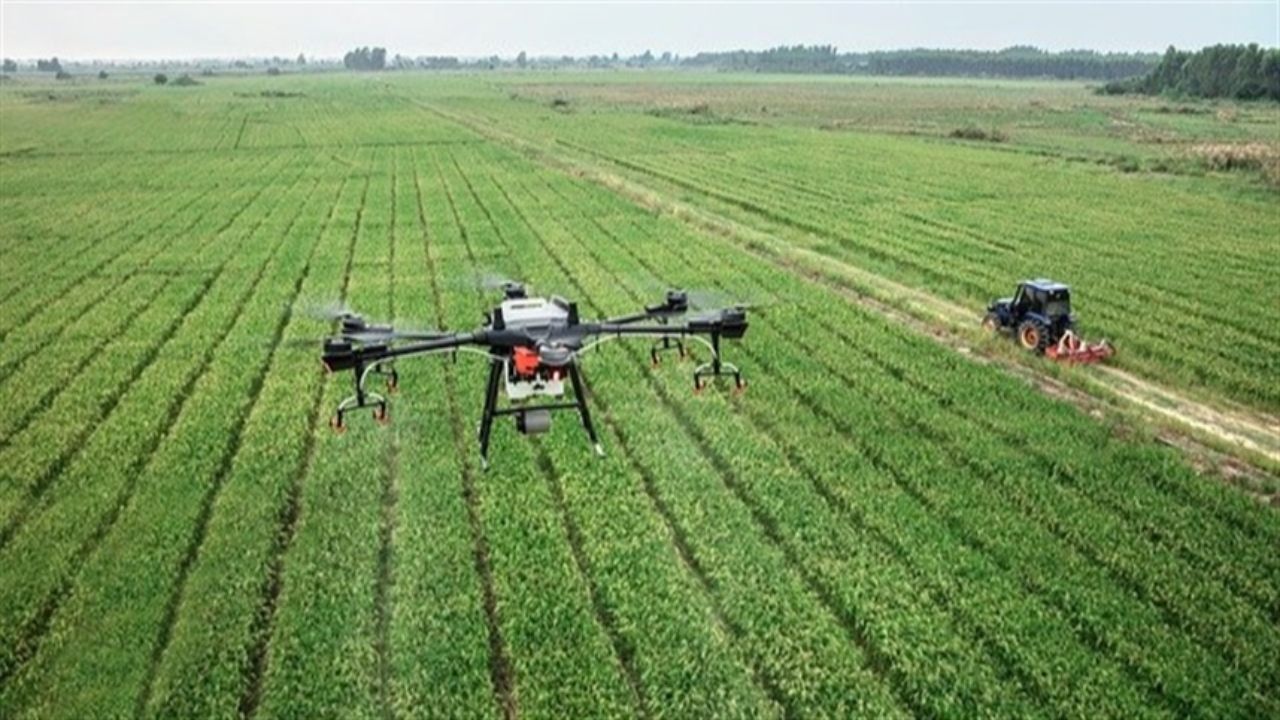
The potential of Rio Verde materializes in the field. Drones and Artificial Intelligence (AI) are moving from concepts to becoming operational tools that yield clear productivity gains.
Drones are the protagonists in modernization. They are used for precision spraying, applying pesticides only where necessary. The agrotech Cromai, one of the highlights of the hub, uses drones and AI to generate maps that result in an average savings of 65% in herbicide use.
The Artificial Intelligence functions as the digital brain of the farm. In a livestock project, the AI monitors the well-being of the cattle through cameras. The technology analyzes animal behavior and generates a real-time index, resulting in an 11% increase in daily weight gain of the herd.
The Synergy Between Companies, Universities, And Government
The success of Rio Verde is based on collaboration. Universities, companies, and the government work together in a highly functional “Triple Helix” model.
The University of Rio Verde (UniRV) and the Federal Institute of Goiano (IF Goiano) are the knowledge base. Innovation hubs like CEAGRE, AgroHub UniRV, and Orchestra Innovation serve as bridges.
They connect startups, researchers, and major companies like BRF, Cargill, and the cooperative Comigo. This relationship is symbiotic: large corporations present real problems and a path to market, while agrotechs offer agile solutions.
The Next Steps For The Agrotech Hub


Despite the success, the agrotech hub of Rio Verde faces significant challenges. The rapid technological evolution has created new bottlenecks that need to be addressed.
The main one is the lack of skilled labor. Technology is advancing faster than the training of professionals to operate it. Another critical bottleneck is connectivity in the field. Many Agriculture 4.0 technologies rely on a stable internet connection, which is still lacking in many rural areas. Overcoming these challenges is crucial for the hub to continue its successful trajectory.