Portuguese
  Spanish


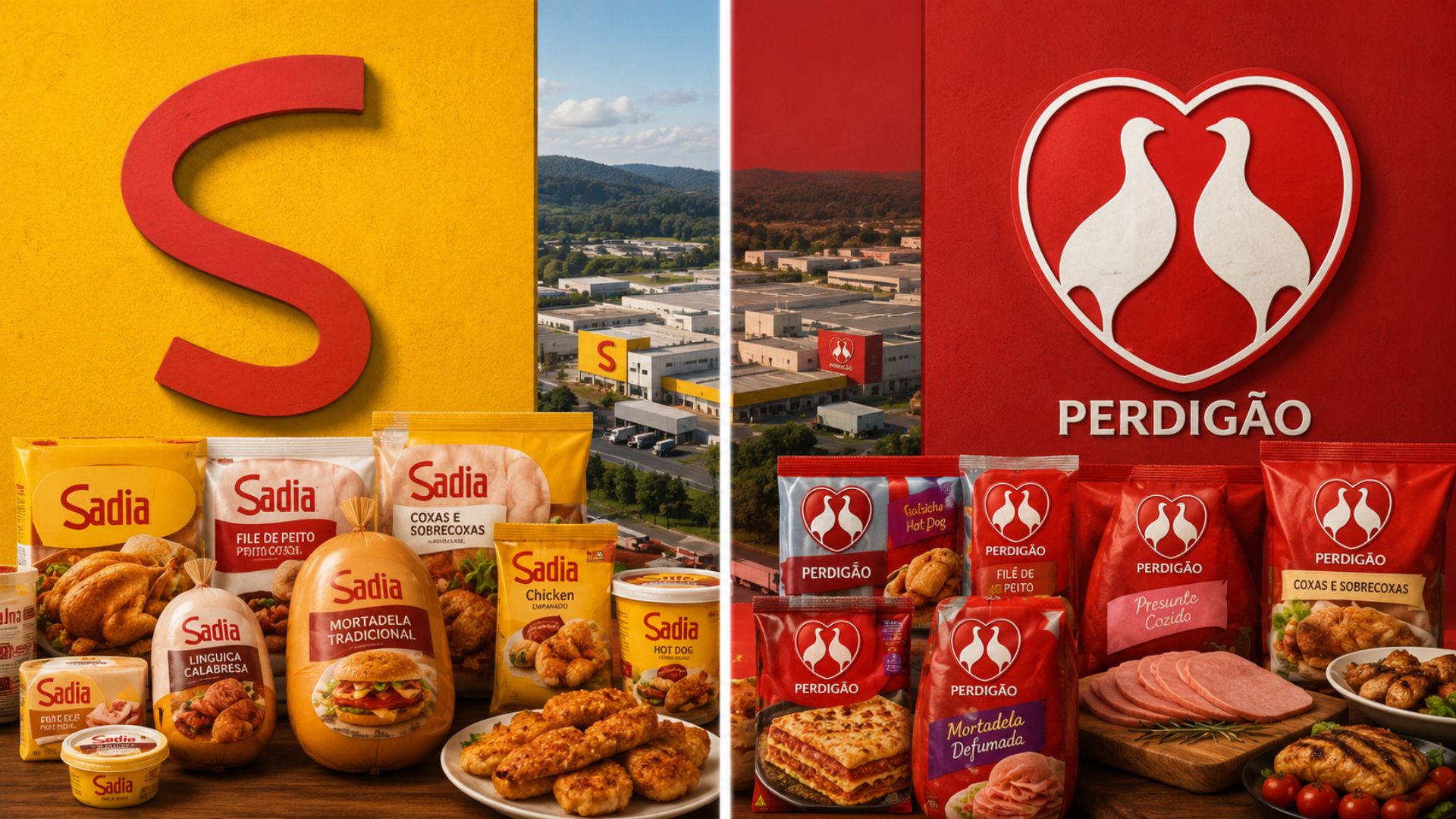

Sadia and Perdigão were born in the interior of Santa Catarina, about 120 kilometers apart, and spent more than six decades competing in supermarkets, exports, and Christmas dinners throughout Brazil. According to information from NSC, the rivalry between the two meat giants ended in 2009, when a financial crisis that cost Sadia a loss of R$ 2.5 billion forced the merger that created Brasil Foods, later renamed BRF.
The story did not stop at BRF. In 2025, the company merged with Marfrig, specializing in beef, giving rise to MBRF, which in its first year of consolidated operation reported a record net revenue of R$ 164 billion, sold 8.2 million tons of food and marked presence in 117 countries. It all started with two families of Italian descendants who set up slaughterhouses in the West of Santa Catarina in the 1930s and 1940s, and whose rivalry shaped the country’s meat industry. Understanding how Sadia and Perdigão went from small slaughterhouses in the interior of Santa Catarina to becoming the foundation of a R$ 164 billion food empire is to follow the very history of the Brazilian agribusiness.
Perdigão: 1934, Videira, Ponzoni and Brandalise families

Perdigão was founded first, in 1934, in Videira, in the Mid-West of Santa Catarina, by the Ponzoni and Brandalise families, descendants of Italian immigrants. The initial business was focused on pig slaughtering and food sales for the regional market, an activity that generated enough revenue to support the founding families, but that still lacked the scale necessary to compete outside Santa Catarina.
With increased production, Perdigão began investing in its own animal breeding and in structuring the agro-industrial chain. The integration model between rural producers and industry, in which the company provides chicks, feed, and technical assistance while the farmer takes care of fattening, became the foundation of the company’s growth and, later, of the entire agribusiness in the South of Brazil. This organizational innovation was as crucial to Perdigão’s success as any product the company would later launch.
-
Couple Sold Their Home to Save Business, Now Run Platform Handling $180 Million Monthly and Managing Over 51 Million Listings

-
Brazil’s 2026 Tax Refund: Record 9.58 Million Filers in Largest Payout Ever, But a Key Detail on Priority Recipients Draws Nationwide Attention

-
Itaú Alters Hybrid Work Model, Increasing Office Days from 2028, Prompting Employees to Adjust to New Routine
-
Facing Labor Shortage, Japan Plans to Invest $34 Million to Attract Foreign Workers in Construction, Healthcare, Industry, and Commerce





Sadia: 1944, Concórdia, Attilio Fontana

Ten years after the founding of Perdigão, Sadia emerged in 1944 in Concórdia, in the West of Santa Catarina, founded by Attilio Fontana. The beginning was modest: a small mill and a slaughterhouse still under construction, but by 1946 the company was slaughtering more than 100 pigs a day. From the start, Sadia distinguished itself by focusing on distribution to distant consumer centers, especially the Southeast, where the demand for animal protein was growing with urbanization.
Fontana’s vision of taking processed meat from the interior of Santa Catarina to São Paulo and Rio de Janeiro defined the logistical DNA that Sadia maintained for decades. While Perdigão strengthened integration with rural producers, Sadia invested in refrigerated transport, distribution network, and presence at points of sale. The two strategies were theoretically complementary, but in practice generated fierce competition for the same consumer.
The turkey war and the invention of Chester
The rivalry between Sadia and Perdigão reached one of its most memorable chapters in the 1970s, when the dispute ended up on the Brazilian year-end dinner tables. Sadia dominated the Christmas turkey market, and Perdigão needed to find a way to compete without offering the same product. The solution came from genetic improvement: in 1979, Perdigão imported eggs from the United States and developed a differentiated bird, which deposited more meat on the breast and thighs.
The Chester hit the market in 1982 with the slogan “Habemus Chester” and became a commercial phenomenon. What few people know is that the bird is nothing more than a larger chicken, weighing between 4 and 4.5 kilos, resulting from genetic selection that favors the yield of noble meat. Retired veterinarian Vitor Hugo Brandalise, nephew of the founders of Perdigão, said that “it was not feasible, at the time, to bring another bird to compete with the same Sadia turkey,” and so the company sought something completely new. The Chester divided the country’s Christmas tables and turned the dinner into a battle between Santa Catarina brands.
The hostile offer and the crisis that turned the game around
The dispute between Sadia and Perdigão went beyond shelves and dinners when, in 2006, Sadia attempted to acquire the competitor in a deal valued at around R$ 3.7 billion. The offer was considered hostile and rejected by Perdigão’s shareholders, who did not accept the proposed conditions. The failed attempt left marks on the relationship between the two companies and seemed to definitively distance the possibility of a union.
Two years later, however, the scenario dramatically reversed. The global financial crisis of 2008 hit Sadia with billion-dollar losses in currency derivative operations. The company closed the year with a loss close to R$ 2.5 billion and debt that operational generation could not cover. The same Sadia that had tried to buy Perdigão two years earlier now needed the competitor to survive. Negotiations for the merger began under the pressure of a debt that admitted no delay.
The 2009 Merger and the Birth of BRF

The union between Sadia and Perdigão was officially announced on May 19, 2009, giving rise to Brasil Foods, later renamed BRF. The new company was born with 119,000 employees, 42 factories, and an annual net revenue of R$ 22 billion, numbers that immediately positioned it as one of the largest food companies in the world. For two brands that spent decades competing for the same shelf space, sharing the same corporate structure required cultural adjustments that took years to consolidate.
Despite the gain in scale, BRF’s growth in the following years was slower than that of direct competitors. According to a study by the University of São Paulo, between 2008 and 2021 the company’s gross operating revenue went from about R$ 25.4 billion to R$ 56 billion. In the same period, JBS advanced from R$ 31.1 billion to R$ 361.5 billion. The difference in speed indicated that even after the merger, BRF needed another leap to compete with the largest in the global animal protein sector.
From BRF to MBRF: R$ 164 Billion and 117 Countries
The leap came in 2025, with the merger between BRF and Marfrig, which created MBRF. Marfrig, specialized in beef, complemented BRF’s portfolio, focused on poultry and pork, creating a company capable of offering complete animal protein for any market in the world. In the first year of consolidated operation, MBRF reported a record net revenue of R$ 164 billion and a volume of 8.2 million tons of food sold.
The presence in 117 countries makes MBRF one of the largest food exporters on the planet. For two brands that were born in small slaughterhouses in the interior of Santa Catarina, the global scale is the latest chapter of a journey that began with pig slaughtering in the 1930s and today supplies populations on all continents. The rivalry between Sadia and Perdigão turned into a merger, the merger became BRF, BRF became MBRF, and what was a neighborly fight in the West of Santa Catarina transformed into a food empire of R$ 164 billion.
From Rivals to R$ 164 Billion: A Santa Catarina Story
Sadia and Perdigão were born 120 kilometers apart, competed in supermarkets and Christmas dinners for decades, almost bought each other out, and ended up united by a billion-dollar crisis that left no alternative. Today MBRF, heir to this rivalry, earns R$ 164 billion a year, sells in 117 countries, and employs tens of thousands of people. The story proves that, in the interior of Santa Catarina, even the fiercest competition can end at the same table.
Are you more Sadia or Perdigão? Tell us in the comments if you remember the rivalry between the brands, if your Christmas dinner had turkey or Chester, and what you think of the merger that turned two rival companies from Santa Catarina into one of the largest food groups in the world. We want to hear your story.